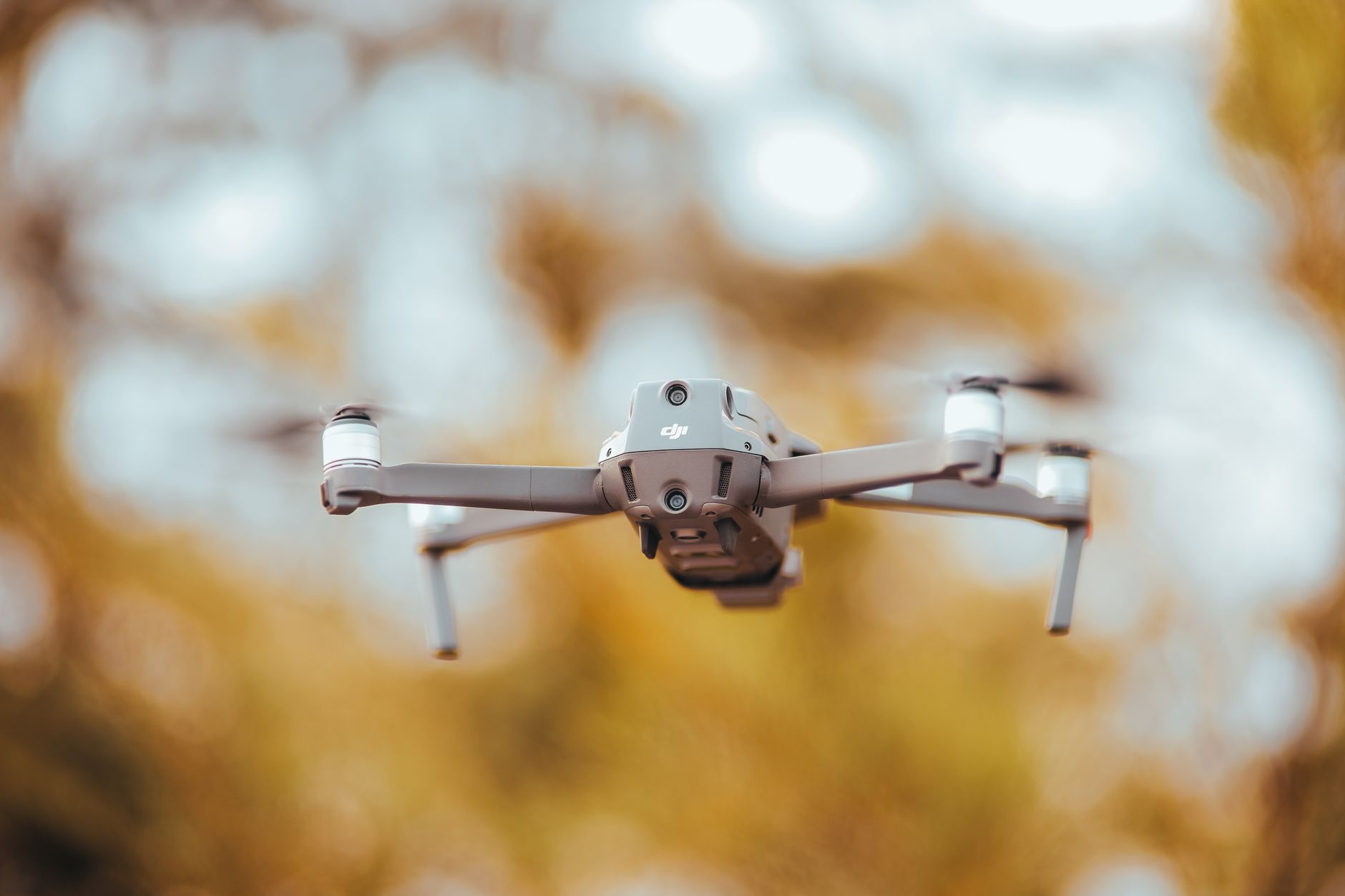
A handful of airmen from the Air Force's Experimental Operations Unit landed at Edwards Air Force Base in mid-April with two Pelican cases, a laptop, and a jet-powered drone. Over the next week, they flew multiple sorties without a single piece of ground infrastructure that a traditional drone operation would require. No large antenna arrays. No hardened operations center. No supply chain for specialized launch and recovery equipment. Just Anduril's YFQ-44A Fury collaborative combat aircraft, a ruggedized command system called Menace-T, and warfighters who had been trained for days, not months, to operate it. On April 17, the Air Force confirmed publicly what had just happened: the first documented instance of a combat unit flying a semiautonomous, jet-powered drone from a simulated forward operating base without any of the infrastructure that has defined drone operations since the Predator era began in the 1990s.
This matters because it collapses the single largest logistical barrier to scaling autonomous combat aircraft. The entire drone enterprise—Predators, Reapers, everything in the inventory today—requires sophisticated ground infrastructure, trained pilots, sensor operators, and intelligence analysts working in shift rotations from secure facilities. It is capital-intensive and footprint-heavy, which makes it difficult to deploy forward into denied or contested environments. The YFQ-44A, under Anduril's Increment 1 collaborative combat aircraft program, was designed with the opposite logic: semi-autonomous flight means fewer human operators per aircraft; expeditionary design means less infrastructure; ruggedized ground control means the whole operation fits in a cargo truck. The test at Edwards proved it is not theoretical. Lt. Col. Matthew Jensen, commander of the EOU, was direct about what had changed: 'Every sortie generated and flown was done with a warfighter, not an engineer or test pilot, kicking the tires and controlling the prototypes.' This is the operational test that validates acquisition risk, and the Air Force conducted it before the program is even locked into production.
The platform itself is a jet-powered aircraft, approximately the size of a large tactical missile, built to fly alongside manned fighters like the F-22 and F-35 as a loyal wingman or to conduct strikes independently. The YFQ-44A completed its maiden flight in October 2025 and transitioned to operational testing with the EOU six months later. What distinguishes this test from the hundreds of developmental flights that happen at contractor facilities is the human element: the operators, maintainers, and mission planners were all from an active-duty combat unit, not Anduril engineers or Air Force test pilots. The EOU warfighters used Menace-T, a laptop-based command and control system, to upload mission plans, initiate autonomous taxi and takeoff, task the aircraft in flight, and manage post-flight data. The training footprint was minimal: only a handful of maintainers received days of instruction before they were loading weapons, executing pre- and post-flight checks, and turning the aircraft for the next sortie. That is orders of magnitude different from the six-month training pipelines for traditional drone operators.
What created the conditions for this test happening now, six months into flight testing and before production, is a deliberate shift in how the Air Force evaluates experimental systems. Col. Timothy Helfrich, the Portfolio Acquisition Executive for Fighters and Advanced Aircraft, articulated the logic clearly: the Air Force is 'trading operational risk with acquisition risk in real-time.' Traditional acquisition reserves risk: prove the technology works in controlled conditions, lock down requirements, build to spec, deliver the finished product. That process takes years and frequently costs billions. The Warfighting Acquisition System framework, which the USAF official release cited, inverts that logic: get a functional system to warfighters as early as possible, learn from their feedback in operational contexts, and iterate rapidly. Helfrich's exact words capture the philosophy: 'An 85 percent solution in the hands of a warfighter today is infinitely better than a 100 percent solution that never arrives.' This is not new thinking in Silicon Valley. It is genuinely new in Air Force acquisition. The EOU test happened because senior Air Force leadership accepted the risk of learning from warfighters operating a prototype in order to accelerate the path to a credible operational capability.
The implications are stark for the competitive landscape. Anduril is no longer competing on specification or prototype maturity. It is competing on operational credibility. The Air Force flew the YFQ-44A with combat crews and published the results. That shifts every conversation with the Pentagon from 'Will this work?' to 'When can you build 1,000?' The Air Force has stated it wants a fleet of at least 1,000 collaborative combat aircraft to conduct strike missions, sustained operations, and manned-unmanned teaming with fighters. The production decision is expected in summer 2026. Anduril's competitors in the CCA space—Boeing, Kratos, and others with their own Increment 1 programs—are still in developmental testing or working through supplier issues. None have conducted the kind of expeditionary operational test that the EOU just executed. That is a measurable gap that matters.
Here is what is actually happening beneath the acquisition language: the Air Force has committed to a deployment-ready autonomous combat aircraft by the end of the decade, and it is willing to field an 85 percent mature system rather than wait for perfection. The YFQ-44A expeditionary test was not a proof of concept. It was a final validation before production. Anduril benefits because it has demonstrated operational credibility with the service that will buy these aircraft. The EOU benefits because it now has operational experience with the platform before it becomes a squadron asset. The Air Force benefits because it has compressed what would normally be a multi-year integration timeline into six months of flying. Everyone else in the CCA competition loses ground because they are still in the lab while Anduril's system is being flown by warfighters from Pelican cases. The production timeline and scale of the program—1,000+ aircraft—means this is not a marginal program. This is a reshaping of the tactical air force.
Watch for three things in the next 180 days: the summer 2026 production decision and the volume commitment the Air Force announces; whether the EOU conducts a second exercise with the YFQ-44A at a different location or with a different squadron to validate that the expeditionary footprint works at scale and across different units; and any announced integration plans showing how the YFQ-44A will train with manned fighter squadrons before 2028. If the production decision commits to more than 100 aircraft in Increment 1, or if the Air Force announces plans to deploy YFQ-44A squadrons operationally before 2030, the test at Edwards was not just validation—it was the beginning of the end of the traditional drone model.