On April 21, the FCC handed AST SpaceMobile a commercial order that should have been a celebration: full authority to deploy a 248-satellite direct-to-device broadband constellation on premium 700 and 800 MHz spectrum, coordinated with Verizon, AT&T, and FirstNet. Two days earlier, Blue Origin lost AST's first operational satellite to an engine failure on New Glenn's second flight. The confluence is not coincidental timing, it is the shape of the current market: regulatory policy moving faster than hardware reliability.
AST SpaceMobile's D2D broadband story has lived in the permitting queue since 2022. The company first got FCC approval for a 25-satellite experimental system in 2024, but that order explicitly prohibited commercial service. Last week's approval removes that ceiling. The company is now licensed to operate 248 satellites providing supplemental cellular coverage from space, meaning U.S. carriers can legally offer continuous broadband to phones and devices that have never touched a terrestrial network. The authorization comes with hard deadlines: 124 satellites operational by August 2030, the full constellation by August 2033. Those are binding FCC milestones. Missing either one voids the license. The spectrum coordination with three major carriers and FirstNet, the federal first-responder network, was the hardest regulatory lift. AST cleared it. On paper, the company can now build what it has been trying to build for four years.
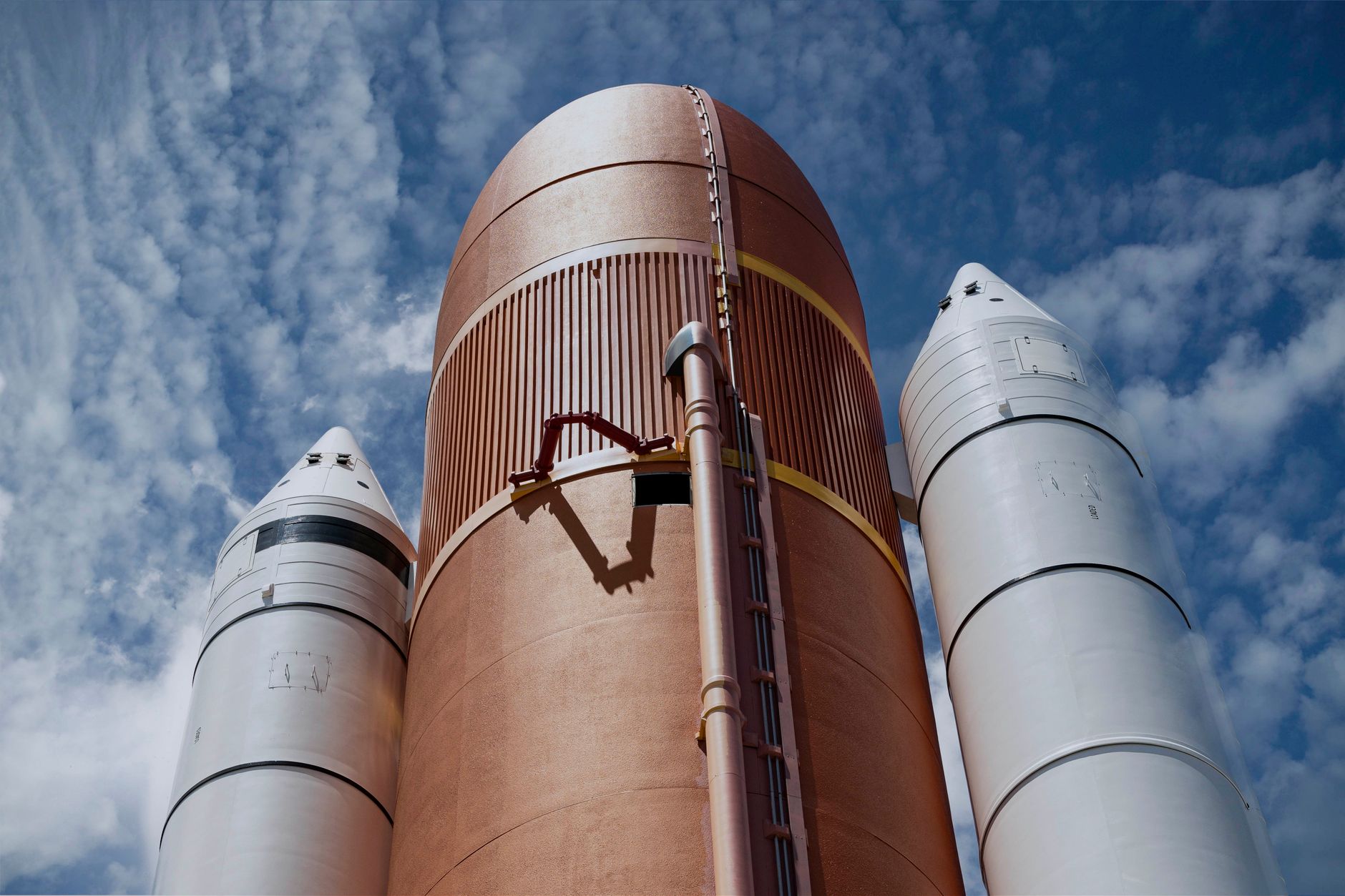
Blue Origin's New Glenn is supposed to be AST's workhorse. The vehicle stands 98 meters tall, lifts 45 metric tonnes to LEO, and most critically for AST's deployment timeline, can carry eight BlueBird satellites per mission. AST's BlueBird 7 satellite, massed at 6,100 kg with a 222-square-meter communications array, was the test case for this integration. On April 19, New Glenn's first stage executed flawlessly. The booster reignited for a landing burn and returned to the pad, Blue Origin's third New Glenn flight and its first booster reuse. By comparison, SpaceX flew 32 orbital-class Falcon 9 missions before the first successful booster reflight in December 2015. This is not nothing. It is the kind of engineering milestone that, on any other mission, would dominate space news for a week. But then the upper stage burned. New Glenn's second stage, called GS2, is powered by two BE-3U engines burning liquid hydrogen and liquid oxygen. On its second vacuum burn, the one that was supposed to push BlueBird 7 to a 285-mile operational orbit, one of those engines underperformed. The satellite ended up at 95 miles. That orbit is a graveyard. At that altitude, atmospheric drag wins in weeks. BlueBird 7 is a total loss.
Blue Origin CEO Dave Limp posted on X the next day: 'We clearly didn't deliver the mission our customer wanted, and our team expects.' The preliminary diagnosis: 'Early data suggest that on our second GS2 burn, one of the BE-3U engines didn't produce sufficient thrust to reach our target orbit.' The FAA moved immediately. It classified the event a 'mishap', the formal trigger for a mandatory investigation. New Glenn is now grounded indefinitely. As of May 7, there is no return-to-flight date. The FAA's standard language is that Blue Origin must demonstrate that 'any system, process, or procedure related to the mishap does not affect public safety.' That sounds routine. It is not. BE-3U engine development on the New Glenn upper stage has not yet been flight-proven at full performance on a real mission. This was supposed to be that mission. Now the investigation has to determine whether the failure was a one-off integration issue, a manufacturing problem, a design flaw, or something else entirely. Until Blue Origin answers that question comprehensively and the FAA agrees, no New Glenn flies again.
AST SpaceMobile's 2026 plan depended on New Glenn. The company stated it aims to deploy between 45 and 60 satellites this year to enable continuous broadband service in initial U.S. markets, with a target of up to 90 satellites possible by 2027. At eight BlueBirds per New Glenn flight, that timeline required roughly six to eight heavy-lift launches in 2026 alone. The company has alternatives in theory, Falcon Heavy, Vulcan, Ariane 6, but all of those have longer lead times and higher per-flight costs. More critically, none of them are currently integrated with AST's payload deployment mechanism. New Glenn was the plan because Blue Origin had committed to a cadence of up to 12 launches in 2026. That plan is now vapor. Every week the FAA investigation runs, AST's margin to hit the August 2030 halfway milestone, 124 satellites operational, erodes. The company is in production through BlueBird-32 and claims 95 percent vertical integration at its Texas facility. Those are real assets. But satellites in the factory are not satellites in orbit. And the FCC order, despite its commercial language, contains an implicit threat: miss the deployment milestones and the license reverts.
This is the actual story. The regulatory clearance is genuine. The FCC order is a real, enforceable grant of commercial authority on premium spectrum in coordination with three major carriers. That is the hard part, and AST cleared it. But clearing regulatory policy is not the same as building a constellation. Hardware has to fly reliably, launch cadence has to hold, and the FAA has to allow it. Right now, one of those three things is broken. Blue Origin has real engineering talent and a track record of solving hard problems, New Glenn's booster reuse on flight three proves that. But the BE-3U engine performance issue is not something the company can engineer around in weeks. The FAA investigation will take at minimum 60 to 90 days, more likely four to six months. By then, AST's 2026 deployment window, the original plan for 45 to 60 satellites, will have compressed into a much tighter, much more expensive sequence. The company could pivot to other launchers, but that costs time and money it did not plan to spend. Or it could slip its timeline and reset the FCC deadline clock. Neither option is attractive when your license comes with hard enforcement dates.
What matters now is not the regulatory approval, which was predictable and politically aligned. What matters is whether Blue Origin can identify the root cause of the BE-3U failure, fix it, and return to flight within 90 days. That is not a given. If the investigation reveals a systemic issue with the engine's design or manufacturing, the timeline extends into 2026, and AST's deployment plan becomes structurally broken. If Blue Origin solves it quickly and nails three or four consecutive successful New Glenn flights in the summer and fall, AST still has a path to hit 60 satellites by year-end, though the margin gets much thinner. The FCC order is real. The engineering problem is real too. The next 120 days will determine whether AST's D2D broadband constellation actually gets built, or whether it becomes another example of regulatory approval outpacing hardware maturity.