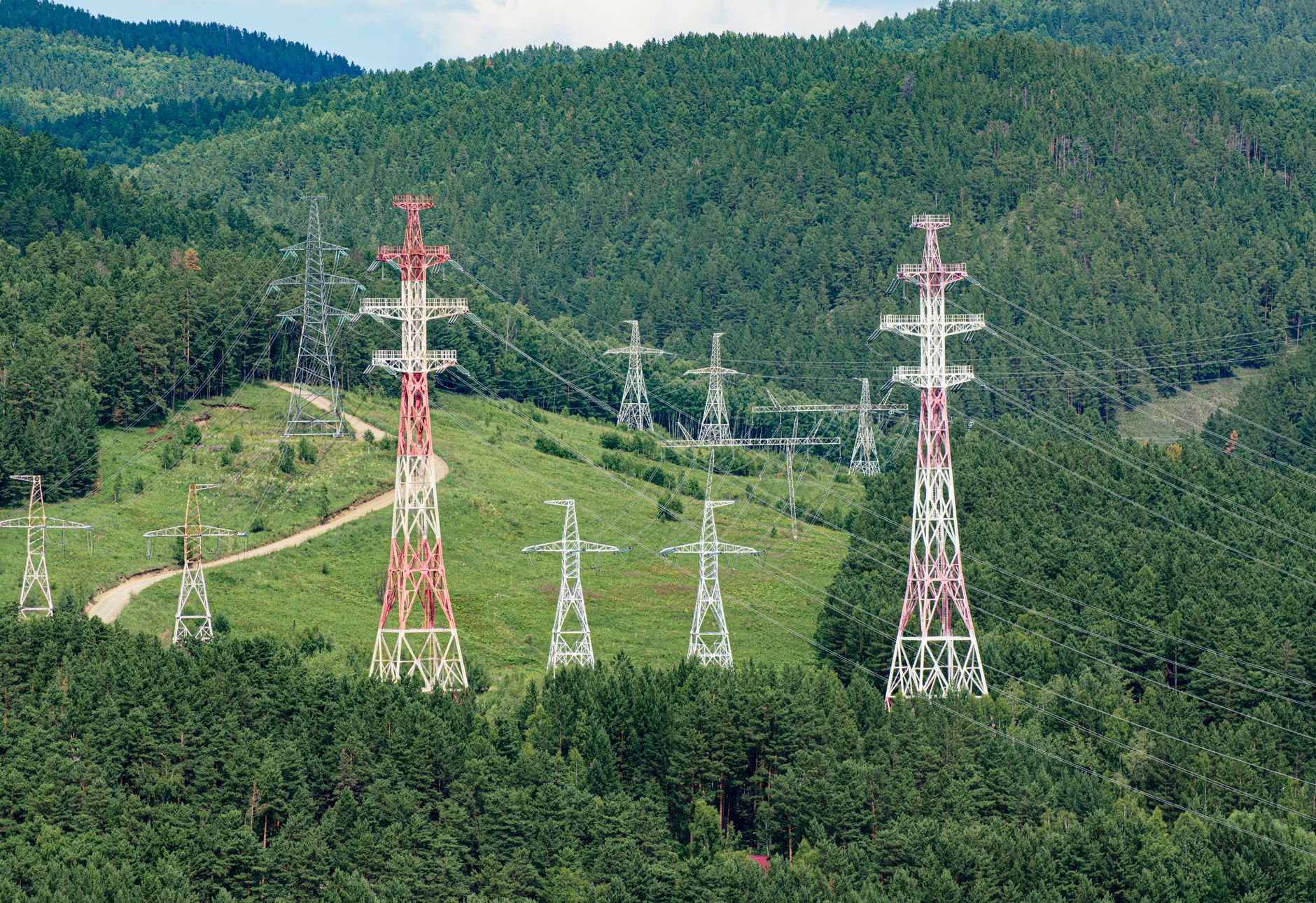
Path 15, California's most congested transmission corridor, has been a problem for so long that grid operators stopped calling it one. Instead they built workarounds: dynamic line rating software, emergency dispatch protocols, renewable curtailment on hot days. It worked for a while. Then data centers arrived, and the workarounds stopped working. This week, the California Independent System Operator finally said what every engineer knew: you need a new 500 kilovolt line. The Grid says fix it; it's going to cost billions and take a decade.
CAISO's draft 2025–2026 Transmission Plan, published this week, recommends 38 transmission upgrades totaling $7 billion over the next decade. That is not a small number — it is CAISO's most expensive annual transmission blueprint in recent memory, and it is a direct response to one forecast: California's electricity load will grow 15 gigawatts by 2035 and 20 gigawatts by 2040. For context, that is equivalent to adding the entire electricity demand of a state the size of Oregon. The installed generation capacity, not just transmission, needs to expand by 74 to 107 gigawatts across the same period. This is not incremental modernization. This is a wholesale expansion of the grid to meet a demand curve that was nearly flat for 15 years and is now climbing hard.
The Path 15 solution is the flagship project: a new Gates–Los Banos #3 500 kV line to break the chronic north-south bottleneck that has constrained renewable development in the Central Valley and forced California to curtail solar generation on high-output days. CAISO's analysis shows that without it, the grid cannot reliably move the 45 gigawatts of additional solar that developers want to build in the Westlands area, Tehachapi, San Bernardino, Riverside, southern Nevada, and western Arizona. The plan also calls for upgrades to the Greater Bay Area's Tesla–Trimble–Metcalf 230 kV corridor and a Trout Canyon–Lugo 500 kV line to access renewable development east of Pisgah. But Path 15 is the binding constraint. It is also not done yet: CAISO notes the recommended solution 'needs additional engineering refinement' and will circle back next year. Translation: the ISO has identified what needs to happen, but the final design work is still on the table.
What changed right now? Two things, both published within days of each other. The EIA's Annual Energy Outlook 2026, released April 8, formally quantified what everyone has whispered for two years: data center energy demand is going to be enormous. The EIA projects server energy use could reach 818 billion kilowatt-hours by 2050 in high-demand scenarios — more than 16 times 2020 levels. The agency assumes 'AI servers will increasingly skew more energy intensive' and the 'installed stock of AI servers grows exponentially through at least 2040.' This is not a guess; it is the federal energy model that utilities use to plan capital expenditure. CAISO built its 38-project portfolio directly on top of this data. The second driver: electricity demand across the United States has grown 2.1 percent per year over the past five years, ending a decade-and-a-half stretch of near-flat consumption. The U.S. generation fleet needs to expand by 50 to 90 percent by 2050. California, with its renewable generation, data center footprint, and electrification targets, is the leading edge of that surge. The CAISO plan is what happens when you collide an exponential demand forecast with a transmission network designed for a flat-demand world.
Who wins and who loses here is already becoming clear. Large incumbent utilities like PG&E and Southern California Edison gain deployment capital and cost-recovery opportunities. Renewable developers who hold land in the Central Valley and Tehachapi corridor gain unlocked transmission capacity — but only after 2035 at the earliest, which means project returns get pushed out by a decade. Independent transmission developers and merchant transmission companies face a window: if they can finance and permit a private 500 kV solution faster than CAISO's multi-year engineering cycle can move, they capture upside. Small utilities and ratepayers lose directly: residential electricity prices have already risen 37 percent since 2020, and transmission and distribution costs are a major driver of that increase. A $7 billion transmission buildout, spread across California's 40 million people, is not free. The beneficiaries are data centers, large manufacturers, and electric vehicle charging networks — the loads that drove the forecast upward. Everyone else pays for the grid to accommodate them.
Here is what is actually happening: California's grid is entering a permanent state of scarcity until 2035. Transmission is not keeping pace with generation, and generation is not keeping pace with demand. CAISO is now ratifying a capital deployment cycle that will run through the 2030s and probably beyond. The Path 15 decision is correct and overdue — the corridor cannot handle 45 GW of additional solar and another 20 GW of load growth without it. But the engineering timeline is measured in years, not quarters. That means data centers will continue to face interconnection queues and curtailment risk. It means solar developers will sit on land with no way to export power. It means residential ratepayers will keep seeing 5 to 8 percent annual price increases. The grid is not broken, but it is now openly acknowledged as undersized. That reckoning is more important than the $7 billion number itself. The money will be raised. The real question is whether it will be raised fast enough. Watch what happens when FERC finalizes its data center co-location rule by April 30 — if federal policy accelerates data center interconnection, CAISO's bottleneck will not loosen, it will tighten further.
Three concrete milestones will tell you whether this plan actually closes the gap. First: the April 15 CAISO Stakeholder Meeting. That is where renewable developers and utilities signal whether they will fight the Path 15 solution or embrace it, and whether the cost allocation holds. If incumbent utilities resist cost-sharing with out-of-state solar developers who benefit from the line, the engineering process gets messy. Second: the May 19 CAISO Board of Governors vote. Board approval is procedural, but watch who votes against it and why — dissent there signals rate base disputes that could ripple into state regulatory proceedings. Third: the FERC April 30 ANOPR deadline. If Secretary Wright's directive produces a rule that allows data centers to co-locate faster or bypass interconnection queues, it will immediately supersede CAISO's capacity planning. The grid operator is building on top of an EIA forecast; if federal policy pulls the demand curve higher, the $7 billion plan is already too small.