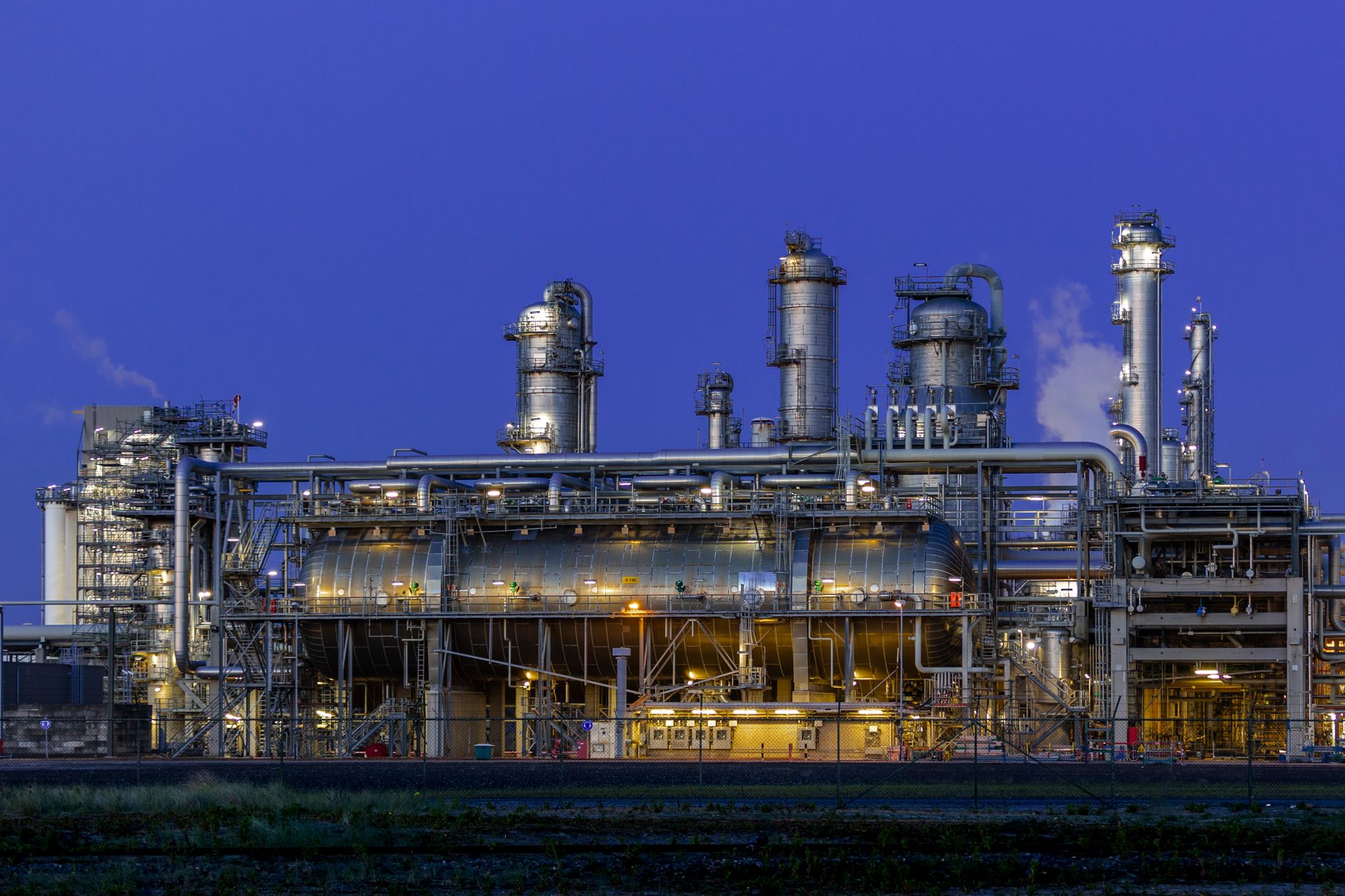
Electra Battery Materials just closed the funding for the only battery-grade cobalt refinery on the North American continent. On May 4, 2026, the company signed a definitive investment agreement with the Government of Canada for C$20 million in federal support, completing a $48 million tri-government capital stack (U.S. Department of Defense, Government of Canada, Invest Ontario) that brings the company's $99.4 million Temiskaming Shores facility to full funding. The refinery is already under active construction. This is not a press release about future intent. This is a binding legal agreement that unlocked the last piece of capital needed to move a critical infrastructure project from announced to operational.
The cobalt sulfate market looks like this: China controls more than 90% of global refining capacity. The United States has no battery-grade cobalt sulfate production. Canada had none. Europe has fractions of a percent. When a battery cell manufacturer (or an EV maker sourcing batteries from LG Energy Solution) needs cobalt sulfate, the processed chemical compound that goes directly into cathode material for lithium-ion cells, it has essentially one option: negotiate with Chinese refiners or buy from the small handful of Western refiners operating at marginal scale. That constraint shapes every Inflation Reduction Act (IRA) compliance decision an American EV manufacturer makes. It also shapes defense supply chain risk calculations. Electra's refinery erases this single-source dependency. At full capacity, it will produce 6,500 tonnes of cobalt sulfate per year, enough for roughly one million electric vehicles. That is not trivial in a market where North America is trying to scale battery production from near-zero to millions of units annually.
The deal mechanics are straightforward. The Canadian government's C$20 million contribution flows through Ottawa's Strategic Response Fund (which replaced the Strategic Innovation Fund) toward eligible construction and commissioning costs. The total $48 million non-dilutive stack breaks down as follows: U.S. Department of Defense committed $24 million in August 2024 (when the company still had significant funding gaps); the Government of Canada committed approximately $16 million in March 2025; Invest Ontario committed C$20 million in September 2025. The latest agreement closes the final capital requirement. The facility is a brownfield expansion (repurposing an existing industrial site), which cuts both construction risk and timeline. Mechanical completion is scheduled for Q2 2027, with ramp-up to full capacity over 12 months post-commissioning. The refinery targets $30 million in EBITDA at full capacity, not a typo, that is the annual operating profit margin on a $250 million project, which implies a lean, efficient operation once the commissioning volatility passes.
What made this funding close possible right now was not a sudden discovery of capital or a shift in government priorities. It was LG Energy Solution's offtake agreement, announced earlier in the project's evolution. LG Energy Solution, one of the world's largest battery cell manufacturers, committed to purchase battery-grade cobalt sulfate from Electra's refinery, covering up to 80% of output. This is the difference between a speculative mining venture and an industrial infrastructure project. An offtake agreement with a tier-one battery cell manufacturer means the refinery has pre-sold revenue. Government capital is willing to fund critical infrastructure when demand is already contractually locked. Feedstock is secured through existing supplier relationships with Glencore and Eurasian Resources Group (ERG), both established producers of raw cobalt ore. The chain runs from mine to refinery to battery cell manufacturer, all named parties, all contractually bound.
Electra wins outright: the company goes from a funded startup concept to an operational refinery with anchor customer demand and enough government capital to avoid equity dilution at commissioning. LG Energy Solution wins: it secures a FEOC-free (Foreign Entity of Concern-free) cobalt sulfate supply source that qualifies for IRA tax credits and U.S. government procurement preferences, de-risking its North American battery supply strategy. Any EV manufacturer locked into LG battery cell supply, which includes Hyundai, Genesis, Kia, and others, wins: they gain access to IRA-compliant cells produced with domestically refined critical minerals, which simplifies their own EV tax credit eligibility and regulatory compliance. The North American lithium-ion battery supply chain wins: it closes the last unambiguous processing bottleneck. The companies that do not win are Chinese cobalt sulfate refiners; they lose a customer (LG's Electra offtake volume) and face a competitor with government backing. Glencore and ERG win conditionally: they have a Western-controlled refinery endpoint for their ore sales, which diversifies their market and reduces Chinese refiner leverage on their pricing.
Here is what this actually means: North America's battery supply chain was broken at the cobalt sulfate refining step. Not broken in the sense of "supply is tight", broken in the sense of "there is no domestic option and Chinese refiners control the price and compliance specifications." A single refinery does not fix global supply concentration (China will still refine 90%+ of global cobalt sulfate), but it does fix North American strategic supply autonomy. For the U.S. Department of Defense, which co-funded this project, the calculus is straightforward: a potential adversary controls the processing step for a mineral that goes into every advanced military battery system. Building Western refining capacity is not theoretical national security policy; it is concrete risk mitigation. For IRA compliance, the existence of Electra's refinery means EV makers can now source cobalt sulfate through a FEOC-free supply chain without special approval or offshore processing risk. This shifts the economics of North American battery cell production from "we need to work around Chinese supply bottlenecks" to "we have domestic options." The refinery will not be a monopoly (LG's offtake covers 80% of capacity, leaving 20% available for other buyers, and other Western refiners exist, though at small scale). But it will be the first North American cobalt sulfate refinery with industrial-scale output, named anchor customer, and government backing. That changes the baseline expectation for what a North American battery supply chain looks like.
Watch three things: First, mechanical completion in Q2 2027. Industrial projects slip. This one has $48 million in government capital and a named customer (LG) expecting material delivery in 2027-2028. Delays become political problems and customer satisfaction problems simultaneously. If Electra hits Q2 2027 mechanical completion, the company moves from startup to operational refinery operator, and the risk profile inverts from execution to market cycles. Second, the ramp from initial production (5,120 tonnes in 2027) to full capacity (6,500 tonnes per year). This is a 12-month ramp post-commissioning, which is aggressive for cobalt processing. If the ramp lags, LG's supply reliability and the refinery's per-unit cost economics both suffer. If the ramp hits on schedule, Electra becomes a stable, profitable infrastructure asset. Third, whether any U.S. or Canadian battery cell manufacturers build new capacity using Electra cobalt sulfate as a compliance pathway. The refinery was funded partly by U.S. DoD strategic intent; the proof of concept is whether the U.S. battery industry actually uses it for IRA-compliant production scaling, or whether LG captures the supply advantage and Electra remains a single-customer operation.