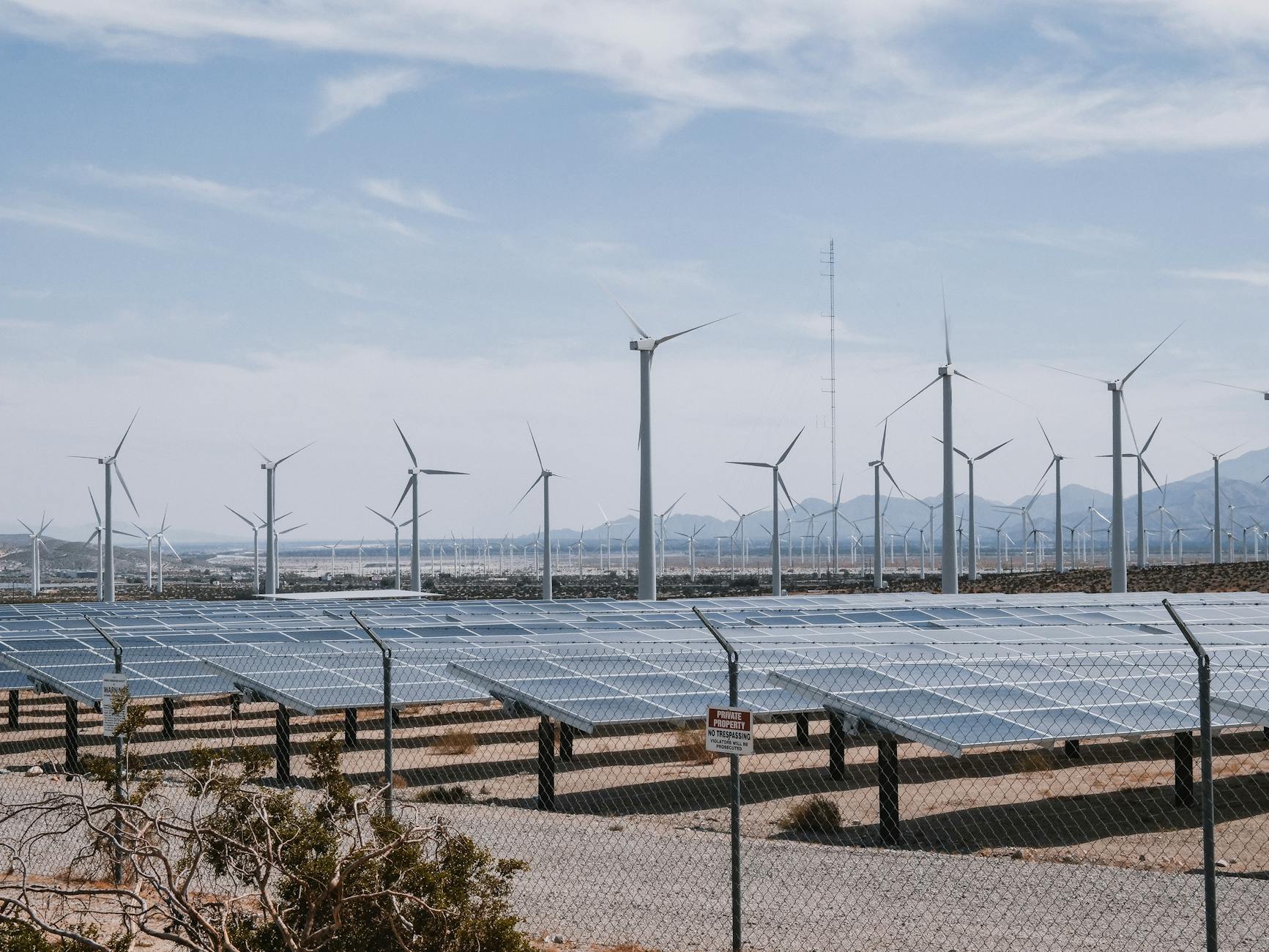
India's Central Electricity Regulatory Commission adopted a tariff of ₹3.19/kWh (~$0.034/kWh) for 1,200 MW of interstate transmission system-connected wind-solar hybrid projects procured by SJVN Limited on March 26, 2026, locking in a binding per-unit price across five awarded developers following one of the most competitive hybrid tenders the Commission has processed this cycle.
The decision matters because it plants a price stake in the ground for a technology category India is explicitly prioritising. Wind-solar hybrids smooth generation profiles across the day, reducing the curtailment that plagues single-technology portfolios and cutting the reliance on costly peaking capacity. The tariff adopted here — ₹3.19/kWh — sits 26.6% above the ₹2.52–₹2.53/kWh CERC recently cleared for SJVN's pure-solar projects, a spread that quantifies what the market currently demands to deliver firmer, blended output. A directly comparable data point: CERC separately adopted tariffs of ₹3.32/kWh and ₹3.33/kWh for SJVN's 1.2 GW of solar-plus-storage projects (600 MW/2,400 MWh of battery capacity), suggesting the market prices storage-backed solar at a modest premium over a wind-solar hybrid of equivalent rated capacity. That pricing ladder — pure solar, wind-solar hybrid, solar-plus-storage — is now visible in a single procurer's portfolio, which is unusually clean data for analysts trying to disaggregate the value of different firming approaches.
SJVN issued the original tender in June 2024 under guidelines from India's Ministry of New and Renewable Energy for the procurement of hybrid power on an intermediary-trading basis. Fifteen bidders entered the e-reverse auction and collectively quoted 3,700 MW of capacity — a 3.1x oversubscription ratio against the 1,200 MW on offer. Five developers emerged successful; SJVN issued letters of award in December 2024. The uniform clearing price of ₹3.19/kWh was the result of that competitive process, which an evaluation committee certified as transparent and consistent with the tender's requirements (the Commission's order cited the committee's finding directly, according to Mercom India's March 26, 2026, report on the CERC decision). SJVN is also permitted to charge a trading margin of ₹0.07/kWh (~$0.0007/kWh), subject to discoms providing adequate payment security mechanisms; if those mechanisms are not in place, the margin reverts to ₹0.02/kWh under applicable regulations — a detail that quietly shifts meaningful revenue risk onto counterparty creditworthiness.
No verbatim executive statements from the March 26 order were available in retrieved sources at the time of publication. The CERC order summary, as reported by Mercom India, states that the Commission observed SJVN followed a competitive and transparent process, and that SJVN itself argued tariff adoption was necessary to enable timely execution of power purchase and sale agreements. The Commission directed SJVN to complete those agreements with developers and with distribution companies, making the order conditional: if awarded capacity does not materialise into signed agreements, SJVN must notify the Commission.
For project developers bidding into SJVN-intermediated tenders, the ruling confirms that CERC is moving at a pace that supports the signing timeline — letters of award issued in December 2024, tariff adopted by March 2026, a roughly fifteen-month gap from award to regulatory clearance. For discoms, the ₹3.19/kWh rate plus the conditional trading margin defines their long-run offtake cost for a hybrid tranche, before transmission charges. For India's broader 500 GW non-fossil capacity target by 2030, which requires sustained annual additions above 50 GW, the speed at which CERC processes multi-gigawatt tariff petitions is itself a rate-limiter — and this ruling suggests the Commission is not the bottleneck in this cycle. IIASA modelling published in the 2025 update by Dafnomilis et al. projected that India, under current policies, faces only a shallow emissions decline by 2035, which means procurement decisions at this scale are not peripheral to the climate trajectory; they are central to whether the trajectory bends at all.
Three signals are worth tracking from here. First, PPA and PSA execution: CERC's order is conditional on SJVN completing binding agreements with the five developers and tying up offtake with discoms, likely within the next 60–90 days — any slippage notice to the Commission would indicate friction in the downstream contracting chain. Second, payment security compliance: whether discoms provide the escrow or letter-of-credit cover required to unlock SJVN's full ₹0.07/kWh trading margin will reveal the financial health of the offtake counterparties. Third, SJVN's forward pipeline: the company has been an active intermediary procurer across multiple CERC rounds in 2025 and 2026; additional tender issuances under MNRE guidelines could push another 1–2 GW of hybrid capacity into the queue before mid-2026, and the pricing on those rounds will test whether ₹3.19/kWh holds as a market anchor or softens as more supply enters.