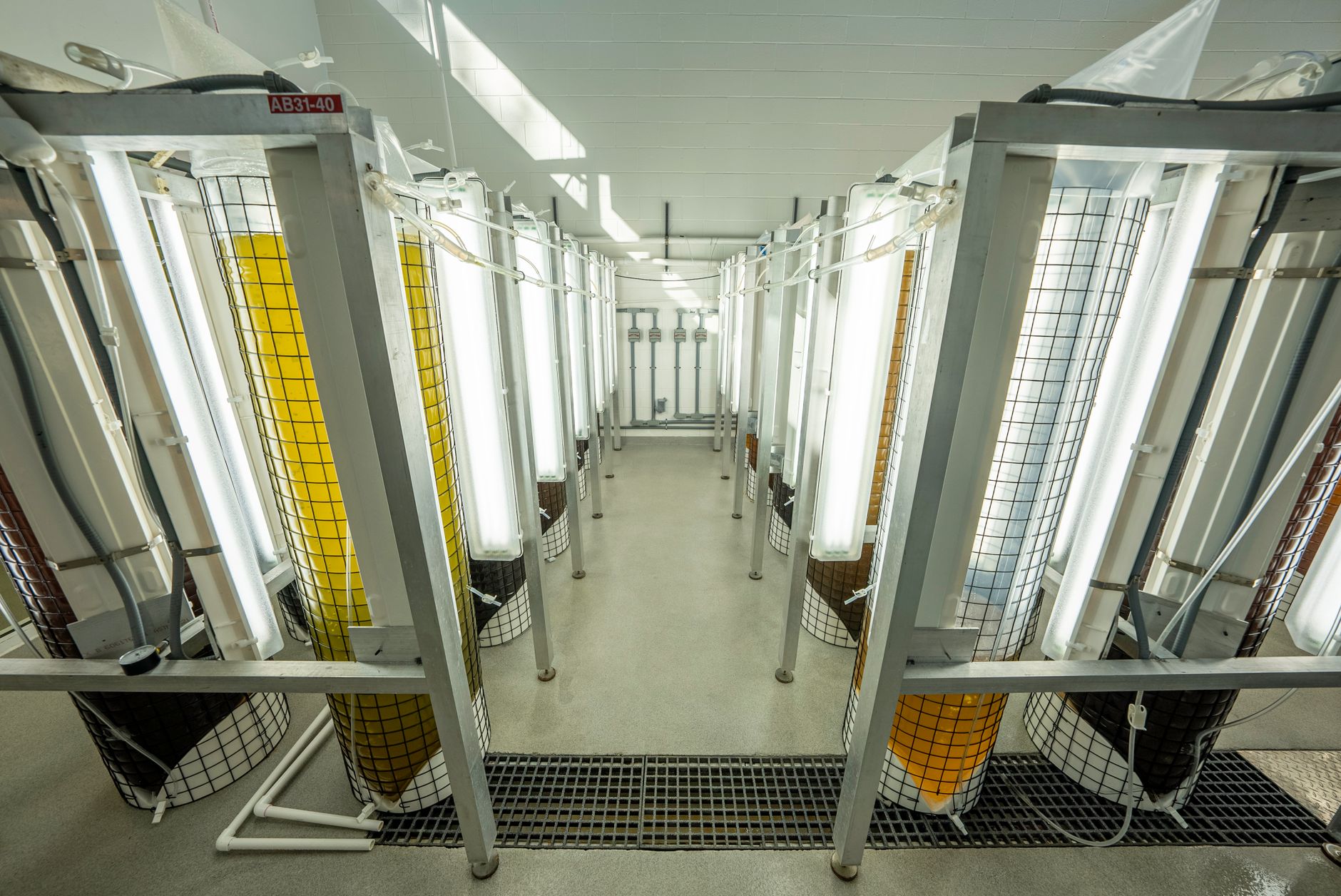
Running Tide collapsed in mid-2024 after months of operating a carbon removal operation that nobody actually wanted to buy from. The ocean-based startup had raised approximately $54 million to sink biomass—wood buoys seeded with kelp and coated in limestone—to the deep ocean floor, a technically sound carbon removal pathway that solved an engineering problem no one was paying to solve. David Helgason, co-founder of Transition Ventures, held a stake in the company and watched the failure unfold. This week, Helgason closed Transition's second fund at $150M and formally reframed the entire investment thesis away from carbon removal toward what he calls 'Physical AI', startups rebuilding real-world infrastructure through machine learning: semiconductor fabs, nuclear power plants, wildfire suppression systems, grid infrastructure. The fund size signals LPs are following him.
Transition now manages over $300M across two funds, writing $1M to $8M initial cheques into pre-seed and Series A startups across Europe and the US. The timing of the pivot is not coincidental. The voluntary carbon market, which generated enough demand to sustain a handful of carbon removal startups through 2023 and into 2024, has functionally dried up. According to CDR.fyi, Microsoft represented approximately 90% of all voluntary carbon removal purchases globally in 2025, a single buyer propping up the entire sector. Microsoft paused new CDR purchases in April 2026 after a general review of its portfolio and market conditions. That pause obliterated the market's primary demand signal. The Q1 2026 CDR.fyi report shows 2.3 million tonnes of carbon removal contracted for the entire quarter, representing a 560% year-over-year increase from Q1 2025, which sounds bullish until you realize Q1 2025 was so small the growth number is largely statistical noise from a higher baseline of zero.
What Helgason is signaling is not that climate is unimportant but that the capital allocation decision has inverted. The energy crisis created by AI data centers, semiconductor fabrication, and accelerating climate destruction (wildfire suppression alone is now consuming infrastructure budgets at scale) is immediate, measurable, and generating real procurement demand right now. Carbon removal, by contrast, requires a buyer to exist first, a buyer willing to pay $100 to $600 per tonne for a service that produces no revenue, solves no operational problem, and exists primarily as a corporate accounting exercise. Running Tide died because that buyer never materialized. Venture capital, even patient venture capital with a climate mandate, cannot sustain a sector built on speculative carbon credit prices and voluntary ESG spending.
The structural problem is not new, but the LP response is shifting. In 2024 and early 2025, tier-one climate-focused funds still deployed capital into carbon removal on the theory that corporate commitments and regulatory tailwinds would eventually create floor-level demand. That theory depended on Microsoft continuing to buy, on other tech giants following Microsoft's lead, and on carbon credit prices remaining stable enough to justify development spending. Microsoft stopped buying. Other corporates showed no appetite to replace the demand. Carbon credit prices compressed. Transition's exit from the sector, not a liquidation of existing positions, but a deliberate choice to deploy fresh capital elsewhere, signals that LPs have stopped believing in the theory. The firm's reframing toward Physical AI is not contrarian; it is a statement that the energy and infrastructure gap is now the binding constraint in the clean energy transition, not carbon removal.
The second-order consequence is triage. Carbon removal companies that depend primarily on voluntary market revenue or corporate ESG budget lines will face a capital crunch as firms similar to Transition reallocate. Companies with government procurement contracts or long-term offtake agreements with utilities will survive. Everything else competes for a shrinking pool of specialist CDR funds and patient impact capital. The market has not collapsed entirely, Q1 2026's 2.3 million tonnes is still 560% higher than Q1 2025, but the growth is concentrated in durable, contracted, non-voluntary demand. The voluntary market is now too small to sustain venture-scale economics. Watch for three markers over the next 18 months: whether other European or US climate funds announce similar pivots; whether carbon removal companies raise follow-on rounds at reduced valuations; and whether voluntary carbon credit prices stabilize above $50 per tonne or continue compressing toward $20–$30. If prices drift below $30, companies without contracted revenue cannot raise at all.