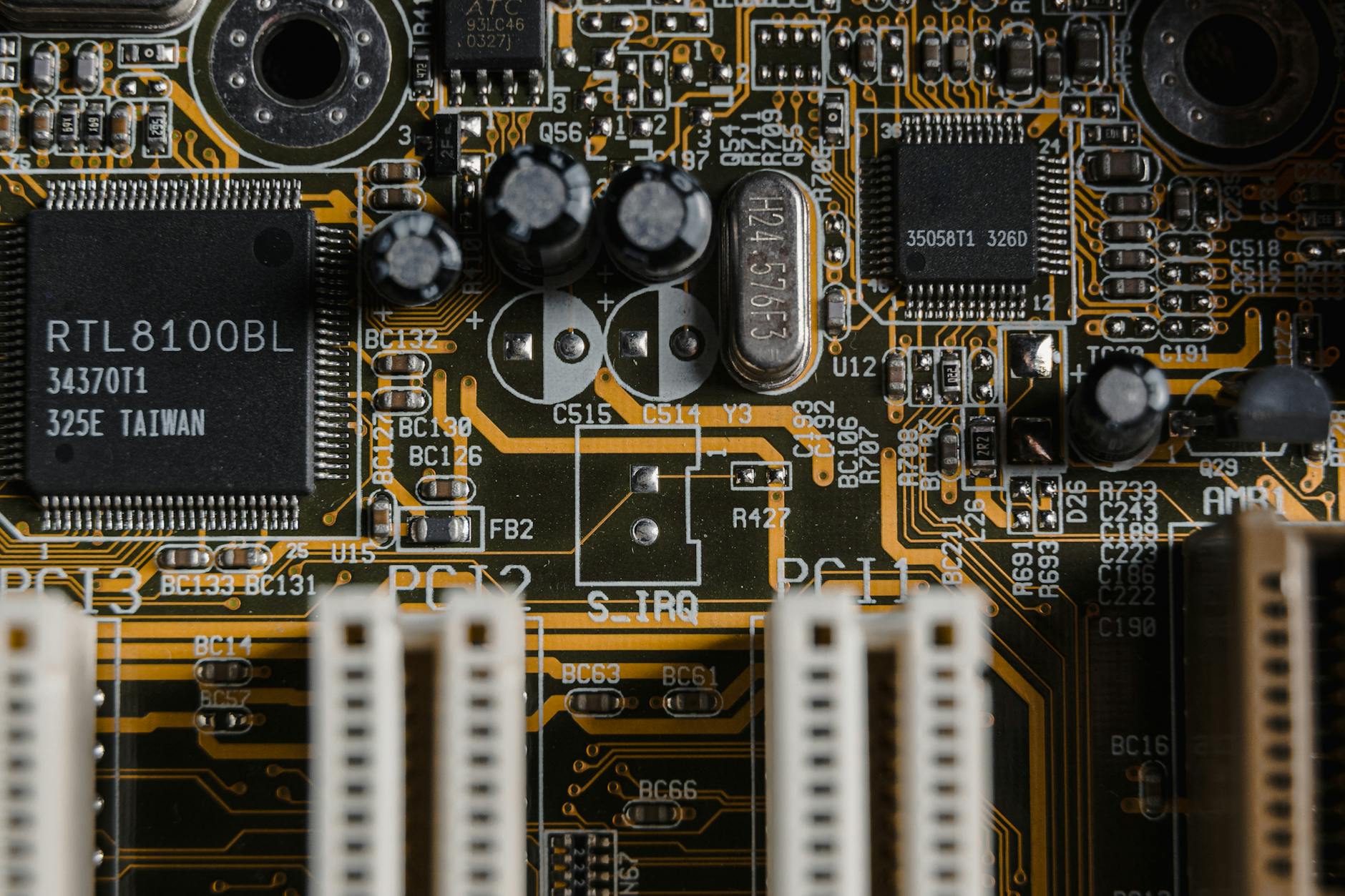
A Brazilian security researcher purchased what appeared to be a genuine Ledger Nano S Plus from a Chinese e-commerce platform at official retail price, with authentic packaging and product listings. It passed the eye test. Then he connected it to Ledger Live, the official software wallet manager, and the device failed the company's on-device authenticity verification. Physical disassembly revealed why: the hardware and firmware had been tampered with. The microcontroller—the chip that actually manages your keys—was manufactured by Shanghai-listed Espressif Systems, not the secure element that Ledger uses. The counterfeit also contained embedded WiFi and Bluetooth antennas absent from authentic devices, with chip markings scratched off to conceal the substitution. The disclosure came April 17, 2026, and it landed in a landscape already saturated by a concurrent $9.5 million theft operation targeting the exact same user base.
The fake-app attack that preceded this by three days is straightforward social engineering: scammers distributed a fraudulent Ledger Live application through Apple's App Store between April 7 and April 13, tricked users into entering their seed phrases during setup, then drained every asset in their wallets. Over 50 victims lost everything. Three of them lost more than $7 million combined. Philadelphia-based musician G. Love, of G. Love & Special Sauce, revealed on April 11 that he lost 5.9 BTC—over $420,000 in retirement savings—to the fake app. The attack was effective because it exploited the exact thing Ledger tells users to trust: an official-looking app downloaded from an official marketplace, with an official interface, running through an official-seeming setup flow. But seed phrase phishing, while devastating, is a social attack. You can theoretically defend against it by training yourself never to enter a seed phrase into any software, ever. The counterfeit hardware attack is different. It is a physical object that looks right, feels right, passes basic verification, and could exfiltrate your keys before you ever realize the device is compromised.
The scope of the counterfeit hardware disclosure remains narrow—a single confirmed device purchased from a Chinese e-commerce platform. But the architecture of the fake is telling. Embedding WiFi and Bluetooth into a counterfeit device suggests intent to exfiltrate keys wirelessly rather than requiring the victim to voluntarily expose the seed phrase. The Espressif microcontroller is a commodity chip, cheap to source in bulk from industrial suppliers. The fact that someone went to the trouble of disassembling a Ledger, reverse-engineering its form factor, substituting the secure element, adding wireless hardware, re-packaging it to match official aesthetics, and pricing it identically to the real product—all while getting it past e-commerce marketplace listings and visual inspection—indicates either a sophisticated manufacturing operation or, more likely, a coordinated effort working within an existing counterfeiting ecosystem. Ledger's 2020 customer data breach exposed the names, email addresses, phone numbers, and physical addresses of over one million users. That leak has been leveraged for years in follow-on phishing waves: fake firmware updates, cloned support websites, physical letters mailed to victims. By 2025, scammers had escalated to impersonating Ledger support through cloned domains and, now, through App Store listings. The hardware counterfeit is the logical next evolution. It bypasses the assumption that underpins the entire hardware wallet model: that you can visually verify and purchase the device from a trustworthy source.
What created the conditions for this disclosure, on exactly this day, was a convergence of two trends. First, the fake-app attack had just crested into public awareness. CoinDesk broke the story on April 14. Second, Fedimint v0.11.0 shipped on April 17—the same day as the counterfeit hardware disclosure—with a feature that lets non-technical users self-host a federation gateway using Iroh, an open-source networking tool that tunnels through NAT without requiring firewall configuration or DNS setup. The timing is not coincidental in the news cycle sense; it is structural. The two stories represent opposing poles of the self-custody landscape colliding on the same day. One path—hardware wallets—is being attacked from below, by counterfeit manufacturers exploiting supply-chain gaps. The other path—federated ecash—is maturing enough to be deployed by ordinary users, without requiring a physical device, without App Store gatekeeping, without the supply-chain surface area that a hardware manufacturer inherently carries.
Ledger is not going to be displaced by a counterfeit disclosure. The company has sold millions of devices over a decade. A single verified counterfeit, however sophisticated, does not invalidate the hardware wallet category. But it does expose something the industry has papered over: the assumption that self-custody means you can verify the supply chain. You cannot. Not visually, not at scale, not if the counterfeiter is targeting e-commerce platforms that operate at the margin between official retail and gray-market resellers. Ledger's own advice—download Ledger Live only from ledger.com, purchase hardware only from ledger.com or authorized retailers—is sound. But it assumes users will follow it. The musician who lost $420,000 probably assumed he was doing the right thing too. The gap between what the hardware is designed to prevent and what actually happens in the hands of a non-technical user is where attacks live. Phishing exploits that gap through social engineering. Counterfeits exploit it through supply-chain opacity. Together, they suggest that hardware-based self-custody is secure at the technical level but fragile at the operational level. Fedimint's maturation into a user-facing tool—with Umbrel and Start9 packages coming soon after the v0.11.0 release—offers an architectural alternative: custody that does not depend on owning a physical device, does not depend on trusting an app store, and does not depend on verifying a supply chain. That is not a coincidence. It is what the market is actually asking for.
The real story here is not that Ledger hardware can be counterfeited. It is that the self-custody stack is bifurcating. Hardware wallets were the dominant pattern for users fleeing custodial exchanges because they seemed simple and foolproof: own the device, own your keys, nobody else can touch them. That model is now carrying credible physical supply-chain attacks, operational vulnerabilities from software phishing, and regulatory pressure from app-store gatekeepers and law enforcement. At the same time, federated ecash tools are becoming accessible enough for non-technical users to run, which means custody is becoming a software problem again—but this time without the attack surface of a hardware manufacturer, without the centralization of an app store, and without the seed-phrase attack vector. That shift is going to accelerate. Ledger will not disappear. But the narrative that hardware wallets are the ultimate answer to self-custody just got a lot harder to sustain.
Watch three things over the next 30 days. First: KuCoin froze accounts involved in the fake-app theft only until April 20 unless law enforcement requests an extension. That deadline will reveal whether regulatory cooperation actually recovers stolen funds or whether the freeze is purely performative. Second: the scope of the counterfeit hardware investigation. The Brazilian researcher found one device. Ledger needs to disclose how many reports of counterfeit devices have arrived, from which platforms, over what time window. A handful of isolated incidents is a supply-chain hiccup. Hundreds of devices across major e-commerce platforms suggests a coordinated operation. Third: Fedimint's adoption curve over Q2 2026. Umbrel and Start9 package availability will determine whether non-technical users actually migrate from hardware wallets to self-hosted federations, or whether the operational burden still favors the device-in-hand model despite its new supply-chain vulnerabilities. The answer to that question will shape the entire self-custody landscape for the next two years.