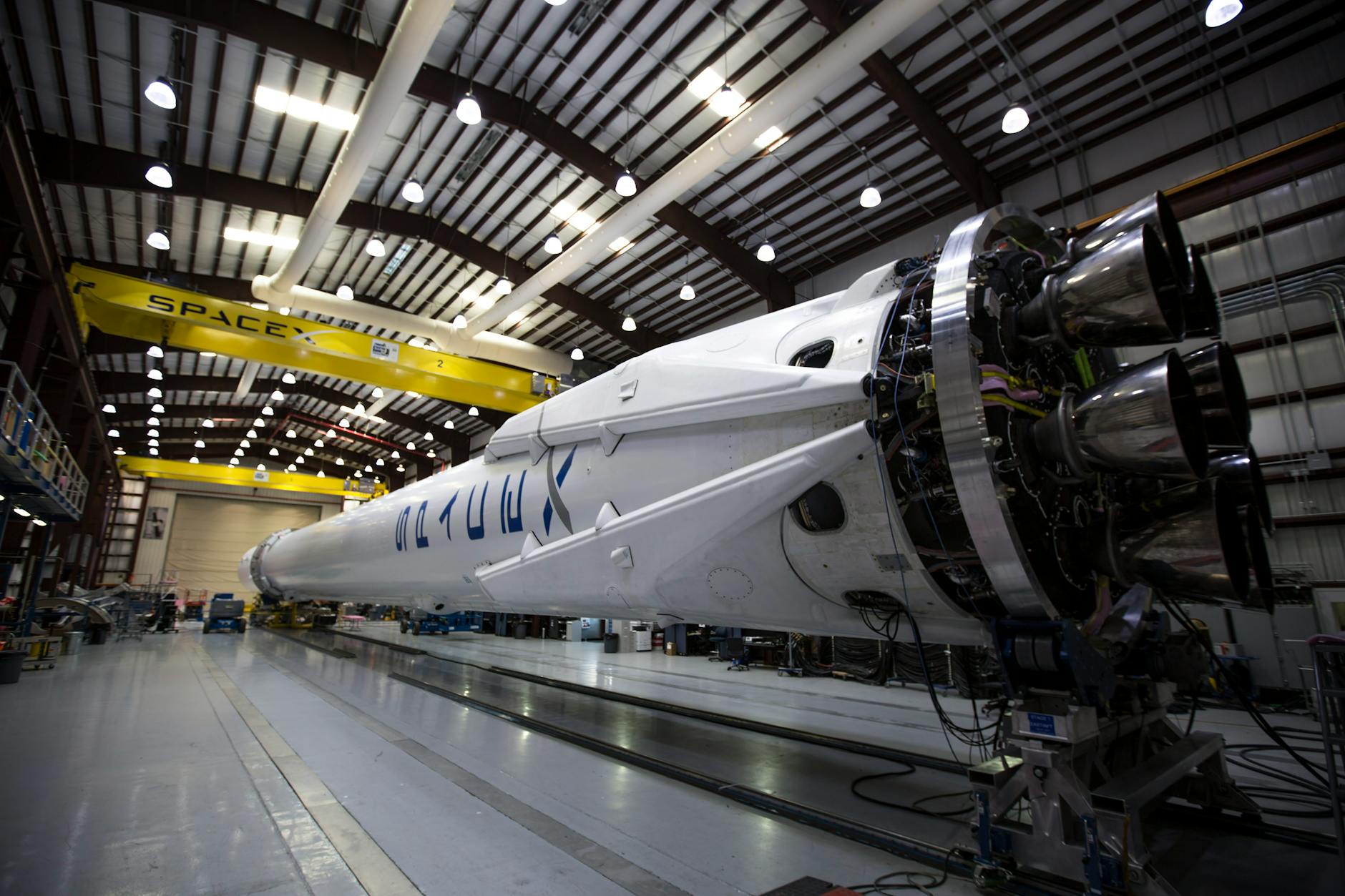
Baiju Bhatt, the founder of Cowboy Space, has a mustache. This fact would not matter if the company was another incremental small-sat launcher, but Cowboy just raised $275 million at a $2 billion post-money valuation to build its own rocket engine and launch vehicle, and Bhatt actually mentioned the mustache in his announcement, as if to signal that he knows how absurd this looks. The company is not yet five years old. It has no flight heritage. And it is committing to develop the most complex and expensive part of any rocket from scratch.
The move makes sense only if you understand that the medium-to-heavy lift market is now bifurcating into two distinct demand streams, and that neither SpaceX nor Blue Origin has moved fast enough to capture the newer one. SpaceX's Starship is still in test flight mode, the vehicle is expected to conduct its 12th test flight imminently, and commercial availability for external customers is years away, reserved first for Starlink's own constellation. Blue Origin's New Glenn, the company's answer to Starship, failed to deliver a payload to orbit during its third flight in April, when an upper-stage guidance error sent the vehicle into an unintended trajectory. Meanwhile, the space data center market, companies like Google's Suncatcher project that plan to operate compute infrastructure in low Earth orbit, has moved from vaporware to funded pilot stage, and those operators need launch capacity now, or at least credibly before 2030. Cowboy Space is betting that a purpose-built heavy-lift vehicle, designed specifically for the data center customer, can close that gap.
The funding is led by Index Ventures, an earlier backer, and includes participation from other existing investors. More significant than the capital figure is who Cowboy hired to spend it: the company has brought on Warren Lamont, a former Blue Origin propulsion engineer, and Tyler Grinnell, a former SpaceX launch director. This is not a team of aerospace outsiders. These are people who have built rockets before, who understand the regulatory and structural constraints, and who apparently believe that a fresh start, unburdened by legacy business units, manufacturing footprints, or internal satellite constellations, is worth the technical debt. Cowboy's first launch target is before the end of 2028, which is 32 months away. The company is still acquiring facilities for testing, manufacturing, and launch operations.
The Series B closes a specific gap in the venture capital funding landscape. Traditional launch vehicle startups have been constrained by the dominance of SpaceX and the multi-billion-dollar technical challenge of reaching orbital velocity. Cowboy is explicitly not chasing small-sat rideshare, a market where Rocket Lab and others have already entrenched. Instead, it is targeting the single highest-value payload class of the next five years: space compute infrastructure that requires 10 to 50 tons to LEO on a cadence measured in months, not years. Google's Suncatcher, currently in development with a planned deployment window of 2026-2027, has catalyzed serious capital into this segment. That capital is looking for launch options other than SpaceX internal pricing or Blue Origin's track record of late deliveries.
If Cowboy executes, it owns the space data center launch market for an entire decade, the window between when the first Earth-observation constellation moves compute to orbit and when Starship becomes commercially available at scale. The company would likely be acquisition-target material for either a satellite operator or a prime contractor within five years. If Cowboy slips by 18 months, a normal occurrence in rocket development, the market timing collapses. Starship will be operational by 2030 at latest, and SpaceX will price commercial Starship launches at a margin that a new entrant cannot compete on. Cowboy is thus one of the few launch startups where the business model is genuinely time-constrained by external technical factors, not just capital availability.
Watch three specific milestones over the next 18 months: first, whether Cowboy secures a vertically integrated manufacturing and test facility (announcement of a location would be a material credibility signal); second, whether the company publishes engine test data from its own powerpack (the vacuum-rated propulsion system is often the first technical gating item in rocket development); and third, whether Cowboy successfully closes a Series C before 2027 Q2. A $275 million Series B is sufficient to reach first-engine test, not first flight. A company that cannot raise again after demonstrating engine readiness will not make 2028. All three are observable, falsifiable milestones that will tell you whether Cowboy is executing or extending timelines in real time.