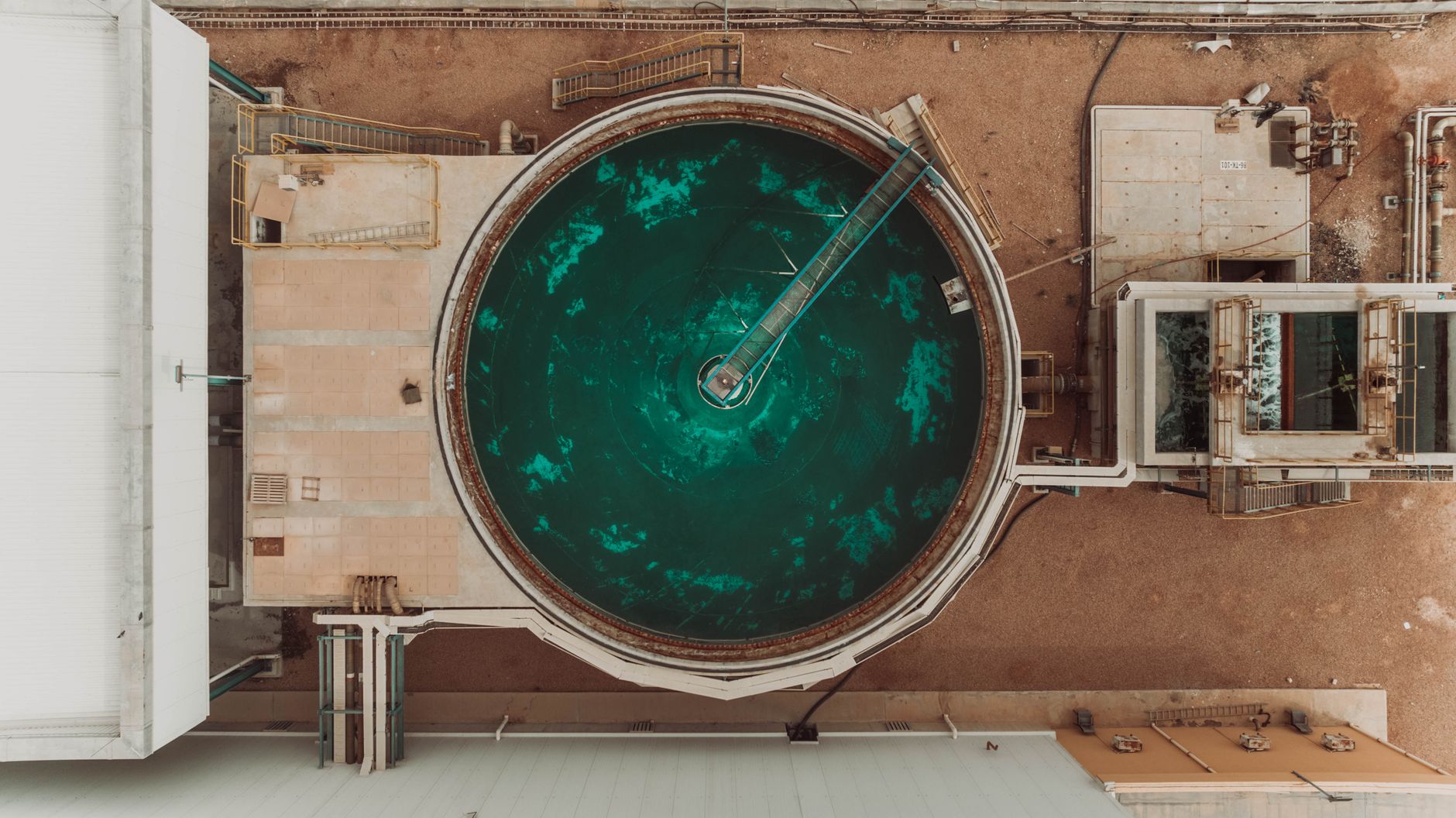
A utility in the United States is deferring $350 million in planned capital upgrades because a wastewater treatment company's alkaline mineral process is making its aging pipes work better. That is not a metaphor for what CREW Carbon is selling, it is the core of the business, and it explains why a $25 million Series A announced this week carries implications beyond the usual venture carbon-removal cycle. CREW closed the oversubscribed raise led by Burnt Island Ventures on May 14, with participation from AP Ventures, Sony Innovation Fund, and others, including $19 million in equity and $6 million in non-dilutive funding. The company optimizes pH and alkalinity in wastewater treatment systems using strategically sourced minerals like calcium carbonate, improving biological performance, reducing chemical spend, and increasing plant capacity, while locking away CO2 in a permanent, measurable form. Since commercial launch in 2024, CREW has deployed at nearly 10 wastewater facilities across the U.S. and Europe, including projects with the Hampton Roads Sanitation District.
The offtake pipeline validates the model faster than most carbon-removal plays see customers: CREW has secured over $33 million in carbon removal agreements and has already delivered verified credits to named buyers including JPMorgan, Google, Autodesk, Stripe, and others through the Frontier marketplace. That capital lockup, long-term contracts from Fortune 500 companies, is not incidental. It is the proof that corporate buyers are willing to pay for permanent CO2 removal that arrives embedded in operational infrastructure, not as a standalone service requiring new permitting or land. Andrew Hinkly, managing partner at AP Ventures, stated that CREW has "impressed us with its rapid progress, ability to deliver real carbon dioxide removal, and high-quality low-cost approach to CDR." The language signals something important: low-cost matters here in a way it does not yet for direct air capture, which still operates in a subsidy-dependent regime. CREW's cost structure works because it piggybacks on assets already in the ground.
The $350 million capex deferral from a single utility customer is the real read. If treatment plants can improve performance while reducing chemical usage and simultaneously earn carbon credits, the unit economics flip from "carbon removal is a cost center" to "carbon removal is a margin play." That inverts the adoption curve. Most carbon-removal ventures are hunting for customers willing to buy credits; CREW is selling utilities a problem-solving service and carbon credits are the bonus cash flow. One customer is already prepared to defer a quarter-billion dollars in infrastructure spending because the technology does the work at lower operating cost. The company has also won a $2.3 million award from the Colorado Energy Office under the state's Clean Air Program, signaling that state-level climate funding sees wastewater alkalinity treatment as a priority infrastructure intervention, not a niche carbon-removal experiment.
Who benefits here is clear: utilities facing tighter regulations, growing wastewater volumes, and aging infrastructure, which have pushed treatment costs up roughly 100 percent over two decades, get operational improvements first and carbon credits second. Who does not benefit immediately is the direct air capture industry, which has built its narrative around being the only permanent sequestration pathway. CREW operates in a different category, it is embedded CDR, infrastructure-based, not requiring specialized land or federal permitting. It also does not require the massive energy input that point-source capture needs. The implication is that venture capital is now funding carbon removal along a completely different axis: not "can we capture CO2 from air," but "where is CO2 already being handled in industrial systems, and can we improve that process while removing carbon?" Wastewater is one answer. Others, cement manufacturing, steel production, direct industrial exhaust, are obvious next moves for the same logic.
The watch signals are straightforward. First: utility adoption ramp. CREW has 10 deployments and $33M in offtake locked. By end of 2026, that should grow to 15-20 deployments; if it stalls below 12, the model has a go-to-market problem despite the capital. Second: measurement and verification acceptance. CREW has developed proprietary MRV (measurement, reporting, and verification) capabilities for carbon quantification. If corporate credit buyers like Frontier and JPMorgan's own portfolio start flagging CREW credits as lower-risk or lower-cost than direct air capture credits, the market has shifted. Third: the capex deferral follows through. If the utility that is considering deferring $350M actually defers it, other utilities will follow within 18 months. That is the inflection point.