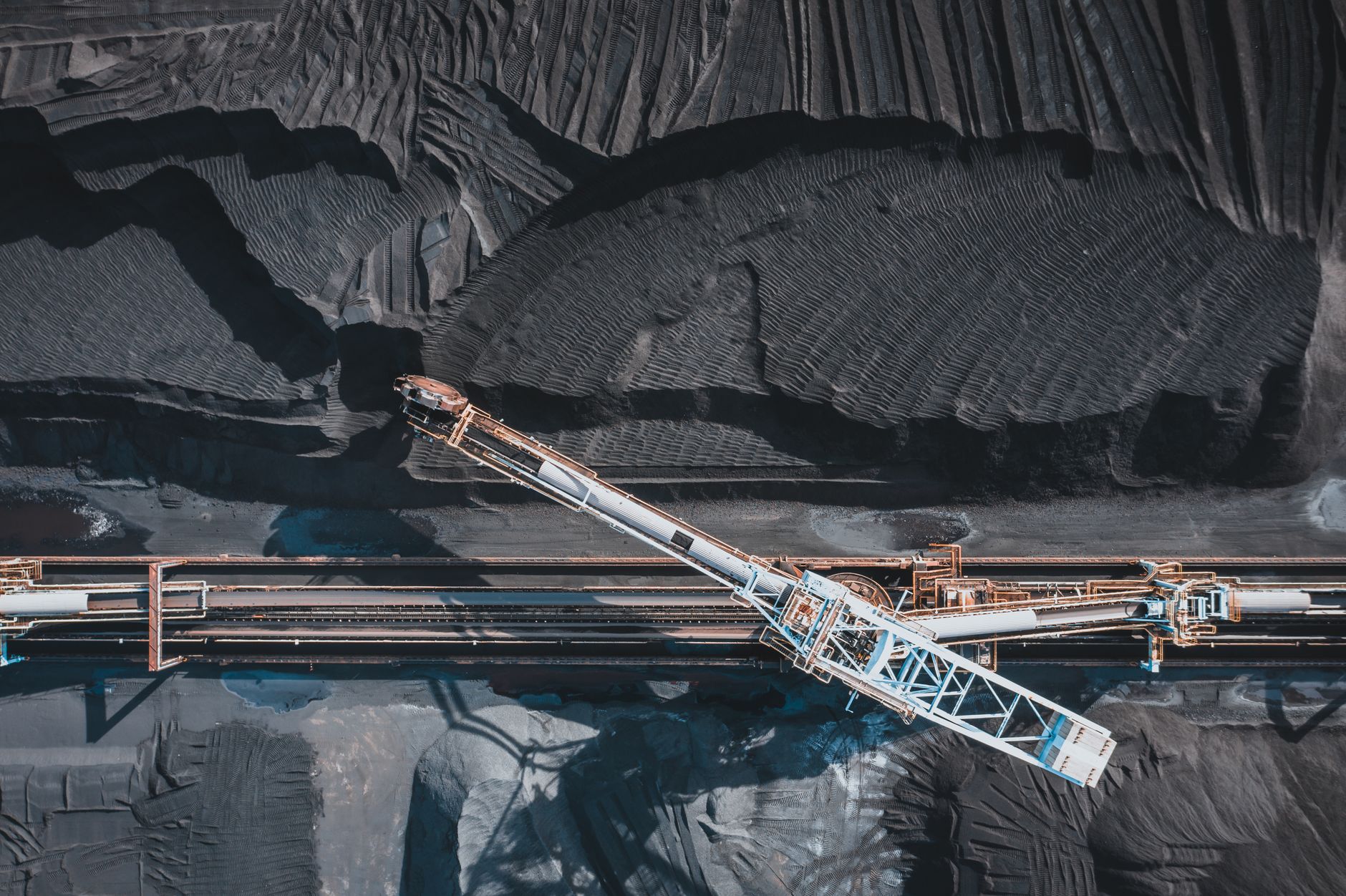
Peabody Energy's Powder River Basin mines in Wyoming have been sitting on billions of tons of coal. Underground, alongside the coal seams, lies another resource: rare earth elements. On July 1, the Department of Energy decided to find out whether turning coal waste into refined rare earths could work at scale. The announcement landed quietly, $75 million split across five projects in five states, each one tasked with extracting germanium, gallium, and rare earth oxides from coal byproducts and converting them into market-ready materials. Peabody got one award. Valor Metals got another. So did CONSOL Innovations, American Resources Corporation, and the University of North Dakota. The bet is explicit: domestic abundance can beat Chinese processing dominance if the U.S. moves first.
The $75 million is the first tranche of a $275 million initiative announced on November 14, 2025 as part of the broader critical minerals strategy. That larger program funds mining, processing, and manufacturing technologies across the full supply chain, but this particular slice targets a specific vulnerability. The U.S. mines some rare earth ore domestically, Mountain Pass in California produces mixed rare earth oxides, but sends most of it overseas for refining. China controls roughly 90 percent of global rare earth processing capacity. That is not a competitive disadvantage; it is a structural chokehold. By proving that coal waste can feed a domestic refining pathway, these five projects bypass the mining question entirely and attack the actual constraint: who owns the processing layer. NETL, the National Energy Technology Laboratory, will manage the pilots.
The five awardees are not startups experimenting with lab techniques. Valor Metals is commercializing electrochemical liquid-liquid extraction (e-LLE), a method that uses electric fields to separate rare earths from acidic solutions without the typical heavy chemical footprint. CONSOL Innovations is scaling a Pennsylvania pilot facility to extract rare earths directly from coal waste tailings, the accumulated sludge from decades of mining. Peabody is extracting critical materials from coal byproducts in its existing Powder River Basin operations, integrating the process into current infrastructure rather than building from scratch. American Resources is piloting commercial-scale production at its own coal-based feedstock sites. The University of North Dakota's project targets rare earth and critical materials recovery from coal and coal-based feedstocks in the upper Midwest. These are not theoretical plays. They are concrete facilities entering operational phase.
Here is where the strategy becomes interesting. Assistant Secretary Audrey Robertson stated that 'American industrial facilities have the potential to produce valuable critical materials from coal and coal byproducts' and that 'by investing in these facilities, we can increase domestic critical materials production and help mitigate the financial risk of commercial deployment.' That last phrase is the real story. Commercial deployment of rare earth refining is capital-intensive and margins are thin when competing against Chinese scale. By absorbing the financial risk of pilot construction, DOE removes the barrier that has kept private capital out of this layer of the supply chain. If any of these five projects proves technical viability and cost structure at scale, the playbook becomes obvious for the next round of investors: build refining capacity wherever coal waste exists and commodity prices support it.
The competitive implications are immediate and stark. China has no equivalent to this program. It has existing capacity and cost advantage, but it does not have coal waste streams at the scale that the U.S. Powder River Basin holds. Peabody and American Resources now have federal capital to prove that domestic extraction can work economically. If they succeed, the narrative flips from 'the U.S. needs Chinese processing' to 'the U.S. can supply its own rare earths without new mining.' That changes the terms of every critical minerals negotiation with allied nations and undermines the rationale for continued Chinese dominance. CONSOL and Valor control the technical pathway that makes this feasible. The University of North Dakota project serves as the neutral validation layer, academic proof that the model works before commercialization accelerates.
What to watch: First, pilot facility timelines. These are $75 million awards; full deployment and commercial production runs should begin within 18 to 24 months. Second, cost per kilogram of extracted rare earths. If these pilots demonstrate production cost parity or better than Chinese imports when including logistics, the second tranche of $275 million will flow into scaling, not more pilots. Third, whether any of these five projects achieves consistent yield of market-grade materials. Lab-scale recovery and industrial-scale consistency are different problems. If Valor's e-LLE or CONSOL's tailings extraction can produce germanium and gallium at 99%+ purity repeatedly, the feedstock model survives. If they cannot, coal waste returns to the waste pile and the strategy pivots back to mining. The DOE is betting it survives. Watch whether the companies prove it.