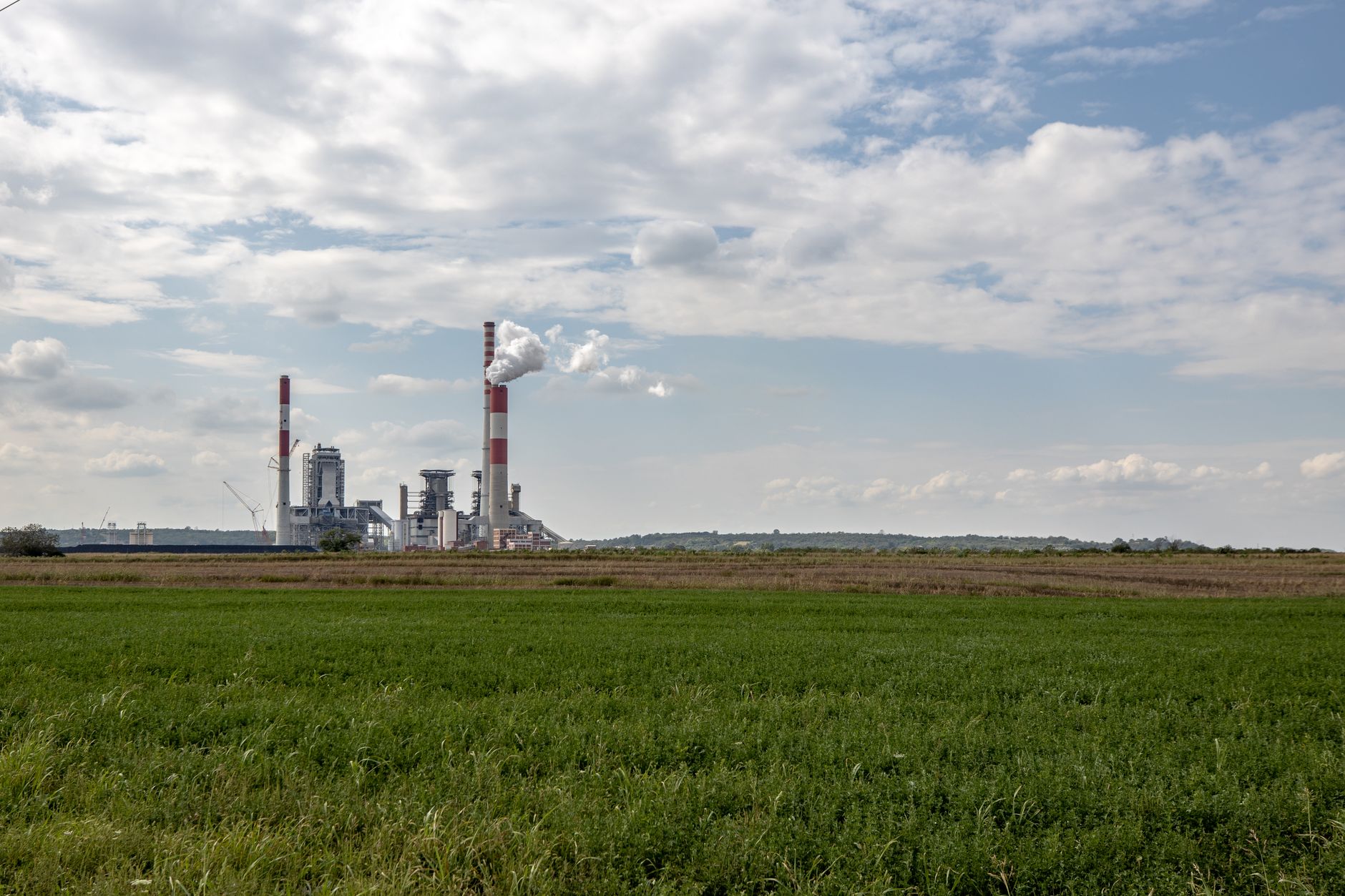
Occidental Petroleum's Stratos plant in West Texas is not starting up sometime in the distant future. It is starting up this quarter. That is not projection or aspiration, it is the timeline embedded in the Department of Energy's announcement, made just days ago, that it is restoring $1.2 billion in direct air capture funding split primarily between Stratos and Heirloom's Project Cypress in southwest Louisiana. For a sector that has spent two decades moving from laboratory curiosity to pilot projects to 'full commercial deployment next year,' the difference between theoretical and imminent is everything.
The restoration is a genuine turning point, but not for the reason most people think. DAC has not solved its cost problem. The sector has not cracked the thermodynamic barrier that keeps it expensive. What has actually changed is the credibility structure of carbon removal itself. The voluntary carbon market has spent the last three years collapsing under the weight of investigations proving that nature-based offsets, the forest-conservation and reforestation projects that were supposed to be the backbone of corporate climate commitments, deliver a fraction of the removals they claim. This credibility crisis has created a vacuum that DAC is uniquely positioned to fill. DAC credits trade at $400 to over $1,000 per tonne because they offer something the offset market has never managed: quantifiability, additionality, and permanence. Institutional buyers with serious climate commitments are increasingly willing to pay that premium. The DOE funding is a political signal confirming that bipartisan infrastructure law commitments survive the current administration. It is also a financial signal that the market for verified carbon removal has matured enough to support infrastructure-scale deployment.
Stratos itself is the proof point. The facility is located in West Texas, operated by 1PointFive (an Occidental subsidiary), and uses a liquid solvent system to capture CO₂ directly from ambient air. Its planned capacity is 500,000 tonnes per year. To understand what that means: as of early 2025, global operational CO₂ capture and storage capacity stood at roughly 50 million tons per annum across all industries. Stratos alone will represent a 1 percent increase to that global total. When combined with Heirloom's two Louisiana facilities targeting a combined 320,000 tons per year of removal, the two projects funded under this DOE tranche will add roughly 820,000 tonnes annually to global DAC capacity. That is an 873 percent surge from a single year of deployment. The announcement does not name an exact go-live date, just 'this quarter', and SEC filings from Occidental will be the actual market signal when commissioning begins. But the fact that DOE is willing to publicly anchor the timeline means construction milestones have been met and equipment is installed. Stratos is real.
The pathway to this moment runs through policy, not innovation. The 2021 Infrastructure Investment and Jobs Act allocated $3.5 billion to establish four large-scale DAC hubs, each targeting at least 1 million tonnes per year of CO₂ removal. In August 2023, the DOE selected both the South Texas DAC Hub (led by 1PointFive, the entity building Stratos) and Project Cypress (led by Climeworks and Heirloom) as recipients of initial funding. That announcement came with a $1.2 billion initial disbursement. Then came uncertainty. The incoming administration signaled skepticism toward climate spending. DAC faced questions about whether the full funding would materialize. The announcement three days ago settles that question: the federal government is restoring the full amount. No cuts. No delays. Heirloom and 1PointFive both get to proceed at full speed. The 45Q tax credit, which offers $180 per tonne for DAC with geological storage (and is inflation-adjusted thereafter), remains the financial backbone of the economics. Its transferability, the ability to sell credits to third parties, is critical for project financing, particularly for operators without sufficient tax liability to use the credits directly. That mechanism was preserved in the One Big Beautiful Bill Act signed into law in July 2025. The combination of a $1.2 billion federal grant, a $180/tonne tax credit, and access to a voluntary carbon market willing to pay $400-$1,000 per tonne for verified removal creates a three-layer financial structure that DAC projects have never had before.
Who wins from this? 1PointFive and Occidental, directly. Stratos will remove 500,000 tonnes per year at a cost that, while still elevated relative to conventional carbon capture from point sources, is now economically viable with federal and market support. Heirloom wins if Project Cypress reaches its 320,000-tonne target. The voluntary carbon market wins because it finally has a supply of credits with the permanence and additionality that institutional buyers have been demanding. Large corporations with net-zero commitments win because they can now purchase verified removal rather than bet on nature-based offsets that may or may not deliver. Who doesn't win? Companies betting on cheaper DAC technology breakthroughs. If Stratos reaches 500,000 tonnes at current cost structures, the incentive to chase sub-$100/tonne removal drops dramatically. The innovation path flattens. The winners are the players who can execute at current economics and at scale, not the ones waiting for a 10x cost improvement that may never come. Smaller DAC operators without access to federal funding or voluntary market buyers at premium prices face margin compression, the 45Q credit at $180 per tonne is generous, but it is not enough to support every DAC startup's business model if they are competing against Stratos's infrastructure scale and 1PointFive's cost curve.
Here is what is actually happening: the sector is not solving DAC's fundamental cost problem. It is making peace with the cost and building the infrastructure and financial mechanisms to operate at that cost permanently. Stratos commissioning this quarter is a signal that this is the new normal. DAC is no longer waiting for a breakthrough. It is moving into production. The question now is not whether DAC works, it does. The question is how fast it scales and whether the voluntary carbon market can sustain premium pricing for 500,000-tonne facilities entering operation every few years. If Stratos hits its capacity target and if the credits it generates sell at $400+ per tonne into corporate portfolios, the entire sector's unit economics change. Cheaper DAC still matters for some applications, but it becomes secondary to the question of deployment speed. The DOE is betting that the market and the infrastructure are ready for that transition. The bet is being made in real time, this quarter, in West Texas.
Watch Occidental's SEC filings for the exact commissioning date of Stratos, that is the go-live signal that everything moves from announcement to operational reality. Watch Heirloom for a groundbreaking announcement on Project Cypress construction; the restored funding means Cypress now has full federal backing and should accelerate rapidly. Watch the IRS and Treasury for early transferability transaction data on 45Q credits claimed in FY2025; the volume of third-party credit sales will be the first hard market signal for DAC project economics at scale. If transaction volumes are high and prices hold above $300 per tonne, the infrastructure wave has begun. If volumes are thin and prices collapse, the premium market for DAC is smaller than the sector believes and Stratos will be an expensive island rather than the beginning of a fleet.