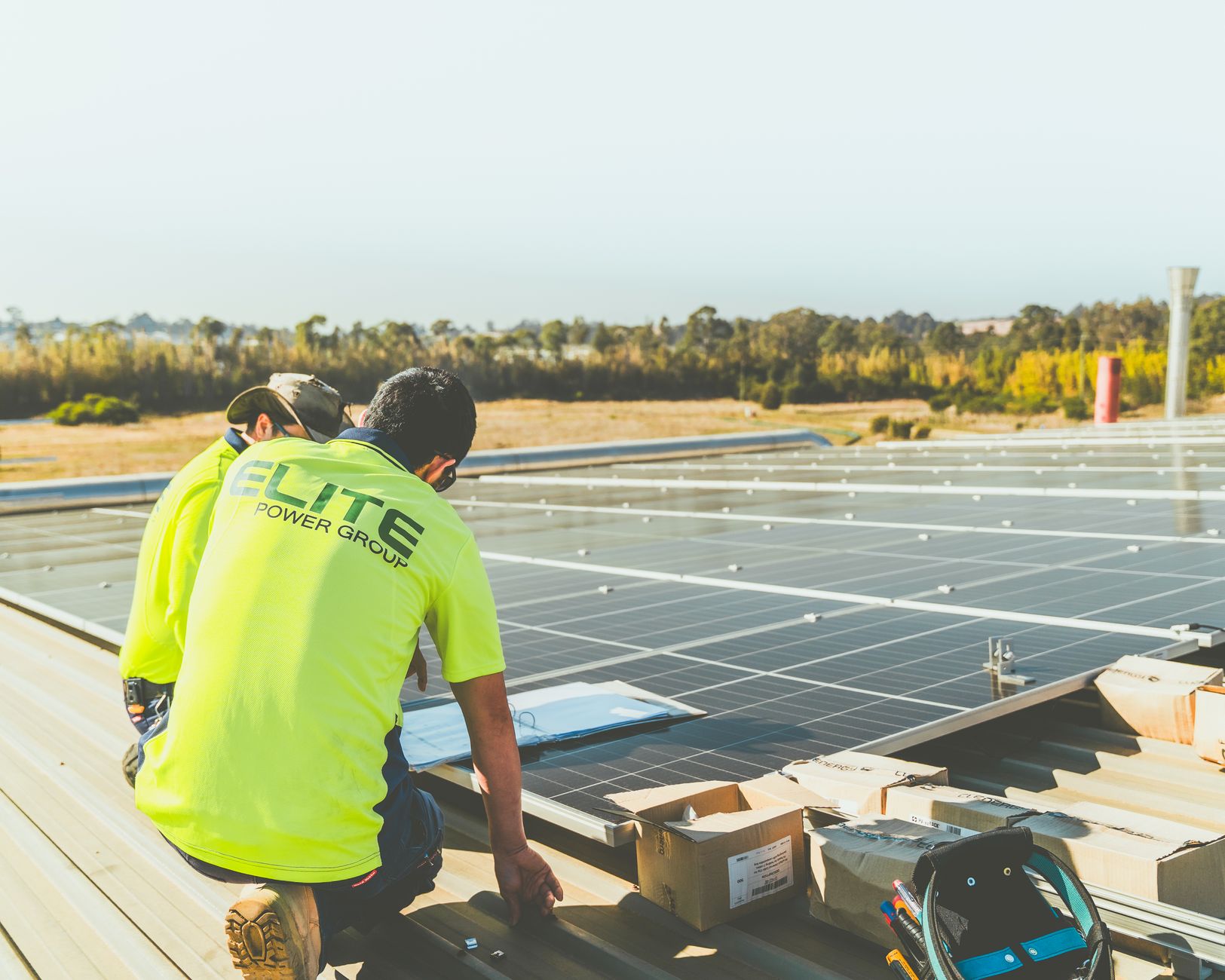
A consortium of 14 lenders signed off on approximately AUD $1.1 billion in financing for Edify Energy's Smoky Creek and Guthrie's Gap projects in Queensland's Banana Shire on May 20, closing what Edify describes as the first greenfield renewable energy portfolio financing structure of its kind in Australia. The two neighboring sites will deliver 720 MWp of solar capacity and 600 MW of battery storage totaling 2.4 GWh, the largest solar-plus-storage hybrid currently under construction in the country. More importantly, this is not a speculative merchant asset or a government-incentivized project chasing a subsidy. Rio Tinto, the global mining company, has committed to a 20-year hybrid services agreement under which it will acquire 90% of the electricity and storage capability to power its Gladstone aluminum operations. That contract is what made the financing possible.
The deal closes the first major milestone for Edify Energy since Canadian pension fund La Caisse acquired the developer for USD $780 million (AUD $1.1 billion) in September 2025. La Caisse's equity commitment, combined with the 14-lender debt facility, has now proven sufficiently bankable that project finance can move forward without waiting for further subsidy architecture or grid payment mechanisms. The lenders, a mix of domestic Australian banks and international institutions, are comfortable with the risk profile of a 20-year offtake from a AA-rated counterparty backed by a battery system that will operate under a grid-forming inverter design. This is the inflection point: industrial offtake has become the credit story, not grid services revenue or avoided subsidy cost. Rio Tinto needs dispatchable low-carbon power; Edify can supply it at a locked price. The financing machinery recognizes that bargain without hedging bets on future regulatory frameworks.
The technical structure matters for replication. Both projects employ DC-coupled hybrid setups, meaning the solar panels feed directly to the battery storage via DC/DC converters before the combined output inverts to AC and flows to the grid. Grid-forming inverters (not grid-following) will manage voltage and frequency, which reduces dependence on synchronous generation or fast-frequency response services from the broader grid. This design is intended to improve network stability as coal-fired plants retire, but it is untested at 600 MW scale in continuous operational load. Malaysia-based Gamuda won construction contracts exceeding RM3 billion (USD $754 million) to build both sites. Delivery is targeted for 2028. The projects will connect to Powerlink's 275 kV network through a new terminal station. At peak construction, the work will support up to 800 jobs in the Shire.
What this structure proves is that portfolio financing for renewable energy assets can now scale beyond single-project bonds or government-backed infrastructure vehicles. La Caisse is not a one-off pension investor hedging energy transition bets; it is a capital holder willing to underwrite multiple assets under a single financing envelope and absorb development risk at scale. The 14-lender structure absorbs that risk across domestic and international institutions, which means no single bank is carrying the full load. That diversification is what allows the deal to price. For the broader market, the implication is that the economics of solar-plus-battery hybrids no longer rest on subsidies or merchant power sales. They rest on industrial offtake certainty, and that certainty now commands institutional capital.
The real tell: Rio Tinto is not buying this power out of ESG compliance. It is buying it because the levelized cost of electricity from Smoky Creek and Guthrie's Gap, locked for 20 years, is cheaper than burning gas or coal at Gladstone. That is the sentence that makes the financing work. When major industrial counterparties can undercut their own fuel costs with renewable offtake, battery storage becomes economically straightforward, not speculative. Watch whether the grid-forming inverter design performs as expected under sustained load in 2028 and 2029, if it does, the design replicates to the next 20 projects. Watch whether La Caisse commits the same capital to Edify's second portfolio tranche (another 900 MW / 3.6 GWh across Rio Tinto and Commonwealth offtake agreements) before the first sites begin delivering. Watch whether other mining, manufacturing, or hyperscaler operators move to replicate Rio Tinto's offtake structure rather than relying on merchant exposure or power purchase agreements tied to grid service pricing. That is where the market goes from here.