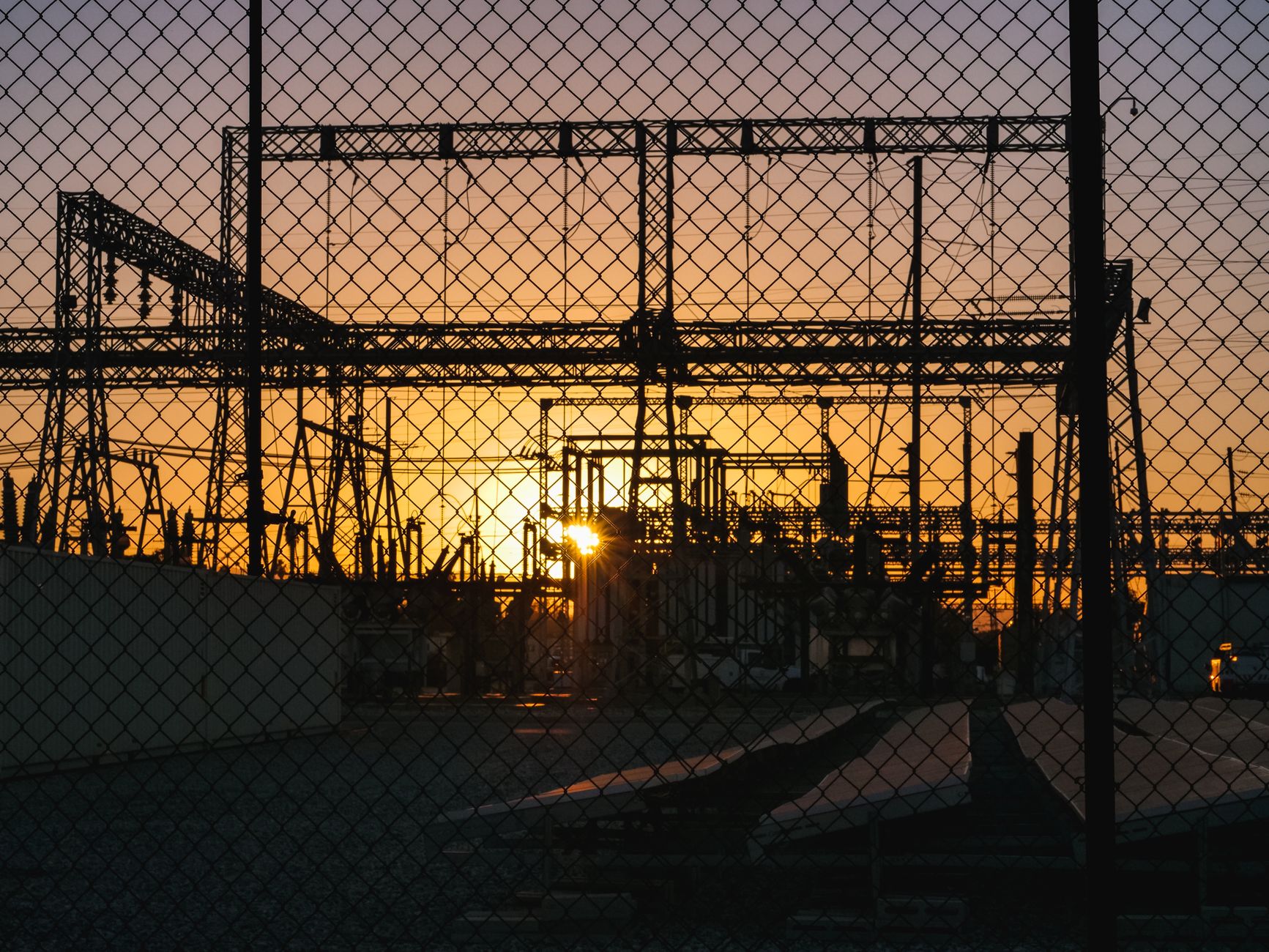
The U.S. Energy Information Administration released its February 2026 capacity projection in measured bureaucratic language: developers plan to add 86 GW of utility-scale electric generating capacity to the U.S. power grid in 2026. That figure does not look like much until you place it against the baseline. In 2025, the U.S. added 53 GW—itself a record since 2002. The 2026 figure is a 62% year-over-year increase in a single category. More pointedly: 24 GW of the 86 GW is utility-scale battery storage, a 60% jump from the 15 GW added in 2025. The March 10, 2026 Short-Term Energy Outlook confirmed these figures and added the driver: electricity generation is expected to grow 1.2% in 2026 and 3.1% in 2027, led explicitly by ERCOT demand surge. The April 7 STEO will be the first official update to these projections and will carry the weight of real load data against the Iran conflict backdrop.
The grid capacity market is now driven by three vectors: data center load concentration in three states (Texas, Arizona, California), the collapse of battery equipment costs (down 40% in 2024 alone, according to Ember), and a capital environment so favorable that the Department of Energy has effectively underwritten the entire buildout. The DOE's $26.54 billion loan to Southern Company—closed February 25, 2026, the largest single loan commitment in agency history—is financing roughly 5 GW of natural gas generation, about 6 GW of nuclear uprates and license renewals, and grid enhancement projects across the Southeast. Separately, the DOE announced a $1.9 billion SPARK transmission funding opportunity on March 12, 2026, with grid operators eligible for up to $427 million for resilience, states for up to $862 million in grid innovation. This is not a market signal. This is capital flooding infrastructure at the policy level. The effect is that any utility operator without immediate access to this capital—the regional players, the non-Southern utilities—is already being priced out of the game by operators who can borrow at DOE rates.
The granular facts reveal the true constraint. Of 24 GW of planned battery storage, 12.9 GW—or 53%—is concentrated in Texas alone. Another 3.4 GW is planned for California, and 3.2 GW for Arizona. These three states account for 80% of U.S. battery storage buildout in 2026. The largest single project announced is Tehuacana Creek 1 Solar and BESS in Texas: 837 MW of solar and 418 MW of battery storage, totaling 1.26 GW of capacity in a single project in a single state. Meanwhile, cumulative U.S. utility-scale battery storage capacity has grown from 17 GW in Q1 2024 to a projected 65 GW by the end of 2026. This is not linear growth. This is exponential ramp. The EIA notes that more than 40 GW has been added over the last five years; 24 GW of that is being added in one year. Battery storage has moved from complementary infrastructure to primary grid asset in thirty-six months. The economic implication is stark: in ERCOT, battery dispatch pricing now sets the marginal electricity price 30% of peak hours. That number will increase as battery penetration deepens.
What made 2026 the inflection year? Three mechanisms converged. First, the data center build-out became real—not projected, not planned, but funded and under construction. Google and Xcel Energy announced a landmark deal in early 2026 for a 300 MW / 30 GWh battery using Form Energy's iron-air chemistry, supporting a data center in Minnesota powered by 1.6 GW of renewable energy. Form Energy's CEO stated the company expects to ship the first modules by end of 2028 and pursue projects of similar scale as its West Virginia factory ramps up. This is not hype; it is committed capital with a nameplate customer and a timeline. Second, battery equipment costs fell 40% in 2024, according to Ember's December 2025 research, and continued falling through 2025. Utility-scale battery storage cost has reached $65 per MWh for discharge, making 4-hour batteries cost-competitive with gas peaking plants at current natural gas prices. Third, and most important: the DOE changed the funding architecture. The Southern Company loan and SPARK program are not grants. They are permanent-rate financing at below-market cost of capital. This means any operator who can clear DOE underwriting criteria can build at a 3–5% cost-of-capital advantage over a private competitor. For utilities with existing relationships to DOE offices—Southern Company, NREL partnerships, state-level political alignment—this is a ten-year moat. For everyone else, it is a pricing squeeze.
The winners are clear: Southern Company, which is now the federally capitalized platform for Southeastern grid modernization; Xcel Energy, which secured early partnership on long-duration storage before the market priced it at scale; and battery OEMs with firm customer contracts—Form Energy, Eos Energy, LPG-based systems. The losers are equally clear: utilities without DOE pipeline relationships, which will be forced to finance buildout at private markets rates (7–9% cost of capital); independent generators in states where transmission is not being upgraded (the upstate New York corridor, parts of New England); and any coal-fired base load operator not part of a state's grid modernization roadmap. In 2026 alone, the EIA projects coal generation will decline 7% as renewable capacity increases and the sector retires 4% of coal-fired generating capacity. Those assets will not age out. They will be stranded by economics, not by timeline. The national average residential electricity rate is projected at 18 cents per kilowatt-hour in 2026, up 37% from 2020. This is not congestion pricing. This is base-load repricing driven by retirement of capital-inexpensive coal generation and replacement by higher-cost renewable and storage infrastructure.
Our read: 2026 is the year the grid became a capital-intensive, geographically concentrated, technology-mediated system that cannot be built by incremental private investment. The 86 GW projection is real; the 24 GW battery storage number is not optimistic, it is conservative given current contract pipeline visibility. The constraint is no longer technology or cost. It is transmission capacity into the load centers—Texas, Arizona, California, and the Upper Midwest data center corridor. The DOE's SPARK program is correctly targeted at transmission bottlenecks, but $1.9 billion is insufficient to deliver the 5,000+ miles of new or reconductored transmission needed to move 86 GW annually from generation sites to load. This means: one, developers will be forced to site battery storage closer to load (increasing costs, reducing siting flexibility); two, ERCOT will remain the highest-margin dispatch market through 2027, making it the highest-risk market for demand destruction if data center load falls; and three, the federal government has now become the marginal capital provider for grid infrastructure, which means regulatory capture at the utility level has been replaced by capital allocation capture at the DOE level. That is a cleaner system in theory. In practice, it means utilities without Federal support are being slowly defunded.
Watch for: (1) The April 7 STEO release—will it revise 2026 battery storage upward or downward, and will it adjust load growth assumptions based on Iran conflict energy impacts? (2) ERCOT actual reserve margin in May-June 2026; if it falls below 20%, developers will accelerate battery deployment schedules, and you will see forward curves repriced within days. (3) Form Energy's manufacturing progress announcements; if the West Virginia factory ramp is delayed past Q4 2026, the Xcel/Google project timeline extends, and long-duration storage becomes a 2027–2028 story, not 2026. (4) Southern Company quarterly earnings calls—specifically, any commentary on DOE loan deployment rate and cost-of-capital savings passed to Georgia Power and Alabama Power customers; this is the test case for whether federal capital actually reduces end-user rates or simply improves utility margins.