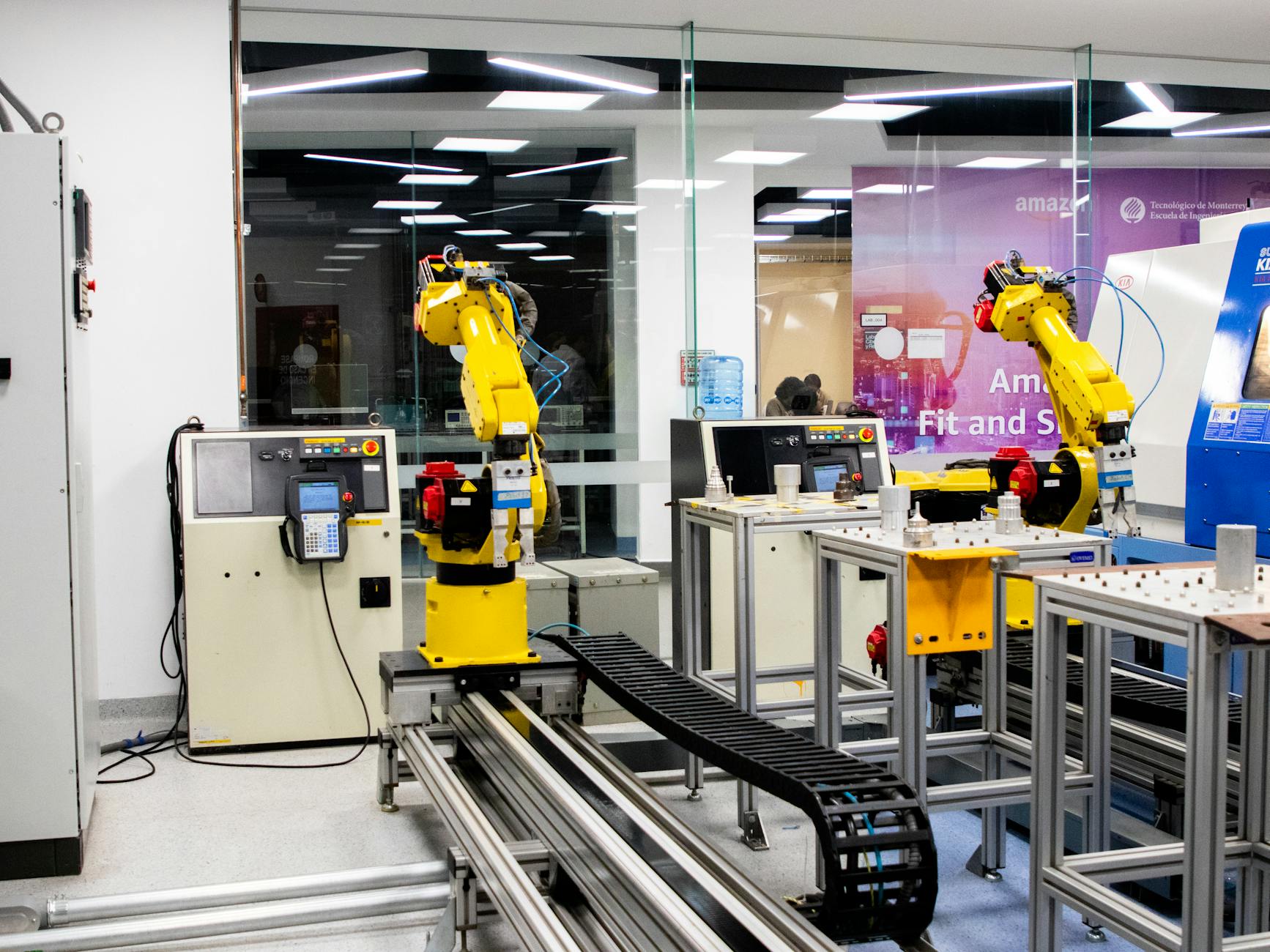
One humanoid robot every 15 minutes rolls off an assembly line in Shenzhen as of May 29, 2026, a production rate that, if real, cuts the build time claimed by every Western maker except Tesla. EngineAI Robotics just opened a 12,000-square-meter manufacturing facility in the city's Honghualing smart industrial cluster and declared the T800, its 75-kilogram full-size humanoid, in mass production. The claim is simple: 10,000 units annually. The implication is blunt: Chinese humanoid manufacturing has moved from prototyping into unit economics.
The factory itself is not a press release artifact. Automated laser welding, closed-loop assembly with digital traceability, 79 quality checkpoints per unit, and 46 simulated operating-condition tests before shipment are standard manufacturing controls, not marketing language. Zhao Tongyang, EngineAI's founder and former XPENG humanoid program lead, spent $200 million in Series B capital (April 2026) to build this: a dedicated floor, not a contract manufacturer's spare bay. The facility sits within walking distance of RoboSense, which makes the LiDAR that these robots need, and within Shenzhen's ecosystem of Luxshare Precision assembly expertise and proximity to DJI and Huawei talent. That geography matters. Iteration loops tighten when suppliers are 500 meters away, not 5,000 kilometers.
The production cadence claim, one unit per 15 minutes, outpaces Leju Robot's Foshan facility by 2x and matches or exceeds anything Boston Dynamics, Figure, or Tesla's claimed cycle rates. What makes it credible is the specificity and the capital discipline: EngineAI did not claim this in a venture pitch; it opened the facility, announced commencement, and cited 79 discrete quality gates. A $1.5 billion post-money valuation (after the Series B) is expensive for an unproven manufacturer, but it is reasonable for a company that can demonstrate capital efficiency at scale. The math is crude but revealing: if a T800 costs roughly $80,000 to $120,000 to produce (standard for full-size humanoids at that motion complexity), a 10,000-unit run at 15-minute intervals is $800 million to $1.2 billion in factory throughput. That absorbs the $200 million Series B in less than a year of full-capacity operation.
What the factory opening signals is that the industrial humanoid market is bifurcating. Western makers, Boston Dynamics, Figure AI, Tesla, are optimizing for unit margins and premium customers in logistics, light manufacturing, and R&D environments where cost-per-unit matters less than reliability and total-cost-of-operation. EngineAI is optimizing for volume and rental economics, targeting the restaurant, warehouse, and light assembly segments where a $40,000-per-unit annual lease competes directly against $25-per-hour labor. That is a different game, and it is played in factories, not labs. Henan state-backed capital and JD.com's logistics interest in EngineAI's cap table confirm the bet: industrial deployment, not experimentation.
Three numbers will determine whether this factory becomes a real inflection. First: actual Q3 and Q4 2026 shipment rates. If EngineAI hits 2,500 units by year-end, the 15-minute cycle is real; if it trails 500, the claim was optimistic. Second: pricing competitiveness. A T800 needs to lease for $30,000 to $35,000 annually to capture logistics and warehouse work; if it costs more, the margin vanishes and Western competitor pressure rises. Third: whether the announced Henan expansion (a second facility) ships units on schedule and whether Zhao's team can replicate the Shenzhen cost structure across multiple facilities. Factory openings are easy. Scaling them is not.