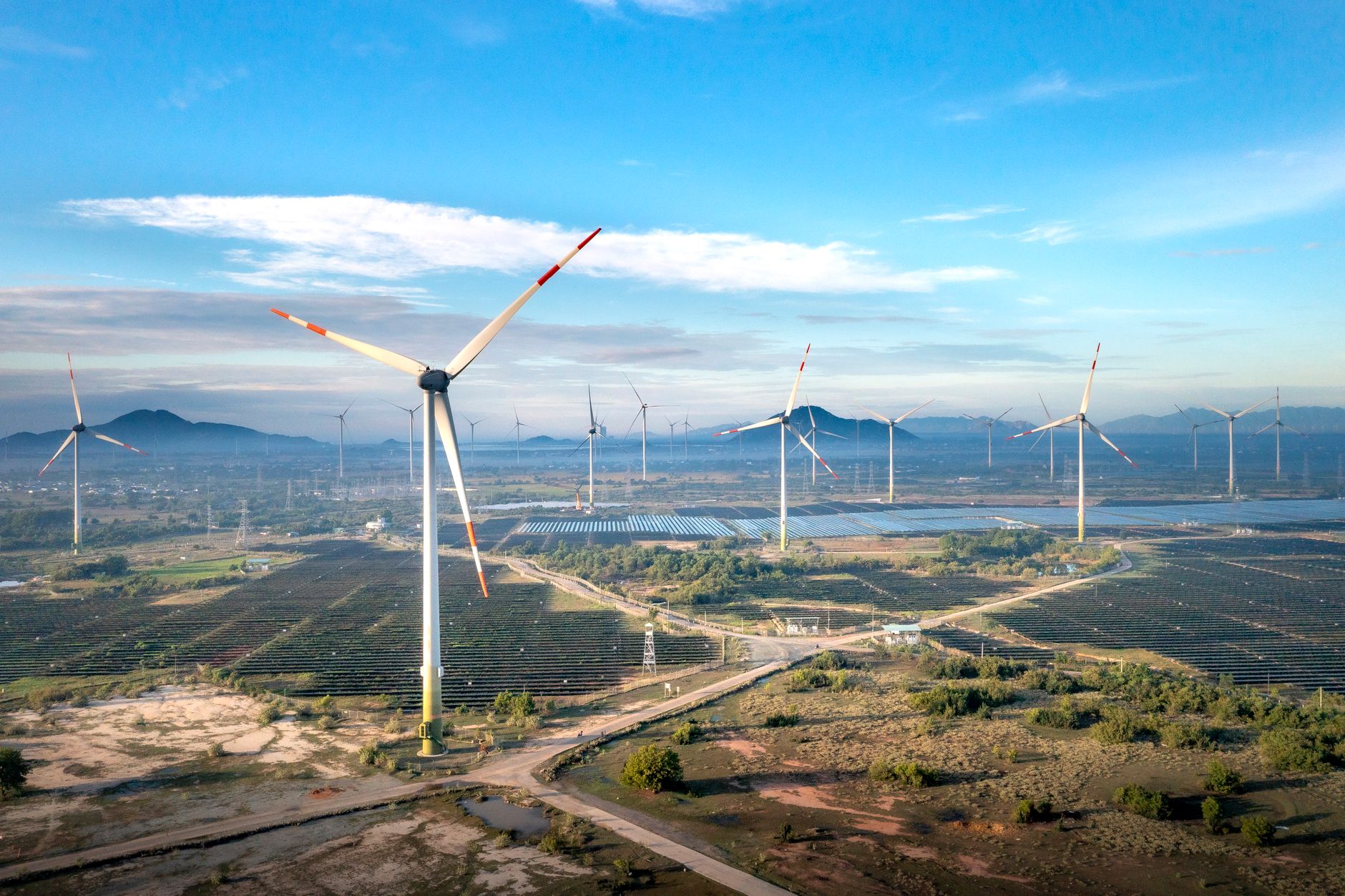
On March 24, 2026, the European Commission announced that 54 projects had signed grant agreements totalling €2.7 billion under the EU Innovation Fund's 2024 Call for Net-Zero Technologies. The projects span 17 countries and 17 industrial sectors — cement, refineries, renewable energy, maritime and aviation decarbonisation, electrolyser production, lithium refining. Individual project awards range from €1.8 million to €216 million. Once operational, the Commission claims they will prevent approximately 210 million tonnes of CO2 over their first decade. The headline reads like velocity. The timing tells a different story.
Four days before the signing ceremony, on March 19–20, 2026, the European Court of Auditors published Special Report 11/2026 — a forensic audit of the Innovation Fund's five-year performance. The finding was stark: of €12.3 billion in grants awarded to projects, only €331.8 million — 2.7% — has actually been paid out. The auditors identified project delays, fund transfers to other EU programs, and a one-in-five cancellation rate among the 228 originally selected projects. Forty projects terminated; 20 more were cancelled after grant agreements were signed. The fund was launched in 2021 with an estimated €40 billion budget through 2030. It has become the EU's primary instrument for bridging the "valley of death" — the capital and market-access gap that separates laboratory demonstration from commercial deployment at scale. A bridge that is half-built and half-blocked. The Commission's rush to sign 54 new grant agreements days after the audit lands reads as institutional damage control: proof of motion, a visible demonstration that the fund can move, that new capital is flowing. What the timing actually reveals is that the audit embarrassed them enough to accelerate the announcement. That is not the same as solving the problem.
The Innovation Fund was established under the EU Emissions Trading System, financed by auction revenues from carbon allowances. The 2024 call attracted 359 applications — nine times the available €2.4 billion budget, compressed into five topic areas covering high-emission industries and emerging clean tech. The oversubscription ratio is meaningless if fewer than 3% of awarded funds reach implementation. The Court of Auditors traced the problem to multiple channels: ETS auction revenues exceeded the original 2015 estimate (€18.7 billion was available by June 2025, against the €10 billion estimated for the entire decade), but €6.7 billion was transferred to REPowerEU via the Recovery and Resilience Facility, leaving the Innovation Fund itself with €12 billion operational. Of the 54 newly signed projects, six additional proposals from the reserve list have been invited to prepare grant agreements and could receive up to €491 million more. The Commission's formal response to the auditors' recommendations — particularly the call for "faster deployment of funds" with a 2030 deadline — will determine whether this €2.7 billion wave actually reaches construction starts or recirculates through the same structural delays that have paralyzed €11.97 billion of previously awarded capital.
What made this moment possible is the audit itself. The European Court of Auditors does not report for political theatre; their findings carry institutional weight and trigger mandatory Commission responses. The timing of the March 24 announcement — placed between the audit's publication and the April 23 deadline for the next funding call (IF25 NZT, €2.9 billion) — suggests a deliberate messaging sequence: here is proof the fund works, here is fresh capital committed, here is velocity. João Leão, the auditor responsible for the report, is quoted describing the Innovation Fund as a "valuable instrument" undermined by "slow deployment of funds, project failures and lack of strategy." The diagnosis is structural, not bureaucratic. Slow deployment means the market conditions for these technologies are harder than the capital allocation process assumes. Project failures mean the business cases do not survive contact with reality. The Commission has three formal recommendations to implement by 2027–2030; the first requires development of a "structured, forward-looking technology landscape analysis." Translation: you are funding technologies without adequate market intelligence about whether they will survive. The 54 signed projects are the Commission's answer to that audit. But answering a question is not the same as resolving it.
Who benefits from the €2.7 billion? The named project consortia — large industrial players (cement, refining), energy majors, and the established cleantech venture ecosystem in Germany, Belgium, France, and Scandinavia where most of the 17 participating countries are concentrated. Who gets hurt? Companies in the global south, smaller regional startup ecosystems, and the carbon capture, use and storage (CCUS) technology sector, which is facing a parallel U.S. headwind. The Presidential Budget Request for 2026 proposes over $7 billion in cuts to DOE CCUS pilot and demonstration programs — exactly the infrastructure that European Innovation Fund projects would integrate with. If U.S. CCUS offtake markets contract, European CCUS deployment projects funded at €50–200 million scales may not find revenue pathways. The Xuan et al. research on metal-organic framework adsorbents for shipboard carbon capture (published in *Analytica Chimica Acta* in June 2026) represents the type of emerging science the fund is meant to commercialize — but the scaling risk has just increased. Dafnomilis et al., analyzing European emission trajectories, found that existing policy commitments at their upper projection result in a plateauing of emissions through 2035, not reductions. That means the Innovation Fund is not a nice-to-have; it is Europe's margin of compliance. If it continues at the current 2.7% disbursement rate, European net-zero targets slip further out of reach.
Our read: The EU Innovation Fund is a €40 billion program in search of a business model. The Commission is right to accelerate capital commitment — the political and climate logic is sound. But the 2.7% disbursement rate is not a plumbing problem; it is a signal that the projects the fund is selecting are facing market conditions harder than the grant awards assume. One in five selected projects have been terminated. That is not a minor attrition rate; that is a portfolio signal that the valley of death is wider than €2.7 billion of new capital can bridge. The auditors are correct: the fund needs a technology landscape analysis that acknowledges which clean tech sectors are actually ready for deployment and which are still in the laboratory. The March 24 signing ceremony demonstrates institutional responsiveness. But the real test is whether the 54 new projects beat the historical ~18% termination rate and whether the six reserve projects confirm that electrolyser production and renewable component manufacturing — the strategic areas the Commission highlighted — have market demand that matches the capital. Watch for mid-2026 reserve project confirmation and the April 23 application deadline to see if industry confidence in the fund persists despite the auditors' findings. If the IF25 NZT call (€2.9 billion) attracts the same nine-fold oversubscription as IF24, the market signal is that capital availability is not the constraint; business model viability is. That would make the Commission's true problem visible: they are running a capital allocation mechanism in a landscape where the real bottleneck is not money but market risk.
Watch for the Commission's formal response to the Court of Auditors' Recommendation 2 (faster deployment, 2030 deadline) — any structural changes to milestone-based disbursement or project qualification will signal whether they have diagnosed the real problem. Watch the termination rate among these 54 projects — if it tracks the historical 18%, you have your answer about what is actually constraining Innovation Fund deployment. Watch for the six reserve projects to confirm their agreements by mid-2026; the sectors they represent (electrolyser production, lithium refining, renewable component manufacturing) will reveal whether the Commission's technology landscape is accurate. Finally, watch U.S. CCUS policy. If DOE cuts proceed as proposed, European CCUS projects lose their primary export market, and the Innovation Fund will have funded technologies with no viable revenue pathway. That would be a different kind of valley of death — not between lab and demo, but between demo and deployment.