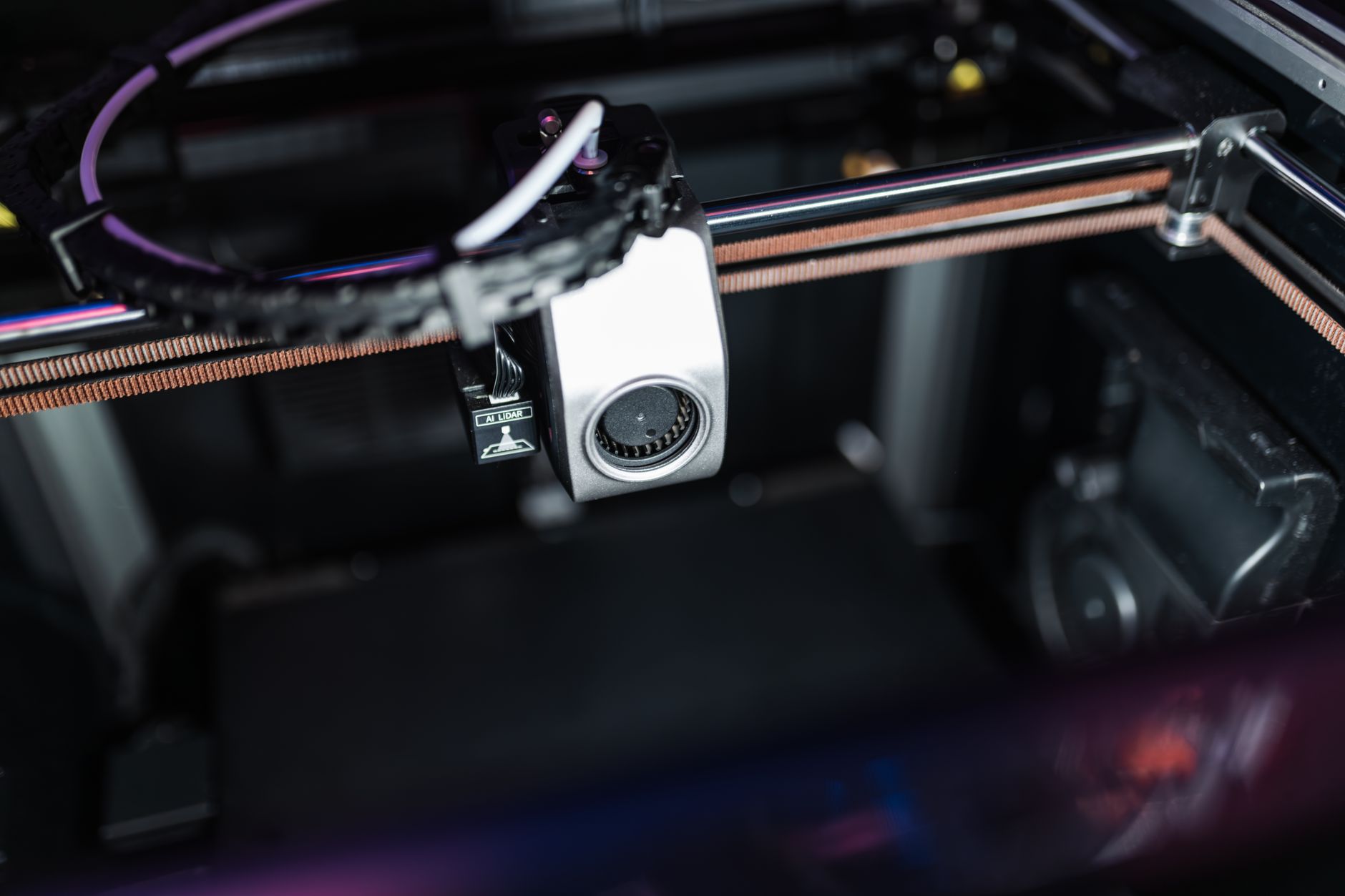
Dan Magy has a problem that most drone startup founders would trade for immediately: his manufacturing method works so well that the U.S. Air Force just handed his company $100 million to keep doing it. The contract came through in January 2025, and what it actually signals is that the Pentagon is no longer willing to wait for legacy suppliers to iterate on small unmanned systems. Firestorm Labs makes the Tempest 50, a 36-hour-endurance fixed-wing sUAS (small unmanned aerial system). The drone itself is modular and open-architecture. But the real product is not the airframe. It is the manufacturing: Firestorm owns proprietary 3D printers called xCell that can print drone components at scale inside a temporary facility, anywhere. That changes everything about how you think about drone logistics.
The USAF contract integrates Firestorm into AFWERX at Eglin Air Force Base, Florida, and also feeds the Tempest 50 into three ongoing swarm initiatives: the Adaptive Air Enterprise, the Hale Cluster, and the Babbage Flock. These are not experimental programs. They are operational integrations. The Air Force is not buying prototypes. It is buying production capacity. The contract also covers integration work on robotic and autonomy platforms for interoperable devices, which is Pentagon-speak for ecosystem compatibility. What matters is this: the Air Force did not award this money to a prime contractor with a 40-year procurement cycle. It awarded it to a non-traditional entrant whose entire business model depends on compressing that cycle. That is a structural shift in how the Pentagon buys unmanned systems, and it matters because it forces everyone else in the space to ask a harder question: what are we actually buying legacy for?
Firestorm's unit economics tell you why the Air Force cared enough to write a nine-figure check. The company claims the Tempest 50 costs about one-fifth to produce compared to existing fixed-wing systems with comparable specifications. Let that sit for a moment. One-fifth. That is not 10 percent margin improvement. That is 80 percent cost reduction. Build time also compresses by one-tenth: a Tempest 50 can be assembled in the field in a fraction of the time it takes to assemble, test, and deploy a traditional fixed-wing platform. The aircraft itself is designed for modular swapping of payloads and can operate for up to 36 hours between launches. The economics are simple. If your competitor's platform takes six months and $2 million to produce, and yours takes two weeks and $400,000, you can afford to lose on price, on schedule, and on customization simultaneously. You can still win.
Firestorm did not invent 3D printing for defense. What it did invent was a manufacturing philosophy: build drone parts not in a centralized facility with long lead times, but at the tactical edge, near the unit that actually needs them. This is not new in software. It is radical in aerospace. The U.S. military currently buys unmanned systems through traditional aerospace suppliers with consolidated production lines, supply chain vulnerabilities, and acquisition timelines measured in years. Firestorm's model says: why wait? Why not produce within a few miles of where the aircraft will be deployed? Why not print new wings, fuselages, or sensor packages on demand? That works if your supply chain is a 3D printer and raw material, not a network of subcontractors across three states. The company secured $12.5 million in seed funding from a Lockheed Martin-led consortium in prior rounds, which means a legacy player had already validated the concept. Now the Air Force is betting on it operationally. Firestorm is also moving from a 15,000-square-foot facility to a 35,000-square-foot operation at Marine Corps Air Station Miramar, expanding production capacity to meet the USAF buy.
The winners and losers here break down cleanly. Firestorm wins the most obvious contract award in the space right now. A $100 million USAF award is real capital, real Air Force integration, and real manufacturing scale. The Lockheed Martin consortium that backed them early wins because their due diligence is now validated by the Pentagon's own check. The Adaptive Air Enterprise, the Hale Cluster, and the Babbage Flock win because they get access to a manufacturing model that lets them iterate and scale faster than they could with traditional suppliers. Who loses? The legacy aerospace supply chain loses the assumption that production timelines measured in years are simply the cost of doing business in defense. Every other small unmanned systems vendor loses the ability to claim cost competitiveness without explaining why their build time is an order of magnitude longer. And the Pentagon's own acquisition establishment loses one more argument for why you need a centralized industrial base. The Air Force just bet that you do not.
Here is what actually happened: a startup figured out that 3D printing was not the constraint in drone manufacturing, supply chain consolidation was. They built a business around printing on-demand instead of stocking inventory. They got validation from a Lockheed Martin-led seed round. And they just got a nine-figure USAF contract because the Air Force realized that compressing production cycles matters more than buying from the same vendor you bought from in 1998. This is not disruptive in the hype-speak sense. This is disruptive in the structural sense. It changes the economics of how many drones you can produce, how fast, and where you can produce them. That is why the Air Force wrote the check. The real question is whether the rest of the defense industrial base moves fast enough to copy it.
Watch for three specific inflection points in the next 18 months. First, watch the Miramar facility ramp. If Firestorm actually builds out to full production capacity at the 35,000-square-foot facility and starts delivering Tempest 50 units to AFWERX swarm operations on schedule, the manufacturing model works. If there are delays in xCell printer deployment, material sourcing, or quality control at scale, the cost and speed advantages evaporate. Second, watch the integration timeline for the Adaptive Air Enterprise and the Hale Cluster. AFWERX integration is one thing. Actual operational deployment across multiple combatant commands is another. If the Tempest 50 goes into production-use drones at forward locations within 12 months, the expeditionary manufacturing model has real traction. If the integration stalls in bureaucratic approval cycles, you will know the Air Force's appetite for non-traditional vendors has limits. Third, watch whether any other sUAS vendor announces a shift toward expeditionary, field-scalable manufacturing. If no one else has announced a similar capability by end of 2026, Firestorm owns a genuine structural advantage. If three other vendors have announced additive manufacturing in-theater by then, the advantage commoditizes and price becomes the only differentiator again.