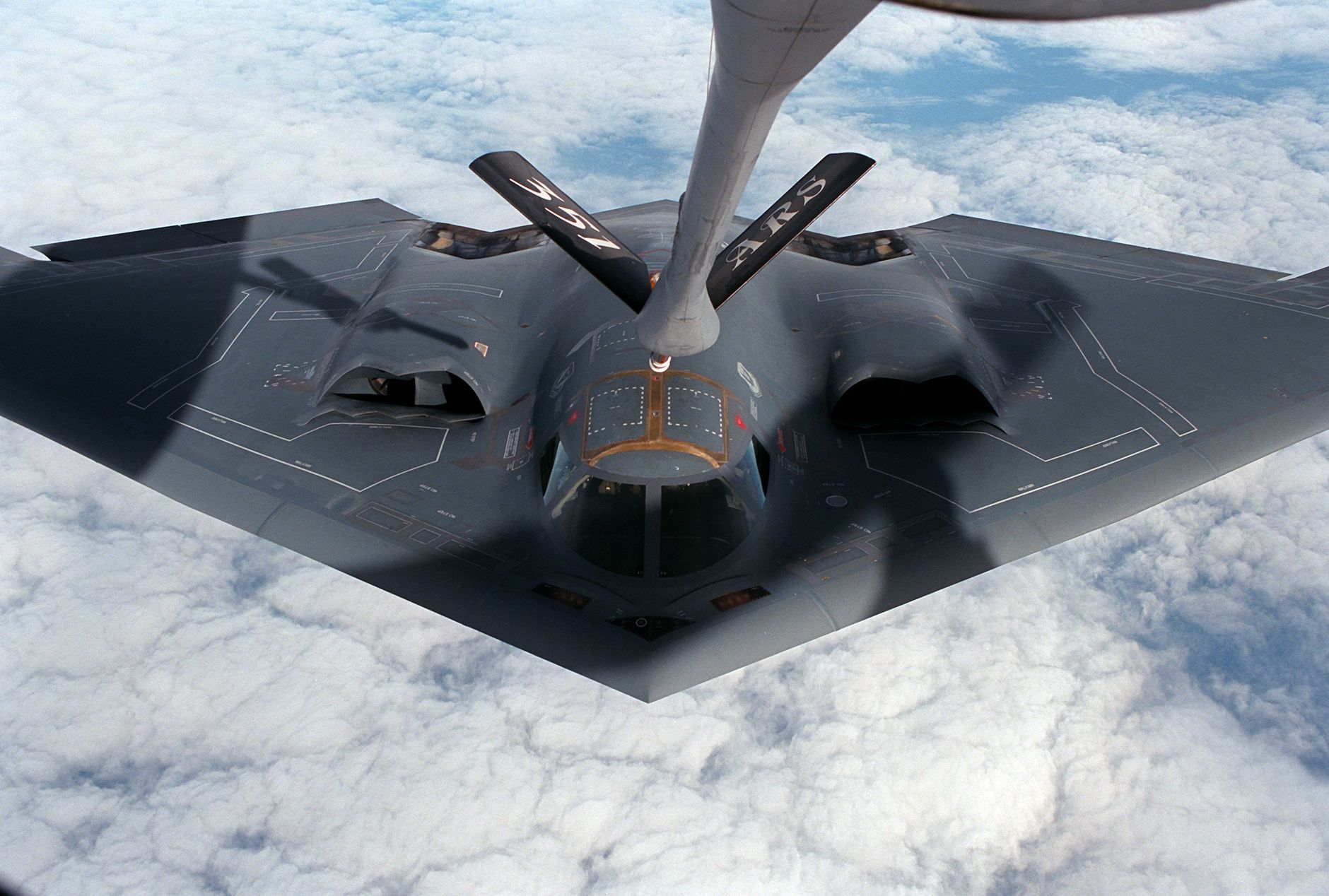
The B-1B Lancer is a platform with a unit cost of approximately $283–317 million built in the Reagan era and still flying conventional strike missions. Its wings have to stay attached, and trailing edges and tips are not afterthoughts, they are high-stress aeroelastic surfaces that cost precision to manufacture and money to replace. On June 12, the Defense Logistics Agency awarded a Georgia parts maker two separate indefinite-delivery contracts to build them: $53.1 million for trailing edges and $23.4 million for wing tips, both firm-fixed-price, both to the same small non-prime supplier.
Top Flight Aerostructures won both awards through competitive bidding against at least one other respondent, each contract running three years with completion set for August 1, 2029 and no option periods attached. The fact that DLA ran a competitive source and picked the same Georgia company twice in the same cycle is the read. This was not a sole-source award to an incumbent. The contracting activity, DLA Weapon Support in Oklahoma City, treats B-1 sustainment as a competed market now, and it selected a commercial supplier rather than a prime to fill it. The base appropriation comes from fiscal 2026 defense working capital funds, meaning this is production cash, not development or prototype work.
Wing components for strategic bombers sit at the intersection of two structural pressures in modern defense manufacturing. First, the B-1 fleet is aging. The last production aircraft was delivered on May 2, 1988, and the Air Force plans to keep the fleet operational through 2036. Parts need replacing, and new production runs are smaller than original build quantities, which means per-unit costs rise unless you find suppliers who can absorb lower volumes without premium pricing. Second, the legacy primes who built the B-1, Rockwell (now Boeing) for the fuselage, General Dynamics for components, have consolidated and deprioritized sustainer contracts on obsolete platforms. A small company with composite and aluminum shop capacity, quality certification, and no legacy overhead can undercut them on firm-fixed-price terms and still make margin.
Top Flight's wins matter because they signal DLA's shift toward sourcing sustainment work on critical platforms through open competition rather than directed awards. The B-1 is not a second-tier system; it is a primary strategic platform for conventional strike missions. Entrusting wing components to a non-prime means DLA has confidence in the supplier's ability to meet mil-spec and delivery schedules, and it means other small aerostructures companies now have a template: if you can certify to the standard and bid competitively on fixed-price terms, the door is open. Lockheed, Raytheon, and Boeing do not dominate sustainment work on aging platforms the way they dominate new-start development, the volumes are too small and the margins too tight. The gap is where companies like Top Flight operate.
The open question is whether these contracts lead to option periods or multi-year renewal. The awards specify a three-year base with no options, which is typical for IDIQ structures, but it also means DLA has an exit ramp if delivery or quality falters. Watch the June 2027 and 2028 reorders: if Top Flight maintains on-time delivery and cost control, DLA will likely extend or expand the scope. If there are slips or rework, the next competitive cycle could open to other bidders. That is the real test of whether small suppliers can sustain their foothold on strategic platforms or whether they remain one-contract vendors. For now, the win is real, $76.5 million in firm revenue over three years on a strategic platform, awarded through competition, to a company with no legacy prime backing. That is how the supply chain moves.