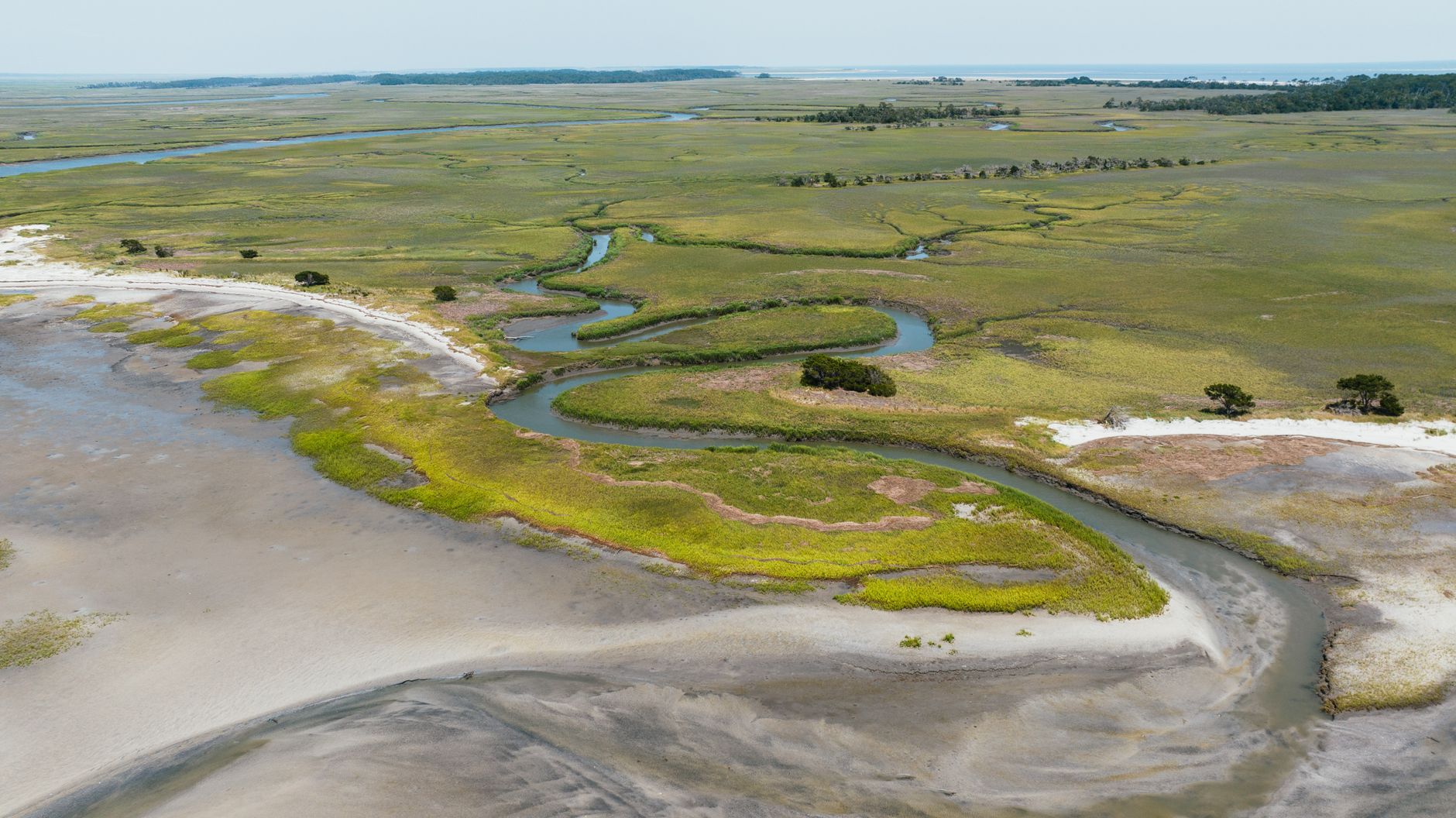
Google announced today that it is turning Pond A1, a degraded salt pond adjacent to its Mountain View campus, into a working laboratory for wetland restoration and carbon dioxide removal research. This is not a press release about carbon offsets purchased. It is a commitment to deploy capital into a physical site, partner with Bay Area researchers, and generate the kind of quantified, peer-reviewed data that the entire CDR industry has been missing: what does nature-based carbon removal actually cost, and at what scale can it work?
Pond A1 sits in the San Francisco Bay Area, a region where industrial salt production spent over a century converting tidal marshes into ponds. Wetlands sequester carbon. When you restore them, you both regenerate an ecosystem and, in theory, create measurable carbon removal. The science works. What nobody has deployed at scale is the infrastructure to prove it works economically, measure it reliably, and then repeat it. Google is stepping in to do exactly that. The company framed the project as integrating science, policy, and private capital to quantify wetlands' role in climate mitigation, language that signals this is meant to be replicable, not symbolic.
The timing matters enormously. This week Microsoft announced it was pausing new carbon removal credit purchases, citing concerns that the market lacked maturity and cost transparency. On the same day Google made its announcement, Carbon180 unveiled what it called the first-of-its-kind framework for responsible carbon dioxide removal aligned with community and ecosystem needs. The three events form a picture: the CDR market is fracturing. Some actors are stepping back. Others are stepping in, but differently. They are not buying credits. They are building infrastructure and demanding data.
The scale context is brutal but essential. Graphyte, a separate carbon removal company, announced on April 9 that it had secured a $60 million commitment from JPMorgan to remove 60,000 metric tons of CO₂ by 2030. That is real money and real tonnage. It is also a rounding error. The U.S. emits roughly 5 billion tons of CO₂ each year. Even if every carbon removal company in existence hit their 2030 targets simultaneously, they would remove perhaps 50 to 100 million tons combined. That covers roughly 1 to 2 percent of annual emissions. The gap is why projects like Pond A1 matter more than the individual deal sizes suggest. If Google can build a replicable template for corporate-funded wetland CDR that works economically and generates peer-reviewed cost curves, that template scales. If it remains a corporate sustainability flagship, it does not.
Google benefits from this directly. It gains a local environmental credential, a research partnership that positions it as a climate technology actor rather than a carbon purchaser, and a hedge against future carbon pricing or regulatory requirements. The company also gets what most corporations never get: a living laboratory 5 minutes from its main campus. Bay Area universities, almost certainly UC Berkeley or Stanford, will benefit from research access and funding. Wetland ecologists and CDR researchers get real-world deployment data. What does not benefit immediately is the federal government's capacity to fund CDR, since the Trump administration has paused USDA loan guarantees for renewable energy and controlled environment agriculture projects, extending that freeze through the end of 2026. Farmers who were expecting REAP grants for biodigesters and vertical farming installations are losing expected funding. The USDA originally implemented a 90-day pause to align with an executive order targeting wind, solar, and green energy subsidies. That pause became indefinite. Congress is currently debating a farm bill that would raise the maximum loan guarantee from $25 million to $50 million, but that bill faces an uncertain path. In the meantime, the on-farm clean tech sector is starved.
Here is what actually matters: Google is betting that corporate capital plus academic partnership plus transparent, quantified science can move carbon removal from the credit-purchase model to the infrastructure-deployment model. That is not naive idealism. It is a rational response to the fact that carbon removal credit markets have no cost transparency, no standardized measurement, and no proof that early deployed projects have actually achieved the removal they claim. If Google's Pond A1 project generates peer-reviewed data showing cost per ton, durability of carbon sequestration, and ecosystem co-benefits, that becomes the first real benchmark in the space. Whether other corporations follow with similar projects is the only thing that determines whether this is a template or a one-off. The announcement itself is notable. The replication is everything.
Watch three specific outcomes. First, watch for academic partnerships and CEQA environmental review filings for Pond A1 — those documents will tell you the scope and timeline. Second, watch whether Microsoft or another major tech peer announces a similar project by end of 2026, or whether they continue to reduce CDR spending. If tech companies collectively shift from credit-buying to infrastructure deployment, that is the signal that the market is maturing. Third, watch the USDA REAP/CEA loan guarantee story — if Congress passes a farm bill that expands rather than contracts those guarantees, on-farm clean tech gets capital again. If the freeze holds, you have a clear split: corporate capital flows to nature-based CDR deployment, while farmer-accessible financing for controlled environment agriculture and biodigesters collapses. That is the real story of the next 12 months.