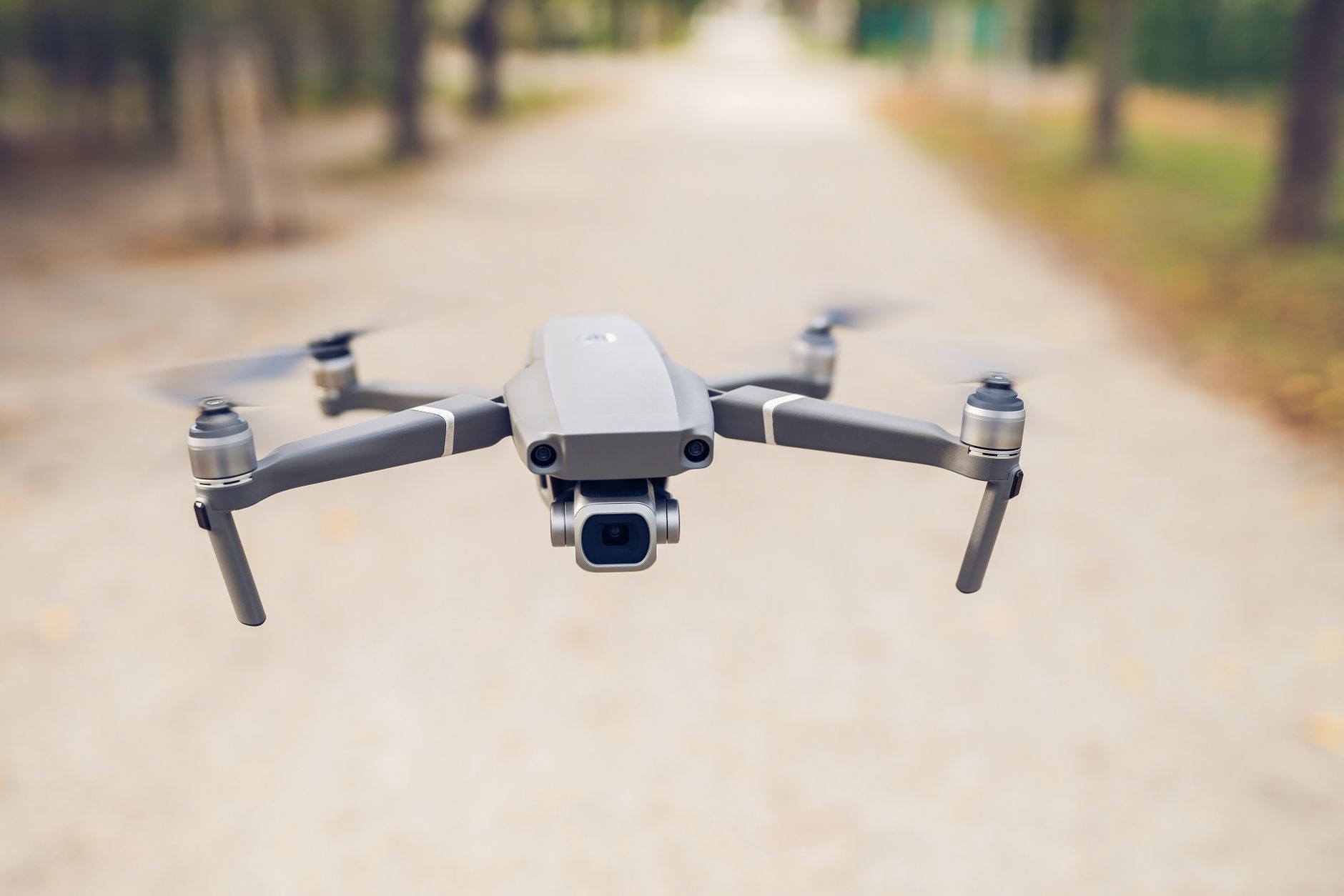
In February, the Bundestag's budget committee approved €269 million in initial funding for Helsing's HX-2 loitering munition, with a framework agreement that can grow to €1.46 billion over seven years. That approval came after the company told investors the weapon was already hitting Russian targets on Ukrainian frontlines. Three months later, Helsing is raising $1.2 billion at an $18 billion valuation while simultaneously announcing that HENSOLDT, the sensor specialist arm of Rheinmetall and Germany's primary supplier of radar and optronics to the Eurofighter Typhoon, will integrate its systems into the CA-1 Europa autonomous combat aircraft. The funding round and the industrial partnership are presented as separate events. They are not. Together they represent a structural shift in how European defense primes adopt autonomous systems.
The HX-2 contract is the inflection point. A 12-kilogram loitering munition with a 100-kilometer range, onboard AI for terminal targeting, and proven effectiveness against peer adversaries changes the policy calculus in ways a venture-funded prototype does not. The Bundestag does not approve €1.46 billion in frameworks for unproven technology. It approved this one because the HX-2 already works, Helsing claims it is active in Ukraine and hitting targets. That operational proof transformed what Helsing sells from "promising AI startup" to "military contractor with a fielded capability." HENSOLDT's decision to integrate its sensor stack into the CA-1 Europa follows logically from that shift. German defense primes do not partner with unproven platforms. They partner with platforms that have demonstrated value in peer conflict.
The CA-1 Europa itself is scheduled for first flight in 2027 and is designed as a companion system for manned combat jets like the Eurofighter Typhoon. HENSOLDT will provide radar, optronics, self-protection, and electronic warfare systems; Helsing's AI platform, called Centaur, will ingest that sensor data and execute autonomous tasking through MDOcore, Helsing's multi-domain operations software layer. The architecture is deliberately hardware-agnostic, Centaur is designed to run on any platform, from ground vehicles to naval systems. That is the Anduril model applied to European primes: sell the brain, not the airframe. HENSOLDT's commitment to integrate Helsing's software into its sensor systems suggests German industry is adopting that model.
The $1.2 billion raise, led by Dragoneer Investment Group and co-led by Lightspeed Venture Partners, is the financial mechanism that makes the industrial partnership credible. The previous Series D round, led by Spotify founder Daniel Ek's Prima Materia in June 2025, was €600 million at a €12 billion valuation, roughly $14 billion in dollar terms. This round values Helsing at $18 billion, a 30 percent increase in twelve months. The valuation reflects not just capital availability but confidence in the HX-2's operational trajectory and the CA-1 Europa's development timeline. Oversubscription of the round, according to the Financial Times, suggests demand from institutional capital for exposure to a commercial defense AI firm with active contracts and hardware in the field.
For Anduril, the signal is straightforward: European institutional capital and European defense primes will now fund and integrate non-U.S. autonomous platforms if they demonstrate operational effectiveness. Anduril's Loitering Munition System (LMS) competes with the HX-2 on performance and cost; the HX-2's European supply chain and HENSOLDT integration eliminate a procurement friction that has favored U.S. vendors historically. For the German industrial base, the HENSOLDT deal is a modernization play disguised as a partnership, Rheinmetall's legacy sensor business gets access to contemporary AI without building from scratch. For Helsing, the challenge shifts from proving the technology to scaling production and managing the tension between venture timelines and defense procurement cycles. The CA-1 Europa's 2027 first flight is a critical milestone; the rate at which the €1.46 billion HX-2 framework is actually spent will determine whether Helsing is a sustained program of record or a venture success that cannot translate to industrial scale.