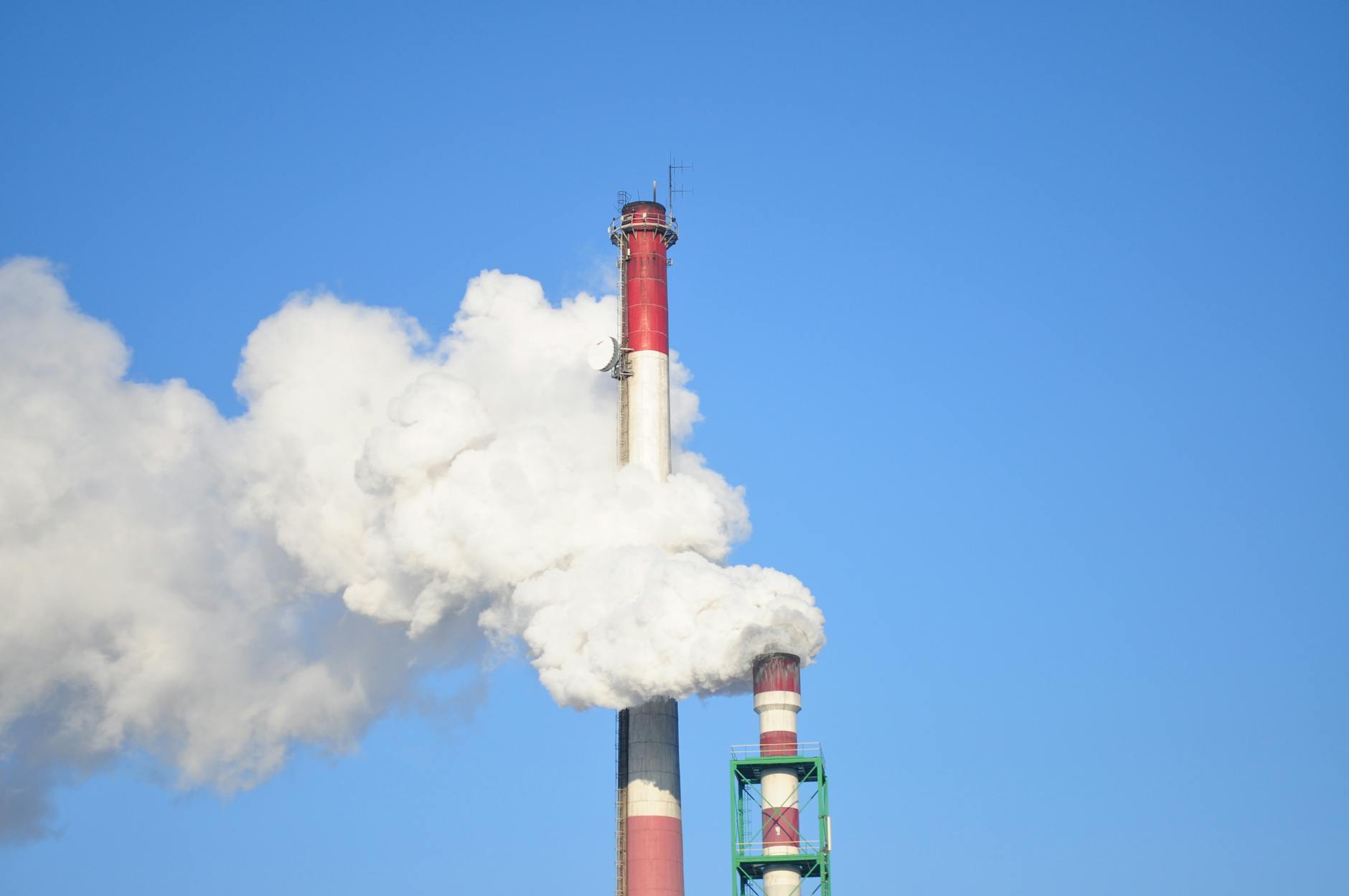
Carbon Hub CPT01 is not merely a project signing — it is the moment Eastern European industrial decarbonisation acquires its first fundable, construction-ready CCS anchor. On 26 March 2026, Holcim Romania formalised a grant agreement with the European Climate, Infrastructure and Environment Executive Agency (CINEA), backed by the EU Innovation Fund, for the Carbon Hub CPT01 project in Câmpulung, Romania — the first Romanian project ever financed by the Innovation Fund and the first large-scale onshore CCS project greenlit for Eastern Europe. The signing releases EU capital for engineering and construction to proceed toward a 2032 operational target, at which point the facility is designed to produce approximately 2 million tonnes per year of near-zero-emission cement and 200,000 tonnes per year of near-zero-emission lime.
The arena Carbon Hub CPT01 enters is large, underserved, and structurally compelled to act. Cement production accounts for approximately 8% of global CO₂ emissions, placing it among the hardest-to-abate industrial sectors on earth, where conventional efficiency improvements exhaust their potential at roughly half the decarbonisation depth that climate targets require. The EU Innovation Fund — one of the world's largest programmes dedicated to deploying innovative low-carbon technologies — has mobilised an expected €40 billion budget funded by EU Emissions Trading System auction revenues; by June 2025, roughly €18.7 billion had already been raised, exceeding the original 2015 decade-long estimate of €10 billion due to higher-than-expected carbon prices, according to a European Court of Auditors Special Report cited by Startuprad.io. The dominant players in cement-sector CCS are Holcim, HeidelbergMaterials, and a small cohort of national champions piloting point-source capture — but no competitor has assembled a multi-country, EU-grant-backed CCUS portfolio of comparable depth. The 2025 Innovation Fund Call for Net-Zero Technologies carries a €2.9 billion budget with applications open until 23 April 2026, meaning the competitive window for the next funding wave is live.
The CPT01 project's technical architecture centres on a carbon capture system designed to process flue gases from two co-located industrial emitters in the Câmpulung industrial area: a cement clinker plant operated by Holcim Romania and a lime plant operated by Carmeuse, the Belgian lime and calcium carbonate producer participating as a key partner. Captured CO₂ will be compressed, transported via a new pipeline, and injected for permanent geological storage at a retrofitted onshore storage site — constituting Romania's first full-chain CCS infrastructure. Simon Kronenberg, Region Head Central and East Europe at Holcim, confirmed the 2032 production start and framed the project within Holcim's 'NextGen Growth 2030' strategy, describing EU Innovation Fund support as evidence of 'the maturity of our technologies and our advanced partnerships that span the value chain.' The CPT01 signing brings Holcim's total to eight large-scale EU-supported CCUS projects, spanning Germany, Poland, Belgium, France (two sites), Croatia, Greece, and now Romania — the largest such portfolio in the industry, according to Holcim corporate communications. The specific grant quantum for CPT01 was not disclosed in available sources; the broader Innovation Fund 2024 call distributed €2.7 billion across 54 projects, with individual awards ranging from €1.8 million to €216 million per CINEA's official release of 24 March 2026.
Three structural forces converged to make March 2026 the viable execution moment for this project. First, EU ETS carbon prices have remained elevated well above the levels modelled in 2015, generating the auction revenues that fund the Innovation Fund at a scale — €18.7 billion raised by mid-2025 — that makes eight- and nine-figure grant commitments routine rather than exceptional. Second, the regulatory architecture hardened: the Net-Zero Industry Act, the EU Industrial Carbon Management Strategy, and the European Clean Industrial Deal collectively create both demand signals for near-zero industrial materials and permitting pathways for CO₂ transport and storage infrastructure that did not exist in legally operational form five years ago. Third, the commercial off-take layer materialised almost simultaneously: on 27 March 2026 — one day after the CPT01 signing — ClimeFi structured what Carbon Herald reported as the first publicly announced transaction under the European Commission's Carbon Removal and Carbon Farming (CRCF) framework, involving buyers including Nasdaq and Adyen purchasing CRCF-aligned carbon removal units from the BECCs Stockholm project, itself backed by the EU Innovation Fund. The CRCF transaction demonstrates that verified demand for EU-certified carbon removal units is no longer theoretical; it is contractually live, creating a monetisation channel that materially improves the economics of projects like CPT01.
The competitive implications of Holcim's eight-project CCUS portfolio extend well beyond Romania. Holcim is constructing a proprietary operational network whose value compounds with each additional node: shared engineering IP, standardised permitting playbooks, consolidated CO₂ transport negotiations, and a buyer-facing near-zero product portfolio that competitors cannot replicate without years of grant-cycle lead time. HeidelbergMaterials, which has advanced its Brevik CCS project in Norway toward a 2024 commissioning target (independently reported; verify against current status), is the only cement-sector peer operating at comparable CCS ambition, but its EU-grant portfolio depth remains below Holcim's eight-project count. For Carmeuse, partnership in CPT01 positions the lime producer within a CCS value chain it could not have built unilaterally — the agreement transfers both risk and technical credibility in ways that strengthen Carmeuse's standing in future EU calls. The second-order disruption falls on regional construction materials producers in Eastern Europe that lack CCS roadmaps: as the EU Emissions Trading System extends its reach and near-zero cement begins to command procurement premiums from public infrastructure buyers, producers without a credible decarbonisation path face a structural cost disadvantage that may accelerate consolidation. This shifts pricing power progressively from commodity cement suppliers toward vertically integrated producers with certified low-carbon product lines, because the mechanism — EU procurement rules and corporate supply chain due diligence requirements — creates inelastic demand for certified near-zero materials that only CCS-capable producers can satisfy at scale.
Our read: the CPT01 grant agreement is the observable leading indicator of a winner-take-most dynamic in EU industrial CCS, and Holcim is the current frontrunner. The testable hypothesis is this — by 2028, the combination of EU Innovation Fund capital, CRCF-compatible carbon unit markets, and Net-Zero Industry Act procurement preferences will have created a certified near-zero cement premium of sufficient magnitude that Holcim's eight-project CCUS network generates measurable pricing differentiation in European public infrastructure tenders. The confirming signals would be: CPT01 engineering procurement contracts awarded on schedule in 2026–2027; CRCF transaction volumes scaling beyond the ClimeFi pilot to include industrial CCS credits; and EU public procurement directives citing near-zero cement specifications. The disconfirming signal would be sustained delay in Romanian CO₂ transport and storage permitting — the project's acknowledged critical path — which would compress the timeline advantage Holcim currently holds over competitors who have not yet entered the grant queue.
Decision-makers should track four specific forward indicators. First, Romanian pipeline and geological storage permits for CPT01: these are the critical path items Holcim itself has flagged, and their resolution in 2026–2027 will determine whether the 2032 operational target is structurally achievable or aspirational — watch for Ministry of Energy filings and Romanian National Agency for Mineral Resources (NAMR) approval announcements. Second, the EU Innovation Fund IF25 Net-Zero Technologies call closes 23 April 2026 via the EU Funding and Tenders Portal; the award list, expected later in 2026, will reveal whether any Eastern European cement or lime competitor has filed a competing CCS application that could challenge Holcim's regional positioning. Third, six projects from the current Innovation Fund reserve list have been invited to begin grant agreement preparation for up to €491 million in additional funding across renewable energy component manufacturing, electrolyser production, and lithium refining — their formal award, expected Q4 2026, will indicate whether CINEA is concentrating capital in proven technology categories (reinforcing the CCS pathway) or diversifying toward novel approaches. Fourth, the volume and buyer composition of CRCF-framework carbon removal transactions in the six months following the ClimeFi-Nasdaq-Adyen pilot: if industrial CCS projects secure CRCF offtake agreements before 2027, the financial model underpinning projects like CPT01 strengthens materially, and the competitive moat around early movers widens.