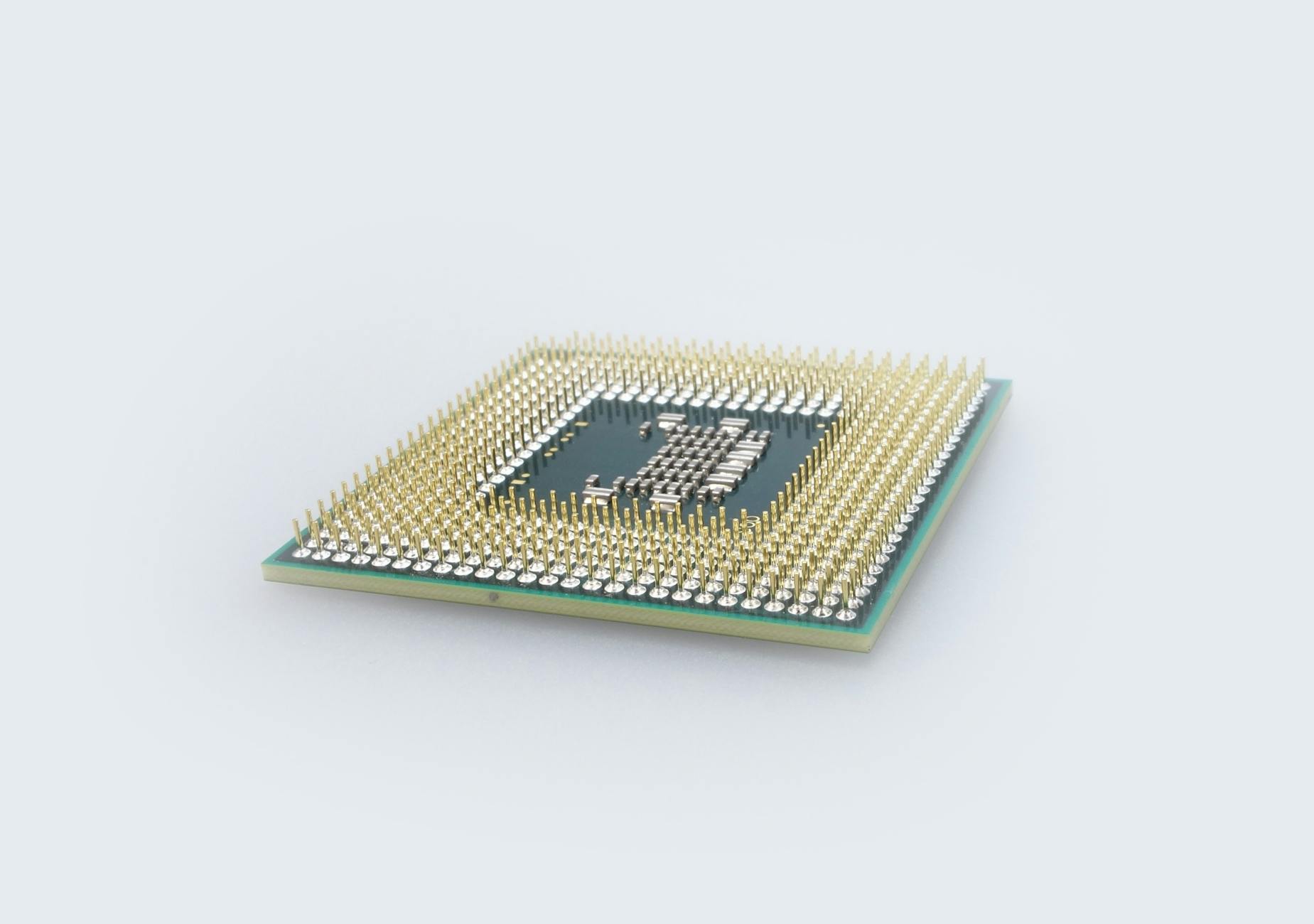
Mark Chen, President of Huawei Cloud Latin America, confirmed in an interview with the South China Morning Post this week that Huawei is studying whether to run its Ascend AI chips inside its cloud and AI services across the region. The move itself is straightforward: take the same hardware Huawei has been shipping domestically and offer it to cloud customers in a place where the U.S. government has no explicit mechanism to stop it. What makes it significant is the timing and the signal it sends about Huawei's confidence in its chip roadmap. On June 5, 2026, Chen Lin, Vice President of Huawei and President of Huawei Cloud China, announced that the company would deploy its next-generation Ascend 950DT chip on Huawei Cloud in August, four months earlier than the previously expected fourth-quarter launch. That acceleration is not coincidental. It is the watermark of a supply chain that is holding, and a company that believes it can compete.
Huawei's Ascend chips are the centerpiece of Beijing's effort to build a self-reliant semiconductor industry independent of U.S. technology. The 950DT represents the third generation of Ascend accelerators (the naming scheme, 910, 910B, 910C, 950PR / 950DT, reflects a progression across multiple generations that Huawei has commercially shipped). The 950DT is built on SMIC's N+3 process node (a domestic alternative to TSMC's 5nm, sitting between 7nm and 5nm in performance terms), and it delivers significant gains in vector computing performance, memory bandwidth, and interconnect bandwidth compared to its predecessor. Huawei says it is more developer-friendly and better suited for autonomous-driving applications, a detail that matters because autonomous vehicle models have become a proving ground for AI infrastructure in Asia. DeepSeek V4 is already running on the Ascend 950 platform, and is expected to be among the first deployments of the 950DT. That is not a minor detail: DeepSeek's cost-per-inference advantage is legendary, and having it run on Ascend hardware gives Huawei a killer demo for cloud customers.
The scale ambition is where the competitive implications land hard. Huawei's Atlas 950 SuperCluster, comprising more than 520,000 Ascend 950DT chips spread across over 10,000 cabinets, will deliver 524 EFLOPS in FP8 precision computing. Huawei claims that is 6.7 times more computing power than Nvidia's NVL144 system and 1.3 times more powerful than xAI's Colossus supercomputer. Those claims require independent verification, and the FP8 metric is not the standard Nvidia uses in its own specs, Huawei is choosing a precision level where it looks better. But the engineering feat is real: Huawei has already delivered over 300 Atlas 900 supernodes to more than 20 customers in telecom and manufacturing, which means the company has operational experience at scale that most of its competitors do not.
Latin America is where this hardware moves out of theoretical competition and into real customer territory. The region has been a Nvidia stronghold because of familiarity, software ecosystem, and the fact that U.S. export controls have not explicitly restricted sales there the way they have for advanced chips to China or certain allied nations. Huawei cannot legally sell to the U.S. market or its closest allies, but Latin America sits in a different legal and geopolitical bucket. A cloud provider in Brazil or Mexico using Ascend chips does not trigger export control restrictions in the same way, and for price-sensitive customers in emerging markets, a 30-40% cost advantage matters. That is the wedge Huawei is driving. The acceleration of the 950DT launch to August tells you management believes it can fill that wedge before Nvidia can respond.
Watch three things to know if this actually scales. First: the Latin America cloud deployment timeline and customer ramp. Huawei said it is studying this, it has not committed yet. A real announcement with a specific cloud region and go-live date would signal confidence. Second: DeepSeek V4 performance benchmarks on 950DT hardware, and whether the inference cost advantage holds at scale. If it collapses, Huawei loses its best demo. Third: Nvidia's pricing response in the region. If Nvidia cuts prices aggressively in Latin America, it signals the threat is real. If Nvidia holds, it signals confidence that ecosystem lock-in and software maturity matter more than raw horsepower and cost, which may be true, but would leave money on the table.