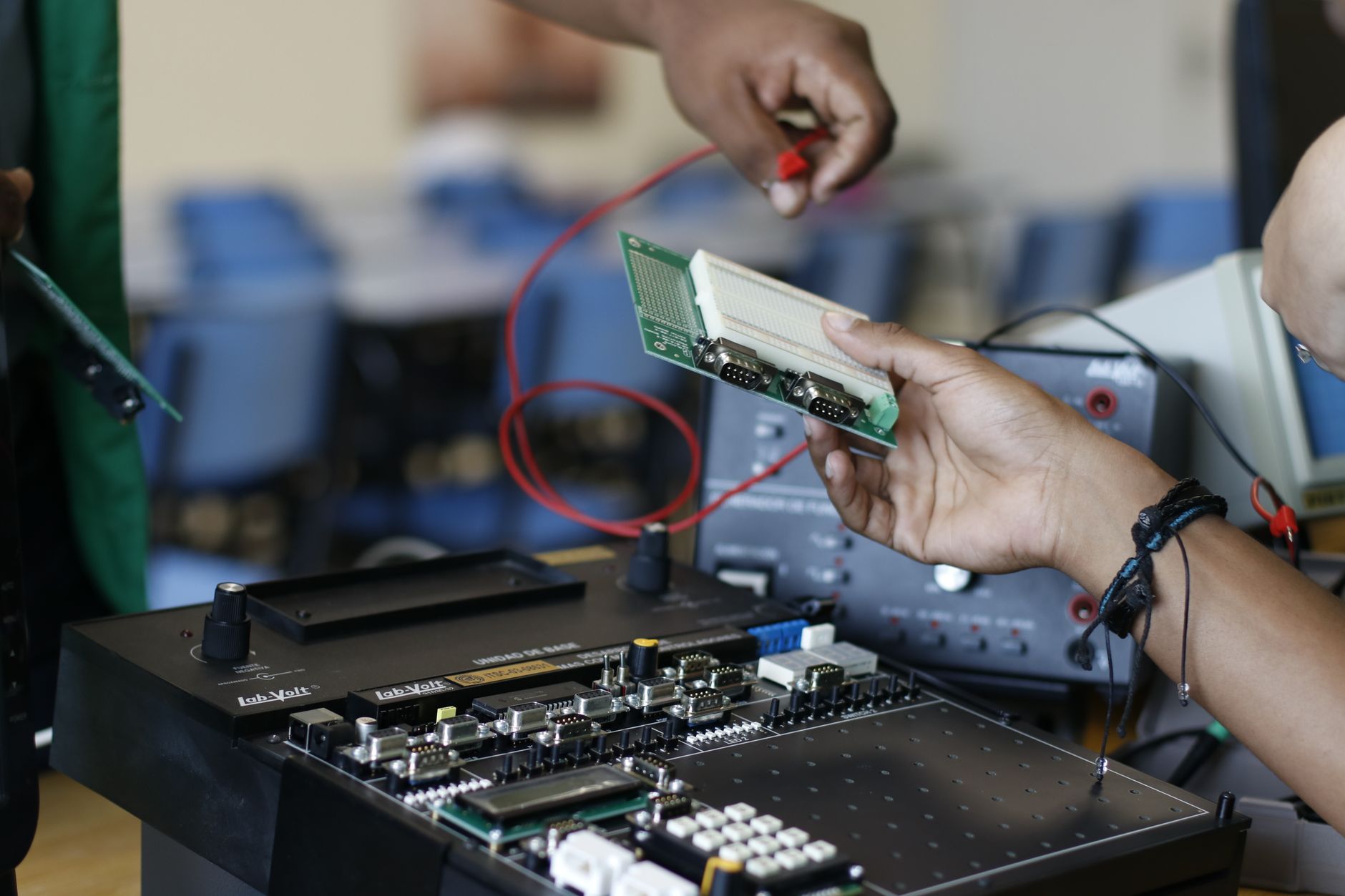
In a UK laboratory, engineers at Viasat are now testing a piece of silicon that India designed and built entirely on its own. WiSig Networks, a startup incubated at IIT Hyderabad, shipped its first system-on-chip for satellite IoT to the satellite operator's testing facility in June 2026. The chip does something that seemed straightforward until it became structurally impossible: it lets a standard smartphone or IoT device communicate directly with a satellite using the same cellular standards, 3GPP Release 17 NB-IoT NTN, that telecom regulators have mandated globally. WiSig built the baseband processor, the radio-frequency silicon, and the compact communication module from scratch. This is not a modification of an existing Qualcomm or Samsung architecture licensed from abroad. It is a complete vertical stack designed for L-band and S-band satellite frequencies, engineered for two-way messaging, location streaming, and low-rate telemetry on battery lives measured in years.
The significance sits at the intersection of three separate pressure points in the global semiconductor and satellite markets. First, MediaTek, Sony-Altair, Unisoc, and GCT Semiconductor have commercial or production-ready NB-IoT NTN chipsets alongside Qualcomm and Samsung, creating a competitive but still consolidated market with limited options for satellite operators and device makers trying to build direct-to-device networks. Second, India's government has explicitly committed to funding sovereign semiconductor development under the Design Linked Incentive scheme and the broader India Semiconductor Mission, treating satellite IoT as critical national infrastructure. Third, the 3GPP standards body has locked the NB-IoT NTN rulebook into place, any chip that passes 3GPP Release 17 compliance can legally operate on any certified satellite network. WiSig's design targets exactly that: not a proprietary island, but a standards-compliant entry point that works with Viasat today and could work with Intelsat, Inmarsat, or any other operator that builds out 3GPP NTN capability tomorrow.
The path to qualification matters because it exposes what the current bottleneck actually is. Viasat did not fund this development, the Indian government did, through grants from the Department of Telecommunications and MeitY. Viasat is now running the tests that will either validate the design or expose failures in the chip's ability to sustain a connection, handle handoffs between satellites, manage power under real signal conditions, or integrate with existing satellite ground systems. These are not trivial gates. A working NTN SoC has to maintain links as satellites move overhead, compensate for Doppler shift, and do all of this on a device running on a battery. The testing venue, Viasat's specialized UK laboratory, signals that Viasat sees this as a serious engineering effort, not a pilot or a tech demo. Use cases Viasat has flagged for qualification testing include maritime safety, fisherman tracking, disaster response, and remote-access government connectivity. These are not niche markets. Maritime IoT alone represents thousands of vessels, many of which have no terrestrial network coverage and currently rely on expensive satellite SMS services or old Iridium infrastructure.
If WiSig's chip clears qualification, the first-order winner is India's semiconductor ecosystem. A proven NB-IoT NTN vendor gives the government a proof point for the entire DLI scheme, that government-backed chip design can reach production at Tier-1 operators and achieve commercial scale. The second-order winner is any device maker or satellite operator tired of betting on Qualcomm's roadmap or Samsung's production capacity. A second source for NB-IoT NTN silicon means price competition and supply-chain resilience for the first time in this market. But there is also a structural question: whether this becomes a one-chip story or a platform. WiSig needs to move from lab qualification to production volumes, and that requires either raising capital to build or partner with a foundry, or convincing a major chipmaker to license the design. The brief does not indicate funding or partnership arrangements beyond the government grants, which is a material open question.
Two specific markers will tell whether this becomes a meaningful second source or remains a credible-but-isolated achievement. First: production ramp and customer announcement. If WiSig ships qualification samples to Viasat or other operators by Q4 2026 and at least one operator begins developing end devices with the chipset, the momentum is real. Second: standards certification completion. 3GPP compliance is not binary; there are conformance test suites, interoperability workshops, and external lab certifications. If WiSig's design passes external 3GPP testing, not just Viasat's internal validation, the chip becomes a genuine platform component, not an operator-specific custom design. The margin between success and irrelevance is the difference between a government-funded engineering milestone and an actual second source in a market where supply concentration has been a chronic constraint.