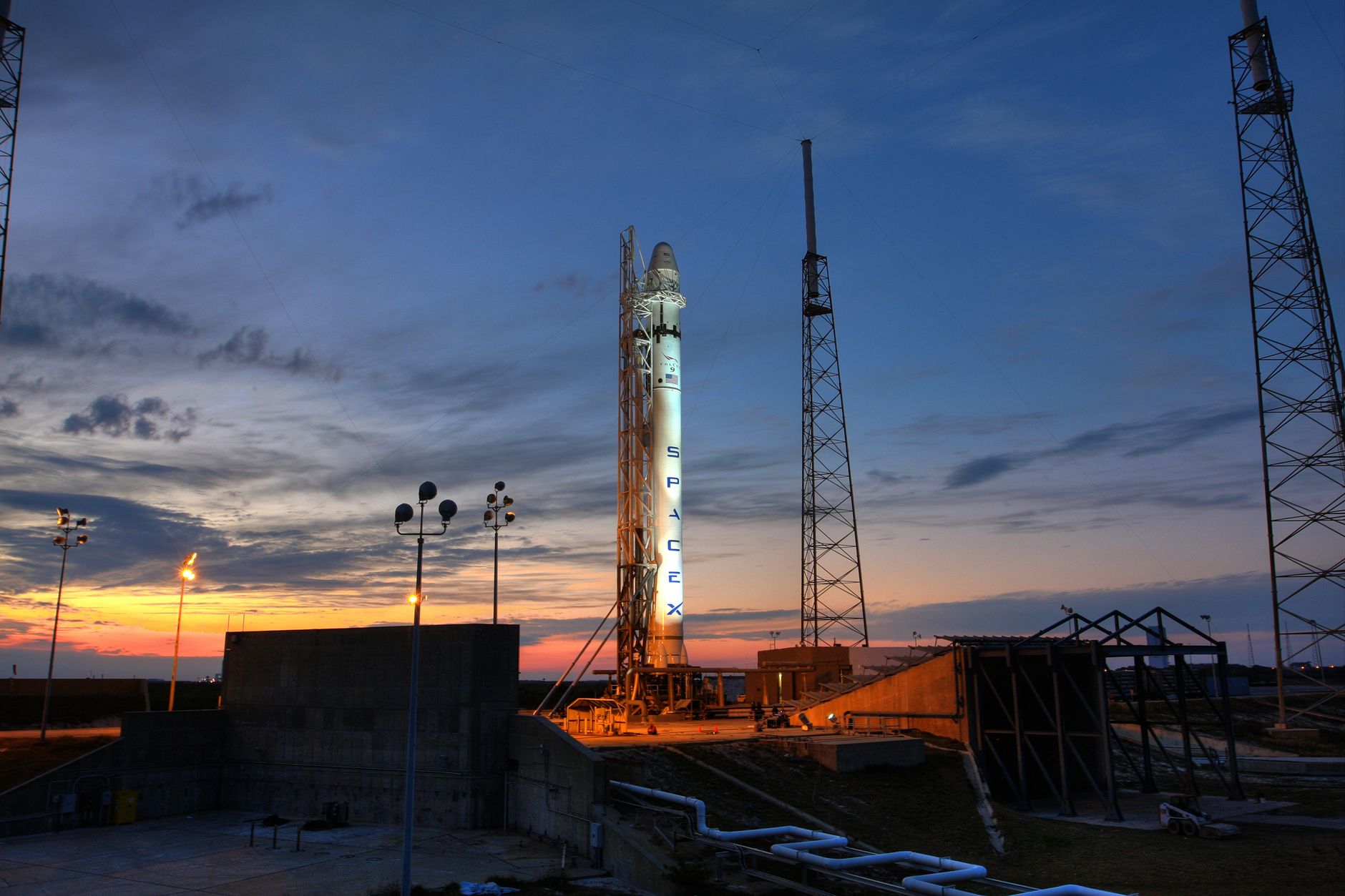
A Spectrum rocket sat on the launchpad at Andøya Spaceport in Norway on July 30, fully stacked with five CubeSats and one ESA-backed experiment, when telemetry began telling a story the launch team did not like. Somewhere in the vehicle's plumbing, the propellant lines, the pressurization system, or the stage interface, something was not nominal. Isar Aerospace's team stood down and told the world: 'We are still detecting off nominal behavior in the vehicle's fluid systems.' No attempt to burn through it. No engineering optimism. No launch window salvage. This is the second test flight of the only orbital rocket currently being cycled by a European commercial company on Continental European soil, and it never got a chance to light its nine first-stage Aquila engines.
The vehicle arrived at Andøya after months of schedule slippage. The 'Onward and Upward' mission was originally targeted for March 25, 2026, then shuffled again as launch windows shifted and integration work ran long. The first Spectrum flight, in March 2025 at the same pad, lasted 30 seconds before being terminated in flight, a controlled failure that was technically a success, Isar proved the vehicle would leave the ground and telemetry flowed during ascent. Six months later, flight two was supposed to demonstrate that the first flight was not an anomaly, that a production cadence was building. Isar had already begun manufacturing vehicles three and four at that point. The second vehicle carried five CubeSats and one non-separable experiment for ESA's Boost! program, an incubation pathway that had already backed Isar through its early stages. ESA Director General Josef Aschbacher called it 'a clear signal of Europe's burgeoning commercial space transportation services.' Now that signal sits idle in Norway waiting for a technician to find a leak or a valve issue or a sensor fault in a system of pipes and pumps that clearly has not been exercised enough to show its failure modes.
What makes the scrub instructive is not the delay itself, rocket development eats delays, but what it reveals about the gap between European ambition and European execution. Isar Aerospace is not a heritage contractor or a government program. It is a venture-backed startup with approximately 450-500 employees and a two-stage rocket that still fits inside a medium-lift industrial footprint. The company has exactly one commercial rocket in active production and zero flights past the 30-second mark. SpaceX's Falcon 9 is at 662 launches. Rocket Lab's Electron is past 150. Relativity Space is already in NSSL Phase 3 Lane 1, the Space Force's five-year, multi-billion-dollar national security launch contract. Isar has one slot in that same contract, as a payload adapter provider, not a prime. The company does not have the financial or operational depth to miss a flight window without losing momentum. Every week the vehicle stays on the pad is a week that a prospective customer watches Arianespace or Rocket Lab's UK operations or Relativity's manufacturing continue to mature.
The real read: Isar's scrub actually demonstrates operational maturity, the discipline to abort rather than cascade failure into flight. But that maturity matters only if the company closes the root cause quickly and if the issue does not recur. The fluid system anomaly on a two-stage vehicle with nine engines and complex stage-separation sequences is not exotic; it is plumbing. If Isar's team cannot isolate and fix a plumbing problem on the ground, the company will not survive its next five flights. Watch three specific data points: first, when Isar publicly states a root cause and timeline to next attempt, vague timelines signal deeper uncertainty. Second, whether the next flight attempt happens within four weeks or stretches beyond eight, the difference between a production hiccup and a design problem. Third, whether any customer or ESA payload shifts to an alternative provider in the interim. If even one Boost! program payload moves to Arianespace or delays past Q4, Isar's window to prove European capability will have begun to close.