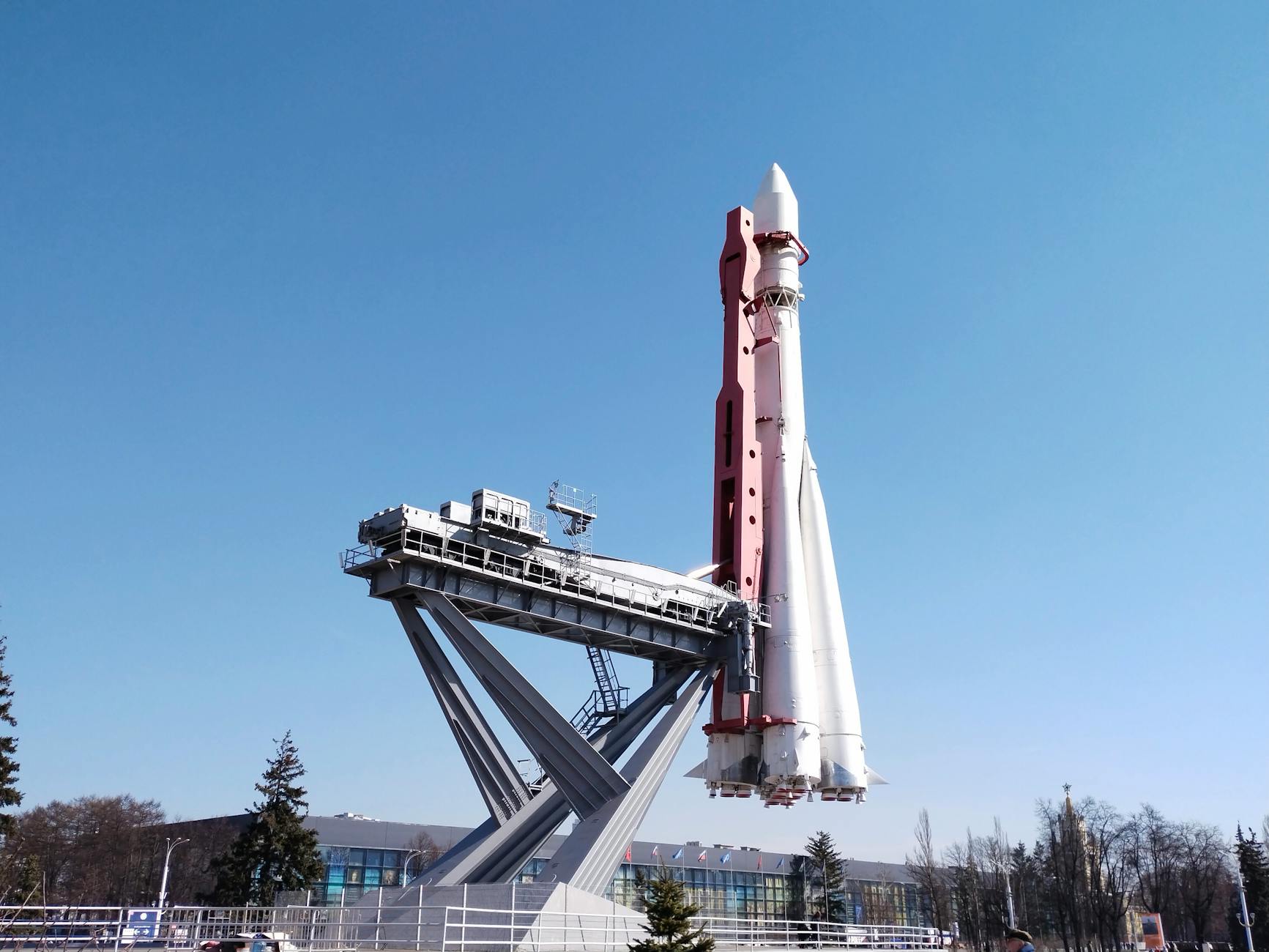
Isar Aerospace's Spectrum rocket is on the pad at Andøya Spaceport in Norway this week, targeting an orbital flight that European spaceflight has been waiting for since January. The vehicle is scheduled to carry five CubeSats and a secondary experiment to Sun-synchronous orbit as part of a "Onward and Upward" qualification mission that represents the first orbital attempt for a privately-designed, wholly in-house-manufactured European launch system. The mission has been delayed four times in five months, a pressurization valve issue in January, high winds in March, an airspace conflict in late March, and a composite overwrapped pressure vessel (COPV) leak on the pad in April. Each slip tightened the operational window; the vehicle returned to the pad after the COPV repair and is now in an active NET May launch window.
The payload manifest alone signals Spectrum's positioning as a qualification vehicle, not a routine demonstration. The five CubeSats, from TU Berlin, the University of Maribor, EnduroSat, NTNU, and TU Wien Space Team, represent genuine customer payloads, not dummy mass. Isar Aerospace designed the mission to test the entire launch vehicle under real operational conditions, including ascent, stage separation, and controlled deployment. The rocket itself is 28 meters tall with a two-meter diameter, powered by nine Aquila engines on the first stage and a single Aquila engine on the second stage. The vehicle targets a payload capacity of 1,000 kilograms to low Earth orbit, with a stated cost target of €10,000 per kilogram ($11,700 at current exchange rates). If that figure holds across a production run, a significant conditional, Spectrum sits between Rocket Lab's Electron (roughly €13,000/kg) and SpaceX's Falcon 9 (roughly €1,500/kg), neither of which are reliably accessible to European operators without geopolitical friction.
The delay sequence reveals operational reality beneath the promotional narrative. A startup on a remote spaceport cannot simply decide to launch when it wishes. Weather windows are narrow at Andøya; airspace conflicts are frequent (shared with defense operations); component issues on a qualification vehicle are not quick fixes. The COPV failure in April was not a design flaw announced by Isar, it surfaced during integrated testing at the pad, and the company repaired it in situ rather than returning the entire stack to the factory. That is operationally correct behavior but it consumes calendar time. The cumulative effect is that a mission originally scheduled for January is now targeting May, compressing the timeline before summer weather breaks and the spaceport's operating season begins to tighten.
What matters beyond Isar is the European competitive dynamic that Spectrum's success or failure now frames. Arianespace operates Ariane 5 and is transitioning to Ariane 6, neither of which is optimized for small payloads or rapid cadence. Rocket Lab's Electron is a proven small-lift option but it is a U.S. company, subject to ITAR (International Traffic in Arms Regulations) controls, and dependent on SpaceX for European facility access. If Spectrum reaches orbit reliably and moves into operational service, it closes a gap that has pushed European CubeSat programs and small-satellite operators toward either Rocket Lab or SpaceX Falcon 9 rideshare missions, neither ideal from a sovereign-capability perspective. The European Launcher Challenge, ESA's competitive procurement framework designed to nurture new European launchers, has a 2027 deadline by which candidates must demonstrate operational capability. Spectrum's May qualification flight is the clearest near-term marker of whether that ambition translates into a viable second source.
The real read is not whether Isar succeeds once. It is whether the company can sustain a launch cadence after qualification. Spectrum's design targets the CubeSat and small-satellite segment, a real market but one that demands repeat launches and tight scheduling to move the unit economics. The four delays in five months are acceptable for a single qualification flight; they are disqualifying for a commercial service. Watch for three signals: confirmation of an actual launch date this week (not another delay), successful deployment of all five CubeSats into the intended orbit, and any public statement from Isar on turnaround time between this vehicle and the next Spectrum on the pad. The third metric will tell whether the company is solving the operational friction problem or merely surviving it.