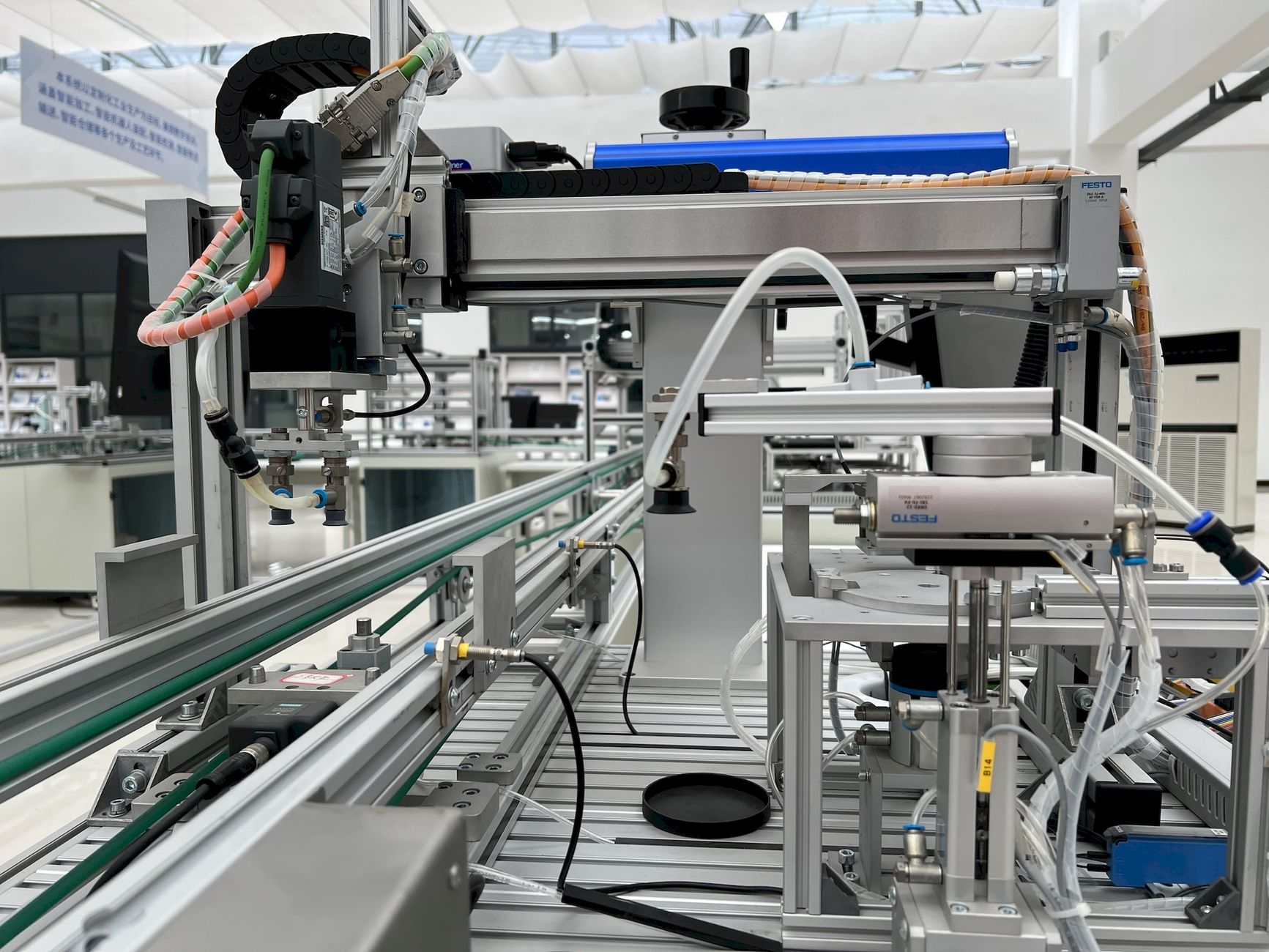
On July 15, Jensen Huang was in Tokyo when he announced that Japan's three largest industrial robotics makers had just committed to building on the same software platform. FANUC, Yaskawa Electric, and Kawasaki Heavy Industries, competitors that have spent decades with separate robot operating systems and closed ecosystems, are joining the NVIDIA Cosmos Coalition. Twenty-plus Japanese manufacturers, chip companies, and roboticists are moving with them. The announcement itself sounded like infrastructure news. In fact, it was a competitive realignment that breaks a thirty-year pattern in the sector.
The platform they are joining is built on three NVIDIA layers: Cosmos, a world model that helps robots understand their environment in real time; Isaac, an open robotics development framework; and Jetson, edge compute hardware that runs inference locally on the robot rather than in the cloud. Cosmos 3 Edge, the version announced this week, is a 4-billion-parameter model optimized for robot perception and control on edge hardware. The model size matters less than what NVIDIA claims about it: developers can adapt it to a specific robot, sensor suite, and factory layout in about a day instead of weeks or months. Fujitsu is leading the effort to build a collaborative control platform that will let FANUC, Yaskawa, and Kawasaki share components, digital twins, robot learning frameworks, simulation-to-real workflows, pre-deployment validation tools, across their own product lines. The platform integrates NVIDIA's Newton physics engine and Omniverse digital-twin libraries. What that means operationally is that Yaskawa no longer builds its own simulation software from scratch; it inherits a stack.
The coalition structure itself is the inflection. For forty years, industrial robotics was vertically integrated: FANUC wrote its own OS, Yaskawa wrote its own, ABB wrote its own. They competed on control algorithms, on sensor fusion, on proprietary features that locked customers into their ecosystem. A large automotive plant might run fifty FANUC arms and ten Yaskawa arms side by side, but they could not share learned behavior or simulation data because the software stacks were incompatible. The coalition breaks that lock. It also breaks the lock on ROS2, the Robot Operating System that many startups and research teams use but that lacks the industrial-grade reliability and performance guarantees that FANUC or Yaskawa customers demand. By offering an open platform that is simultaneously backed by Japan's government, METI (Ministry of Economy, Trade and Industry) co-blessed this as national AI infrastructure, NVIDIA is making it harder for any single vendor to build a moat on software alone. Kawasaki announced plans to apply Cosmos and Isaac to surgical support robots, nursing assistance systems, and hospital transport, moving physical AI beyond manufacturing into healthcare, where safety and latency requirements are even more stringent. Kubota is exploring agricultural robots. Hitachi is using NVIDIA Metropolis (computer vision for physical operations) for smart-building management. The coalition is not manufacturing-only; it is sector-spanning.
What to watch: whether the unified platform gains real traction in non-manufacturing verticals, whether FANUC and Yaskawa integrate it into their own product pipelines at scale, and whether rival robot-vendor coalitions form in Europe or North America in response. The open-source robotics community and proprietary-stack advocates (ABB, Universal Robots, Techman) have no equivalent move announced. Japan's coordination suggests that the window to build an industrial robotics software moat is closing fast. The winners will be companies that can contribute to and evolve shared world models; the losers will be vendors that bet on proprietary perception and control stacks. NVIDIA is betting that the model and the hardware edge will matter more than the robotics OEM's brand. This week's announcement is a test of that bet.