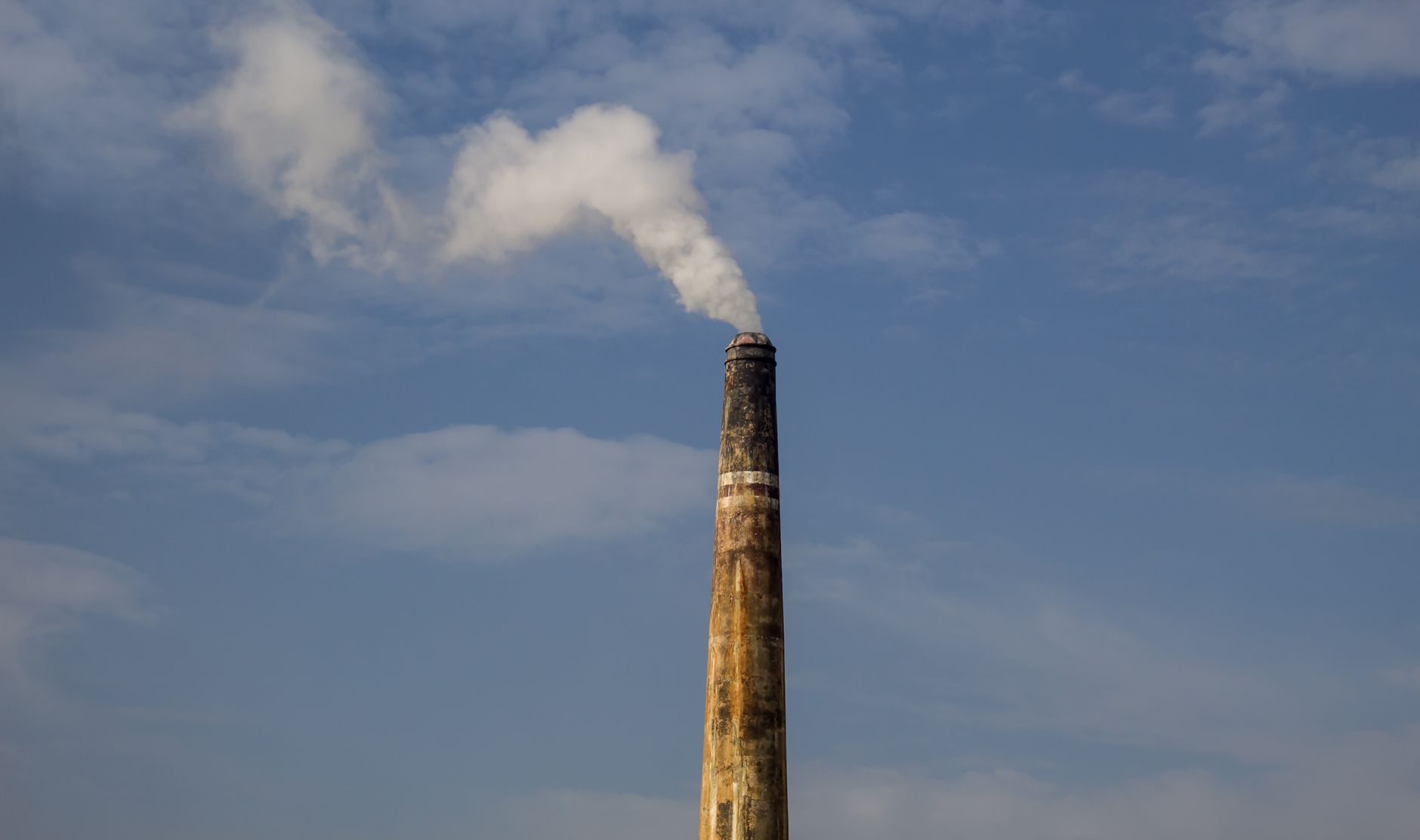
On Tuesday, the Louisiana House Natural Resources and Environment Committee killed a slate of six bills in quick succession, each one designed to hand individual parishes a referendum veto over carbon capture and sequestration projects. The margins were tight: House Bill 5, the broadest proposal by Rep. Mike Johnson, fell 7–9. Five parish-specific measures followed in similar votes. By day's end, the push for local control was dead for the legislative session. What looked like a procedural win for local democracy was actually a decisive victory for state-level CCS infrastructure that could unlock billions in capital deployment across the Gulf South.
The real story is not what lost, it's what winning that vote removes. Louisiana won EPA Class VI primacy in 2024, which gave the state direct authority over CO₂ injection permitting and stripped the federal government's review role. That same authority now faces no parish-level override mechanism. Dustin Davidson, the state's Department of Conservation and Energy secretary, made the stakes explicit in committee testimony: if the bills had passed, the EPA could seek to revoke Louisiana's primacy and impose federal rules 'less stringent than the state's.' Translation: lose parish control bills, or lose state-level control entirely. The committee chose to keep what it had. CCS operators, ExxonMobil Low Carbon Solutions, Occidental Petroleum's 1PointFive, AtmosClear, and others with projects in Allen, Beauregard, Rapides, Sabine, and Vernon parishes, just got regulatory certainty they did not have on Monday.
The parish veto push was not abstract. Allen Parish had already been the battleground: in May 2025, parish officials adopted an ordinance requiring local permits for CCS projects, a direct challenge to state preemption. ExxonMobil filed suit alleging preemption. The ordinance was rescinded. But the legal and political vectors remained live until Tuesday. Any parish could have copied Allen's move in the months ahead. Now they cannot, or rather, they can try, but they cannot do so with any legal cover. Dustin Davidson told the committee that the HB 5 proposal would be unconstitutional if adopted, substituting local rules for federal law. That argument held. The committee sided with the state's technical and scientific review process over the parish-by-parish politics that would have emerged.
Louisiana Chemical Association president David Cresson drove home the capital implications in his testimony: 'If Louisiana creates a system where projects can be approved in one parish, prohibited in another and potentially reversed through shifting local politics, companies will view [Louisiana as an unattractive investment environment].' He was describing the regulatory risk that kills deals before they start. That risk no longer exists in Louisiana's statutory framework. CCS projects are now fungible across the state, a single environmental and permitting review, no parish override waiting in the next election cycle. For companies modeling 20-year IRRs on $500 million to $2 billion infrastructure builds, that eliminates the discount rate hit that makes projects unfinanceable.
The timing matters as well. CDR.fyi's Q1 2026 market report shows durable carbon removal contracted 2.3 million tonnes, 560% of Q1 2025 volume and the largest quarter ever. That demand is downstream. The infrastructure to supply it, injection wells, CO₂ capture and compression, pipeline, monitoring, has to be built on stable permitting ground. Louisiana just became that ground. ExxonMobil, Occidental, and smaller operators can now move from option agreements and feasibility studies into FID (final investment decision) without modeling the parish veto scenario. That is not a theoretical unlocking, it is the removal of the single biggest vector of legal and political uncertainty in American CCS deployment outside of California.
Watch for: capital deployment announcements and FID commitments from ExxonMobil and Occidental in the five named parishes through the balance of 2026. A parish-by-parish capacity filing with the state department by Q3. Any parish that attempts to revive a local veto mechanism, which will now test the preemption argument in actual litigation. And whether the Louisiana Chemical Association and state business groups can hold the line on downstream bills next session, when sponsors of the defeated measures will likely regroup.