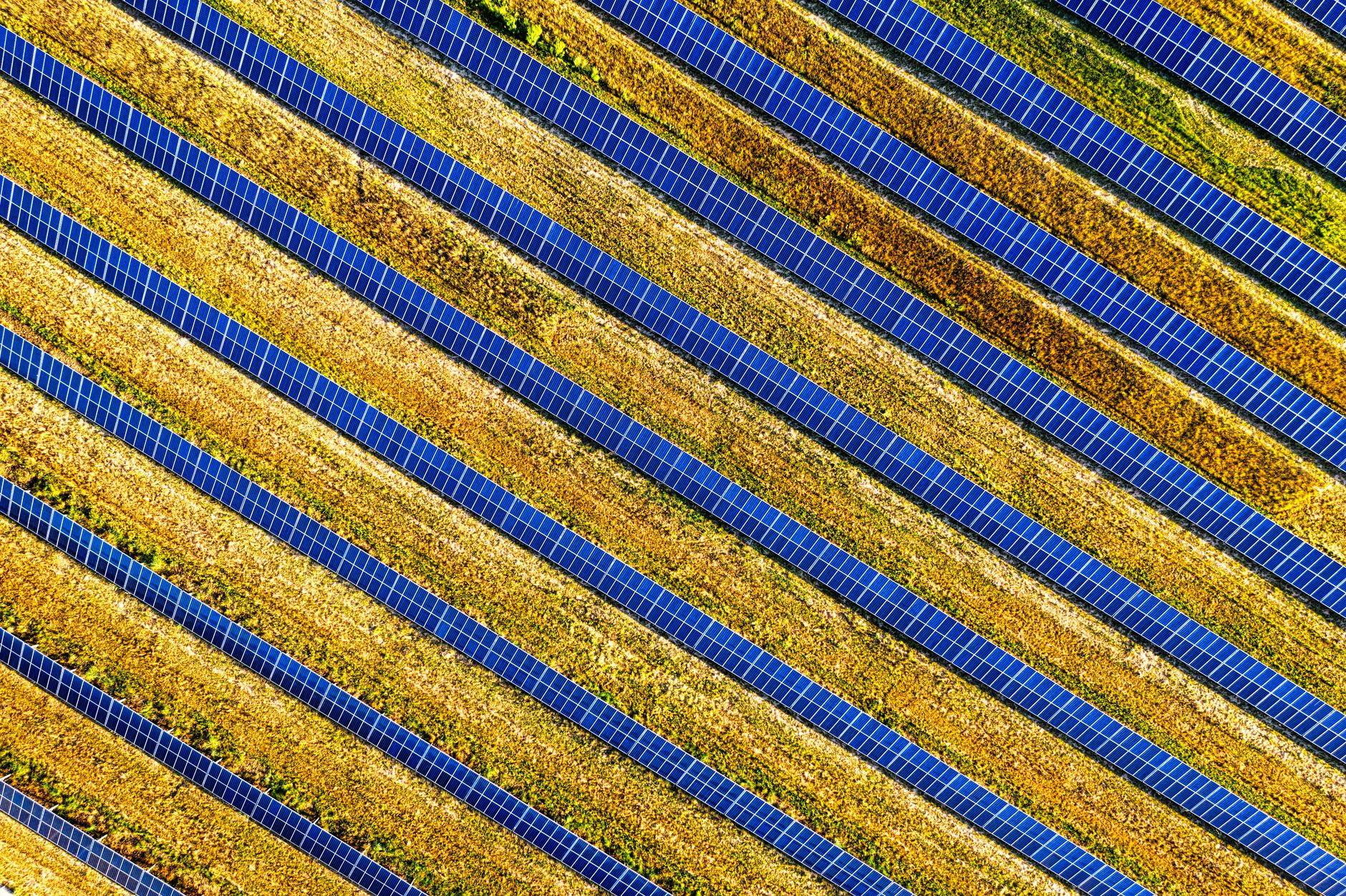
On July 21, Heelstone Renewable Energy broke ground on three utility-scale solar projects in Illinois totaling 86 MW, Two Blues Solar (40 MW in Perry County), Snapdragon Solar (28 MW in Perry County), and Pike Solar (18 MW in Fayette County). All three projects had closed financing the day before, on July 20. The full portfolio was backed by long-term Corporate Power Purchase Agreements with Meta, meaning Heelstone had locked in the offtake revenue before committing capital to construction. The financing stack was fully committed: Stonehenge Capital provided tax equity, ING Capital LLC arranged and provided construction-to-term debt, and all three assets were financed on a non-recourse basis at the project level. This is not a rare structure in utility-scale solar anymore. It is the only structure that works right now.
The broader U.S. solar market contracted 14% in 2025, falling to 43.1 GW from 50.3 GW the year before. Tariff uncertainty and the January 2026 phase-down of the federal Investment Tax Credit safe-harbor window compressed deal flow across the sector. Yet Heelstone has managed to close not one but two separate financing events in six months, a December 2025 and March 2026 close for Alligator Creek Solar in Georgia (104 MW) and Murch Solar in Michigan (102 MW), now followed by this July 2026 close for three more Illinois projects. That cumulative 292 MW pipeline under the same developer, all backed by Meta, is not a fluke. It is a structural shift in how utility-scale solar gets built when corporate offtake demand outpaces available capacity.
Meta's renewable procurement strategy has become a market force in its own right. The company is not waiting for merchant solar projects to chase merchant power prices or hoping grid operators will eventually signal need. Meta is signing long-term CPPAs and using those contracts to de-risk project finance, allowing developers to secure non-recourse debt at reasonable rates without relying on tax equity alone or betting on power-market volatility. ING Capital's Edmund Wong acknowledged this explicitly: "We are proud to have played a leading role in two separate financings for Heelstone over the past six months." Two separate financings in six months is not routine. It signals that banks will commit capital when the offtake is bulletproof, even if broader market sentiment is cautious.
The safe-harbor window explains the urgency. Projects that commenced construction before July 4, 2026 can lock in the full 30% federal Investment Tax Credit, preserving the economics that made these financings bankable. Heelstone's target for commercial operation on all three projects is end-of-2026, an aggressive timeline that reflects the race to beat the safe-harbor deadline. If all three hit that COD target, Heelstone will have built 292 MW in eight months while the rest of the industry is consolidating. If they slip into 2027, projects starting after July 4, 2026 do not receive the 30% rate and must be placed in service by December 31, 2027 with stricter thresholds applied. The market is watching whether Heelstone's execution matches its ambition, not because the company's reputation depends on it, but because project timelines will tell the industry whether the safe-harbor rush is sustainable or whether the deadline is about to create a cliff.
Meta is not alone in this game. Google, Amazon, Apple, and Microsoft have all announced aggressive renewable procurement targets. But Meta's visible deal volume in Illinois, now publicly committed across five projects with one developer, is the clearest evidence so far that hyperscaler demand is durable enough to sustain a parallel deal flow separate from merchant solar markets. This does not solve the industry's broader problem. The U.S. solar market still installed 14% less capacity in 2025 than 2024. Tariff policy is still a headwind. The grid still needs transmission. But it does mean that the largest electricity consumers on the continent have decided to underwrite capacity themselves, bypassing merchant markets and betting on long-term power demand from AI infrastructure. That bet is now being validated on the ground in Illinois.