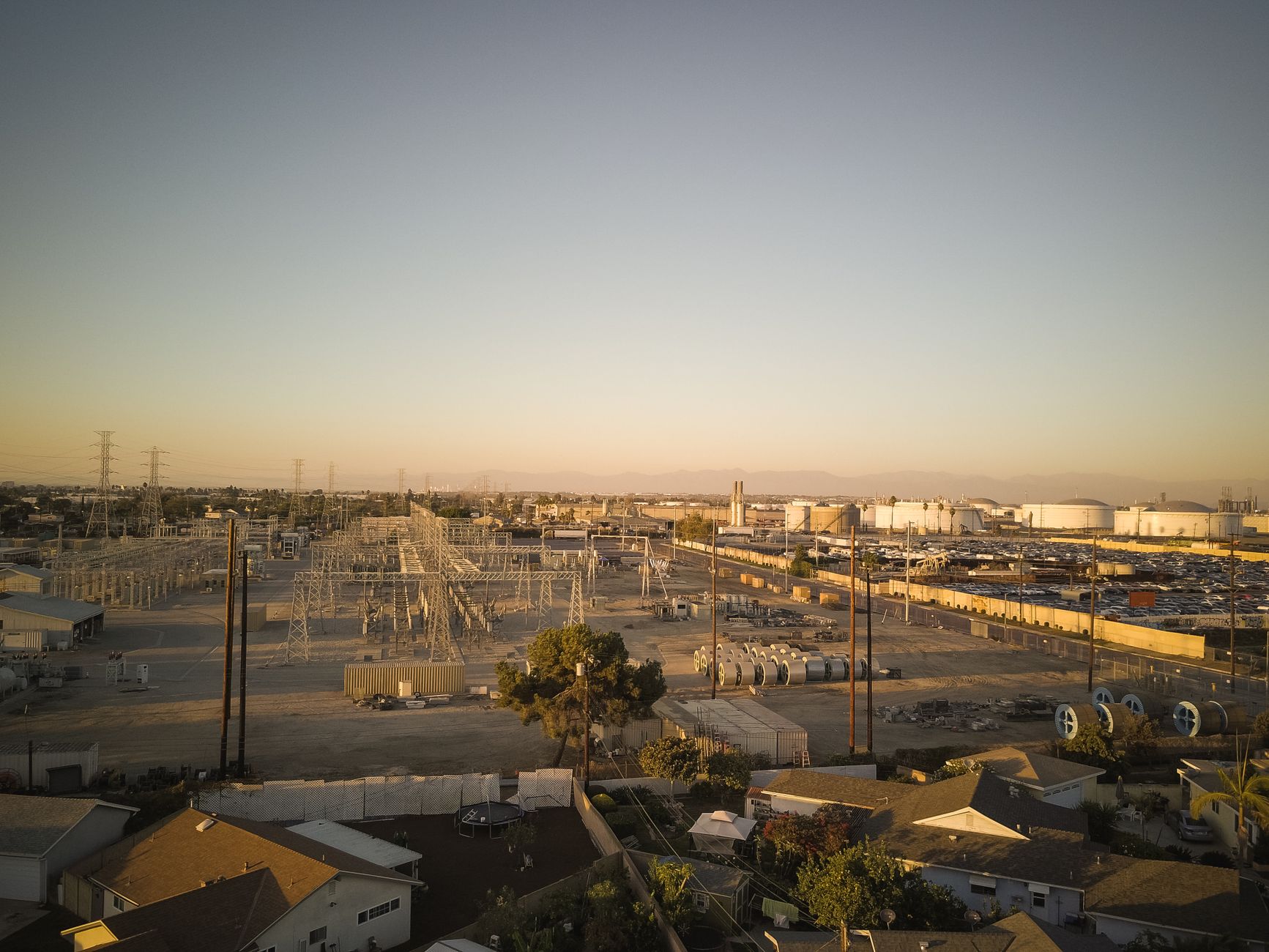
On March 27, 2026, the Michigan Public Service Commission approved six battery energy storage contracts totaling 1,332 megawatts of new storage capacity for DTE Electric Co. Within hours, the announcement circulated through industry channels as a validation of battery economics and grid-scale storage momentum. Read the press release and you get a story about energy transition, renewable integration, and grid reliability. Read the actual terms, and what you have is a precedent: a major utility regulator blessing a model where a cloud infrastructure company funds a chunk of the grid to guarantee its own power supply, while the utility operates the assets and ratepayers absorb the grid enhancement without bearing the capital cost. This is not a small distinction. It is the mechanism by which computational demand becomes infrastructure demand, and infrastructure becomes regulated.
Michigan's battery storage space has been defined by two competing logics. The state sits in the middle of the continent with access to the Great Lakes and relatively modest renewable build-out compared to the coastal states and the Southwest. Battery installations have lagged Texas (which accounted for 53% of planned 2026 U.S. battery capacity additions, or 12.9 GW), California (14%, 3.4 GW), and Arizona (13%, 3.2 GW). Michigan's total was projected at roughly 1.3 GW for 2026. The MPSC's March 27 decision essentially cleared the entire year's planned capacity in a single approval—and buried inside it is the data center angle that transforms how you read the investment thesis. DTE Electric moves from 1,274 MW of storage to 2,606 MW. That is not incremental. That is repositioning.
The six projects approved break into two categories with radically different financials. The first three—totaling 1,000 MW—are DTE's obligation under its 2023 integrated resource plan settlement agreement, which required the utility to add 15,000 MW of solar and wind generation in Michigan and to address the grid stability problem that creates: you need batteries to hold the renewable output. These three projects include a 20-year tolling agreement with Big Mitten Energy Center in Huron County, plus self-build contracts for Fermi Energy Center and Monroe I Energy Center, both in Monroe County. Standard utility infrastructure. Capital requirements. Ratepayer recovery. Familiar model.
The second three projects total 332 MW and exist for one reason: the Oracle-OpenAI data center campus in Saline Township, Washtenaw County. The financing for the $16 billion campus is nearing completion. The data center requires 1,383 MW of company-owned energy storage to meet its demand profile—peak compute loads running 24/7, requiring dedicated, dispatchable power. Oracle subsidiary Green Chile Ventures, the entity created to develop and finance the AI infrastructure in Michigan, will cover the development cost over 15 years. DTE Electric will develop, own, and operate the facilities. Oracle will harvest any wholesale market revenues generated by the batteries during periods when the data center does not require full output. This is the deal: the cloud company pays for the infrastructure, the utility operates it, and the grid gets the capacity. The MPSC's statement that it imposed "the nation's strongest protections to prevent other customers from having to pay the data centre's cost" is accurate and also misses the point. Ratepayers are not paying the capital cost, correct. But they are now sharing a grid that was sized to serve a discrete, externally financed industrial customer. That is a different kind of cost—a structural one.
Why now? Three conditions aligned. First, AI workload forecasts have shifted from theoretical to real. OpenAI's capital requirements are no longer a venture bet; they are an infrastructure planning problem. Oracle and its partners have committed $16 billion to Michigan specifically because the state offers available land, water for cooling, workforce depth, and grid capacity—if you can secure it. Second, regulators have grown comfortable with utility-scale batteries. The EIA reported that developers plan to add 24 GW of utility-scale battery storage to the grid in 2026, a jump from a record 15 GW added in 2025. That trajectory was not happening three years ago; it requires a shift in how commissions evaluate storage ROI and grid benefits. Third, and most important, the precedent-setting moment is now. If Michigan approves a 1,332 MW storage portfolio cleanly, with one-quarter contractually tied to a single data center customer, other states are watching. Texas, which already dominates battery capacity, will see this. California will see this. So will Virginia, where AWS and Microsoft are building data centers. The question is no longer whether data center companies can finance infrastructure; it is whether regulators will allow it and on what terms.
The winners are clear. DTE Electric gains 1,332 MW of capacity on its system without issuing new equity or incurring the full capital expense—Green Chile Ventures covers the data center portion, and the grid projects follow the settlement agreement framework. Oracle and OpenAI secure reliable, dedicated power for a $16 billion facility in a jurisdiction that is not California or Virginia, where competition for grid capacity is fiercer and regulatory uncertainty higher. Green Chile Ventures gets to operate wholesale market revenue streams from the 332 MW during non-peak hours, creating a revenue bridge that improves project economics. The Michigan grid gets 1,000 MW of storage capacity to integrate the renewable buildout mandated in the 2023 settlement and to manage peak demand during summer months. The losers are harder to name but no less real. Ratepayers in Michigan who are not connected to the data center receive grid benefits but have no vote on the infrastructure that shapes their service. If the data center operates at lower-than-expected utilization, or if wholesale market revenues decline, the utility still owns the assets and bears the operational risk; Oracle bears only the financing risk. And there is a structural inequality: a company with $16 billion in capital can guarantee its own grid power by financing infrastructure; a manufacturer, a hospital, or a school system cannot. The MPSC's statement that "other customers" are protected does not address whether they are disadvantaged.
Our read: This approval is significant and represents a genuine precedent, but not for the reasons the announcement emphasizes. The Michigan MPSC is not validating battery economics or demonstrating a commitment to renewable energy integration—those stories are real but secondary. What the commission is doing is establishing that a regulated utility can be repurposed as an operating agent for data center infrastructure, with the cloud company financing the capital and the utility absorbing the operational and market risk. This works as long as the data center utilization projections are accurate and wholesale prices do not collapse. The model breaks if either assumption fails. The approval will be replicated in other states if regulators believe it de-risks battery deployment and adds grid capacity without burdening ratepayers—and they will believe that, because the capital is coming from outside the utility. What changes this read: (1) If DTE Electric files quarterly reports showing materially lower-than-projected utilization of the 332 MW data center storage, indicating that the demand forecast was overstated; (2) if Oracle or Green Chile Ventures challenges the wholesale market revenue sharing in regulatory filings or disputes over facility dispatch; (3) if a subsequent FERC action on large-load interconnections restricts the ability of data centers to claim priority access to battery assets, upending the contractual structure.
Watch four specific milestones. First, DTE Electric must file equipment supply and EPC contracts for the three grid-reliability projects (Cold Creek, Fish Creek, Pine River Energy Centers) in Q2 2026—this will provide the first signal of actual construction timeline and cost overruns. Second, monitor MPSC Docket U-21990 for Green Chile Ventures' filing on the remaining ~1,051 MW of Oracle data center storage that still requires approval; the next filing is expected in Q2 or Q3 2026 and will reveal whether the initial 332 MW deployment succeeded or stalled. Third, watch Michigan courts for any appeals of the attorney general's or environmental groups' petitions—the MPSC denied rehearing requests on March 27, but litigation is not foreclosed. Fourth, track the EIA's April 7, 2026 Short-Term Energy Outlook update, which will revise battery storage deployment forecasts; if Michigan's approval causes the EIA to increase its national 2026 battery projection above 24 GW, that signals the model is spreading.