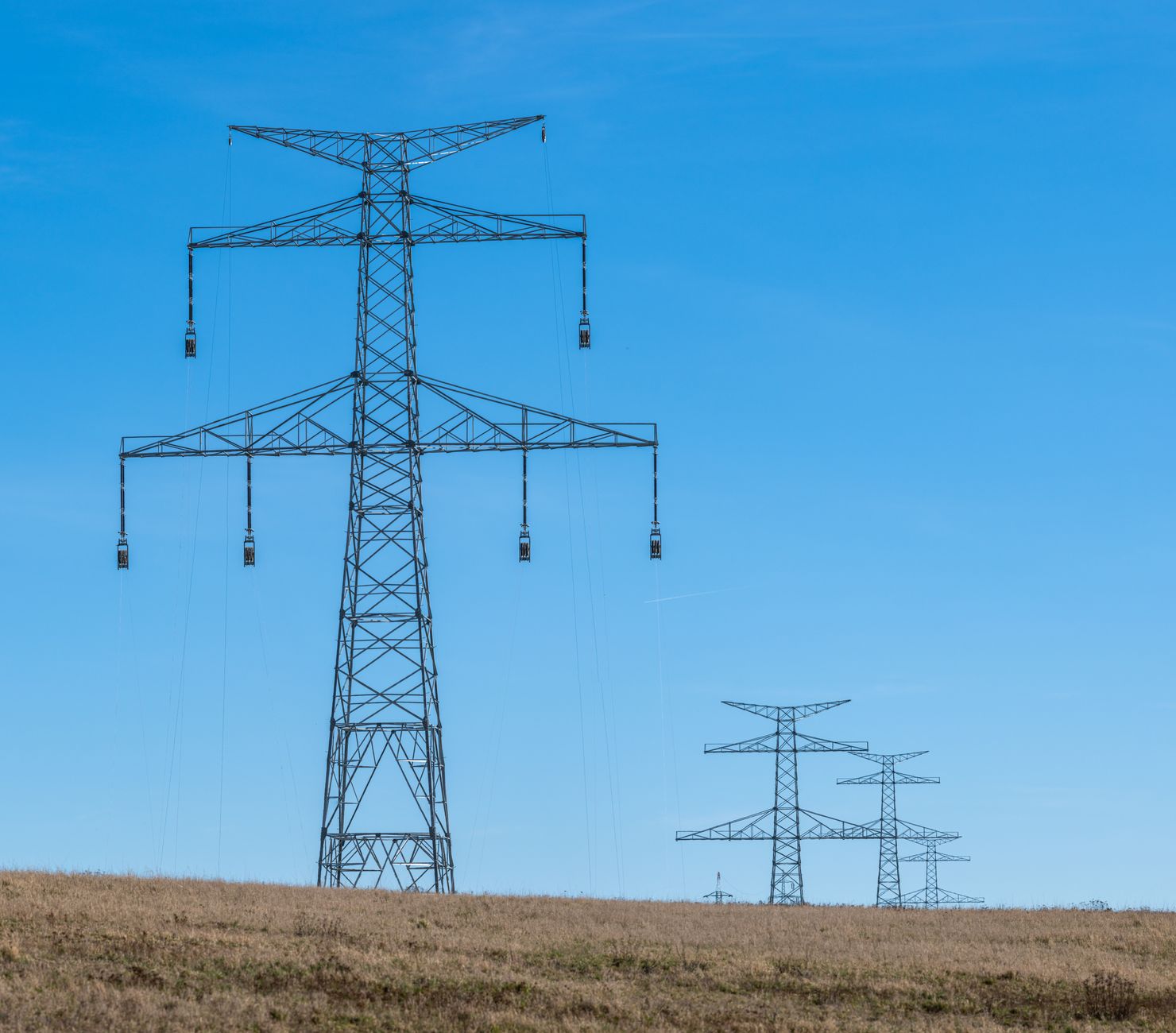
Distribution-grid hardening has crossed from operational priority to regulatory mandate. The Michigan Public Service Commission's March 27, 2026 approval of Consumers Energy's 2026 Reliability Action Plan — authorizing capital deployment across Grand Rapids, Flint, Lansing, and Northern Michigan for nearly 2 million customers — is not a routine rate case. It is the clearest recent example of a state commission explicitly structuring a utility capital program around a measurable reliability benchmark, arriving at exactly the moment that U.S. grid infrastructure faces its most acute stress test in a generation.
The arena here is large and tightening. U.S. utilities are entering what industry analysts describe as a capital 'super-cycle,' with projected spending of $1.1 trillion to $1.4 trillion through 2030 — roughly double the prior decade's pace, according to industry group estimates. EIA data released March 24, 2026 show that solar, wind, and battery storage added 55,221.6 MW of combined capacity in the 12 months through January 2026, while fossil fuel and nuclear net additions totaled less than 1 GW. Renewables now account for 33.5% of installed utility-scale generating capacity. Against that supply build, demand is accelerating: data centers account for roughly 7% of U.S. electricity consumption today, up from approximately 1% fifteen years ago, and Goldman Sachs analysts warned in January 2026 that nearly all U.S. power grids will lack critical spare capacity by 2030. The dominant investor-owned utilities navigating this environment — Consumers Energy, Xcel Energy, Duke Energy, NextEra Energy, and Dominion Energy — are each racing to lock in regulatory cost-recovery frameworks before load growth outruns their capital plans.
The Consumers Energy approval is specific in its mechanics. The Michigan PSC authorized the full 2026 Reliability Action Plan, directing $0.75 of every customer dollar collected under the plan to direct grid investment — tree trimming, underground line burial, pole replacement, automated switching, and physical security upgrades. Greg Salisbury, Consumers Energy's Senior Vice President of Electric Distribution, described the plan's purpose directly: 'Our Reliability Action Plan represents an investment that will lead to fewer and shorter power outages.' The approval also authorized $5 million in bill assistance funding distributed across 11 nonprofit organizations, targeting customers who struggled with energy costs following a major winter storm that struck Michigan earlier in March 2026. The regulatory process that culminated in the March 27 approval took approximately 12 months, according to company filings reviewed via StockTitan. The full order text had not been posted to the Michigan PSC eLibrary at the time this analysis was prepared; conditions, milestones, and cost caps should be reviewed upon public release.
The timing of the approval is not coincidental — it reflects a convergence of three structural forces that have been building since 2021. First, Consumers Energy's own track record provided the regulatory foundation: since 2021, the average Michigan electric customer experienced one fewer hour of outage time per year under normal conditions, a 28% reduction that the company describes as among the largest such improvements nationally over that period. That performance record gave the PSC a data basis for approving continued capital deployment rather than demanding a pause for evaluation. Second, the EIA's 2026 capacity outlook — projecting a record 86 GW of utility-scale additions, with solar at 51% of the total, battery storage at 28%, and wind at 14% — signals that generation supply is being added faster than distribution infrastructure can reliably absorb it, making grid-hardening investment a logical complement rather than a substitute for generation spending. Third, FERC Order No. 1920, which mandated modernized long-term transmission planning with state-level input, has shifted the regulatory conversation from generation siting to system-wide reliability — a frame that makes distribution-level capital programs easier to justify before state commissions.
The competitive implications of this approval run beyond Consumers Energy's own service territory. Utilities that can demonstrate a clear, measurable reliability improvement curve — as Consumers has done with its 28% outage-reduction figure — hold a structural advantage in rate cases over peers that cannot quantify their capital efficiency. This shifts pricing power within the regulatory compact: commissions in Michigan and states watching Michigan will be more willing to approve accelerated cost recovery for utilities that produce auditable reliability metrics. The indirect pressure falls on utilities in adjacent markets — particularly those in the Midwest ISO (MISO) footprint — that have not yet built similarly structured reliability benchmarks into their public reporting. For equipment suppliers serving distribution hardening programs — pole manufacturers, underground cable producers, automated switching vendors, and vegetation management contractors — the Consumers approval represents a confirmed, multi-year demand signal with regulatory backstop. The bill assistance structure, funded at $5 million through nonprofit intermediaries, also signals that state commissions are treating affordability as a co-equal objective alongside reliability, which could complicate rate design in future cases if grid investment costs escalate faster than projected.
Our read: the Consumers Energy approval is a proof-of-concept for a regulatory model — performance-benchmarked capital deployment with transparent dollar allocation ratios — that several other state commissions will attempt to replicate as data center load growth forces utilities to seek faster cost recovery. The testable hypothesis is this: utilities that enter their next rate case with auditable, multi-year outage-reduction data will face shorter approval timelines and fewer conditions than peers that cannot produce equivalent performance records. What would confirm it: if the Michigan PSC's approval order, when released, contains fewer conditions than comparable 2024-cycle rate cases in the MISO footprint. What would disconfirm it: if the full order reveals significant cost caps or performance clawback provisions that the company's press materials did not disclose. The 28% outage improvement is a compelling number, but its durability as load grows — particularly if large-load customers in Michigan seek interconnection under frameworks similar to Minnesota's new very-large-customer tariff — is the variable that will determine whether this approval looks prescient or undersized by 2028.
Decision-makers should track four forward indicators. First, the Michigan PSC eLibrary posting of the full 2026 Reliability Action Plan approval order: when it appears — likely within 30 days — the conditions, reporting milestones, and any cost caps will determine how replicable this model is. Second, the Minnesota PUC's vote on the Xcel–Google–Form Energy Electric Service Agreement, which Xcel plans to file 'in coming weeks' per a March 27 statement to the Minnesota Reformer; a PSC vote by May 1 would confirm whether ratepayer-protection guardrails for hyperscaler loads are workable, directly informing how Michigan and other states structure large-load interconnection requests to Consumers Energy. Third, the EIA's April 2026 Electric Power Monthly, due approximately April 24: if Q1 2026 battery storage installations are not pacing toward the 24 GW annual target, the regulatory case for distribution hardening over generation additions strengthens further, accelerating the capital deployment model Consumers has just had approved. Fourth, FERC Order No. 1920 RTO compliance filings: when MISO and PJM submit their long-term transmission planning proposals under the new framework, the treatment of distribution-transmission interfaces will define the investment economics for the next decade — and will either validate or complicate the asset-allocation logic embedded in Consumers Energy's 75-cent capital commitment.