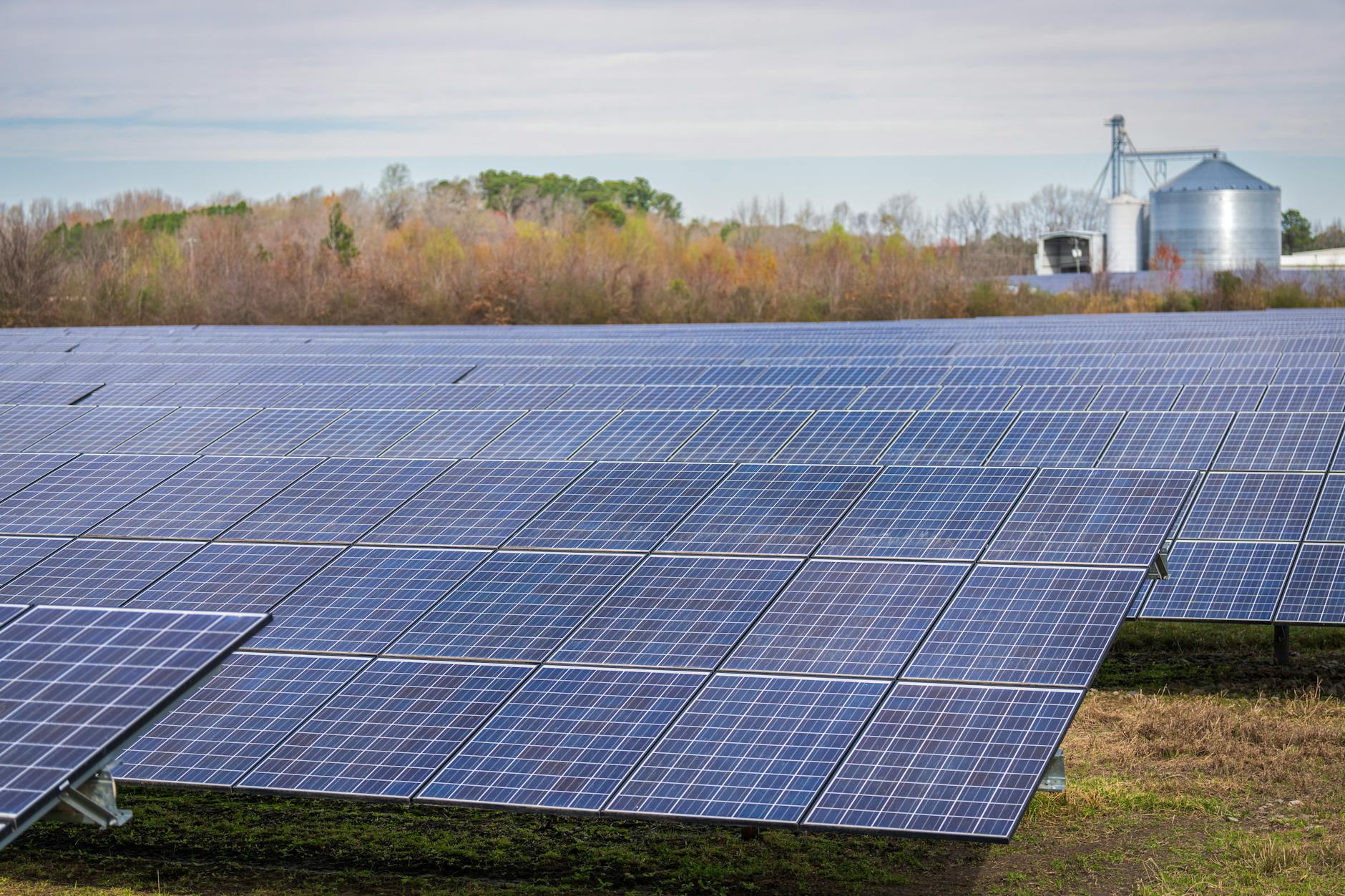
The final solar panel clicked into place at Kōwhai Park on June 15, 2026, 300,000 modules across 230 hectares of flat land at Christchurch Airport, New Zealand's largest utility-scale solar installation now complete in its primary construction phase. Contact Energy and Lightsource bp have secured NZ$267 million in financing for the project to plant enough silicon to generate 275 gigawatt-hours of electricity per year, enough to power 36,000 homes, with Contact Energy committed to buying 80% of the electricity generated under a 15-year power purchase agreement. The project was financed by four major banks: Westpac New Zealand, Mizuho, China Construction Bank, and Intesa Sanpaolo. Commercial operation is expected later in 2026 after grid connections and final commissioning, a timeline that appears feasible but carries technical risk in the final mile of any utility-scale deployment.
The scale and location of Kōwhai Park reflect a deliberate shift in how major energy companies now approach solar in developed Pacific markets. Co-locating 150 MW of generation at an airport, where ground lease costs are lower than urban industrial sites, grid interconnection infrastructure already exists, and anchor customers (airport operators, maintenance facilities, district cooling systems) can absorb baseload power, changed the unit economics. Contact Energy CEO Mike Fuge called the project a proof of concept for "strategic collaboration" in New Zealand's renewable future; what he did not need to say is that the project pencils without subsidies, which signals that merchant solar at scale is now profitable in the developed world. Lightsource bp, the U.K.-based renewables developer owned by bp, has become one of the fastest-moving solar investors globally partly because it pursues exactly this playbook: large ground-mounted installations at infrastructure hubs where power off-take is predictable and grid access is already planned.
Kōwhai Park's timing intersects with a wider strategic pivot at Contact Energy. In November 2025, the company announced Contact31+, a capital program to deploy 200 MW of battery energy storage systems (BESS) and advance geothermal exploration drilling, with a NZ$525 million equity raise announced in February 2026 to accelerate the strategy; Contact explicitly positioned battery storage as a hedge against peak demand and renewable variability. The Kōwhai Park solar output, 275 GWh annually, peaking in summer, requires downstream storage or demand-side flexibility to maximize value during off-peak hours. Contact is essentially building the machine: solar supply, battery buffer, and heat-pump-ready industrial anchor loads. This is the portfolio model that utilities in high-renewable-penetration grids (Denmark, South Australia, Chile) have been forced to adopt; Contact is choosing to adopt it voluntarily, ahead of regulatory mandate, which suggests the company sees battery-backed solar as the only defensible generation position in a net-zero grid.
The project's commercial operation date, stated as "later in 2026", carries real risk. Final grid interconnection with Orion New Zealand's 66 kV distribution network remains incomplete; inverter commissioning, protection relay testing, and reactive power compliance testing are standard final-phase blockers that have delayed utility-scale projects by months in other markets. Contact has already built in contingency by framing the expected operation window as a range rather than a fixed date. The first output milestone to watch is whether the project reaches even 50% of nameplate capacity by October 2026; if grid or equipment issues push that date past December, it signals commissioning complexity that will ripple into Contact's wider pipeline timeline.
Beyond Contact's internal strategy, Kōwhai Park validates a broader trend: large co-located renewables at transport, logistics, and data-center hubs are now moving from experimental to industrial. Similar projects are under construction or planned across Australia, Japan, and Southeast Asia. The competitive threat to incumbent utilities is real but delayed, Contact owns the grid connection and can dispatch the solar output directly into Orion's network, giving it a structural advantage over merchant developers who must compete for transmission access. That advantage will narrow as grids mature and distributed resources become commoditized, which is why Contact is investing in the battery layer now.