Cameron McCord wasn't shopping for capital in early 2026. The Nominal CEO, a former Navy submarine officer and alumnus of defense startup Anduril, had just closed a $75 million Series B round with Sequoia only months earlier. Then Trae Stephens, co-founder of Anduril and partner at Founders Fund, approached him about an $80 million continuation round at a $1 billion valuation. By March, Nominal had raised $155 million in ten months, a velocity that suggests not fundraising hunger but founder conviction and insider validation. What made the round material was not the capital. It was what came next.
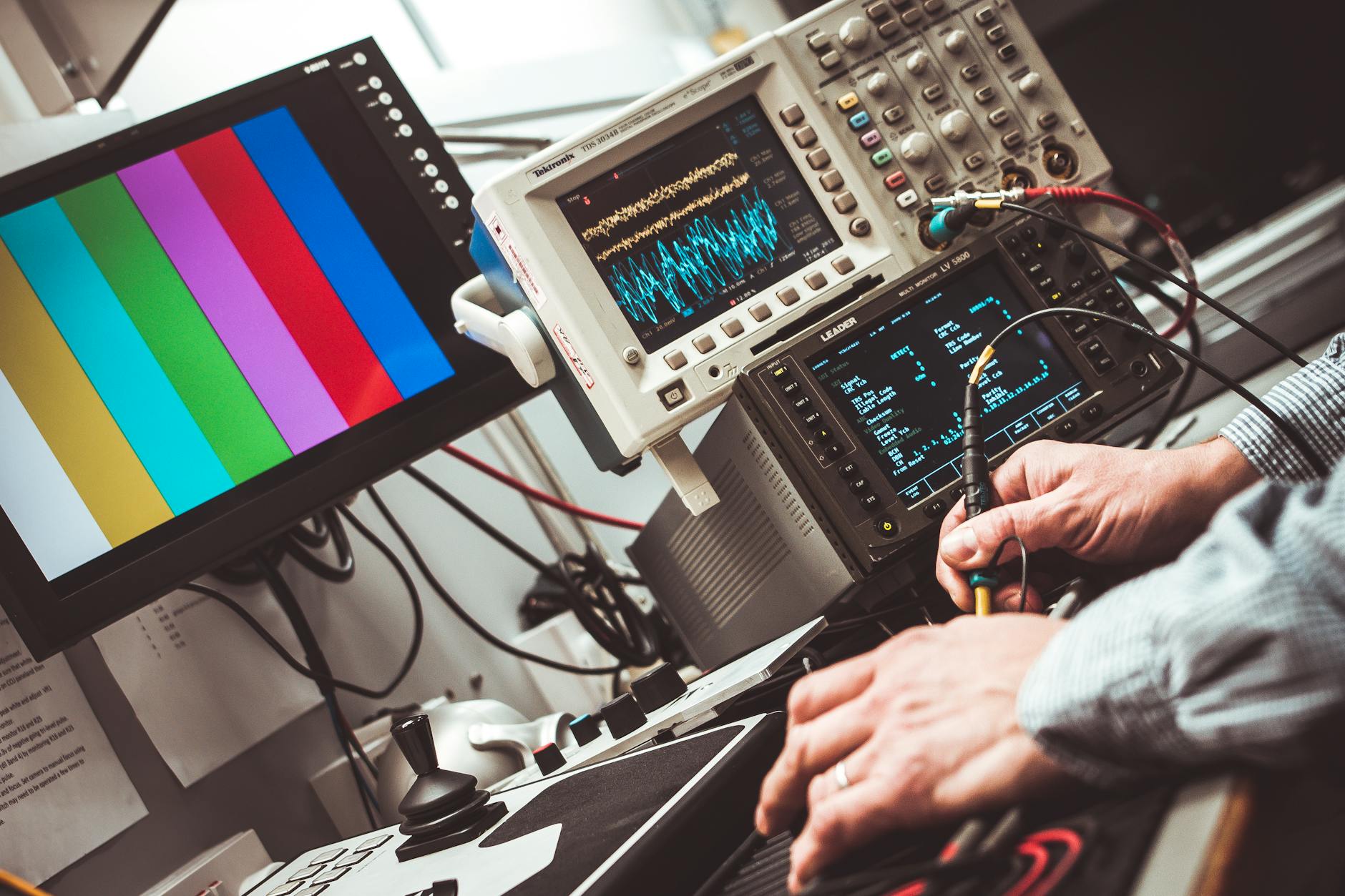
Nominal operates at the intersection of two structural realities in defense and space: hardware development has accelerated (new missiles, drones, satellites, hypersonics launch faster than they used to), but the test infrastructure that validates them has not. Engineers still piece together bespoke test stands, manually collate instrumentation data across incompatible systems, and lose months converting raw sensor output into something AI can actually reason over. This fragmentation is not a nice-to-have inefficiency; it is a lock on iteration speed. Nominal's thesis is that unifying that data backbone, capturing, standardizing, and making it searchable and AI-ready, becomes non-negotiable for programs running at scale. Four of the five largest defense contractors in the world now run on the platform. Over sixty organizations trust it with mission-critical programs. Revenue grew 7x in 2025 alone.
But the real inflection arrived in April. The Air Force Test Center awarded Nominal a $53 million sole-source IDIQ (indefinite delivery, indefinite quantity) contract to modernize test data infrastructure across AFTC test wings and wider DoD programs. This is not a pilot. This is not a proof-of-concept. This is the federal government saying Nominal's approach to test infrastructure standardization is the baseline going forward. The contract emerged from prior engagements: Nominal had already partnered with the Test Resource Management Center (which oversees all U.S. physical infrastructure and test software), completed a Phase 2 STTR contract with the Air Force Test Pilot School in late 2024, and was actively embedded at Edwards Air Force Base. The IDIQ simply formalized what had already been validated in operational conditions.
Three factors converged to make this moment possible. First, the speed imperative in defense modernization, the Air Force's need to compress test-to-fielding timelines, became urgent enough to justify moving away from legacy, siloed systems. Second, Nominal had proven the platform works at scale in adversarial conditions: Anduril is a marquee customer, Hermeus relied on it for hypersonic vehicle testing, Mach Industries adopted it for next-generation strike systems. Third, McCord and his team built genuine federal credibility, not through lobbying, but through embedding at test facilities, understanding compliance requirements (FedRAMP-aligned infrastructure, defense-grade security), and earning trust from engineers on the flight line. When the Air Force decided to move, Nominal was the only vendor that already understood the problem and had operational runway inside the system.
This positions Nominal to capture the infrastructure layer for the next decade of U.S. defense testing. But the real stake is broader. The company is simultaneously expanding into automotive (Pratt Miller Motorsports), energy (Antares nuclear), and industrial manufacturing, sectors facing identical test infrastructure fragmentation. Nominal also acquired Fid Labs in May 2026 to embed AI agents into the full hardware engineering lifecycle, not just test operations. If this expands the way McCord envisions, Nominal becomes not a defense vendor but a horizontal platform for accelerating hardware development cycles across any sector that depends on physical testing and validation.
Watch three things: First, the rate at which the Air Force IDIQ generates actual task orders and annual spend, this will signal whether the contract is strategic centerline or a nice-to-have bolt-on. Second, whether the acquisition of Fid Labs leads to new product traction or feels like engineering-for-engineering's sake; AI agents in hardware workflows are powerful but difficult, and Nominal needs to prove the integration actually compresses test cycles. Third, whether the international expansion (currently a London office) produces meaningful non-U.S. defense traction, the addressable market outside ITAR-constrained defense is larger, but Nominal's moat exists precisely because it understands federal compliance. Winning in open markets requires a different playbook.