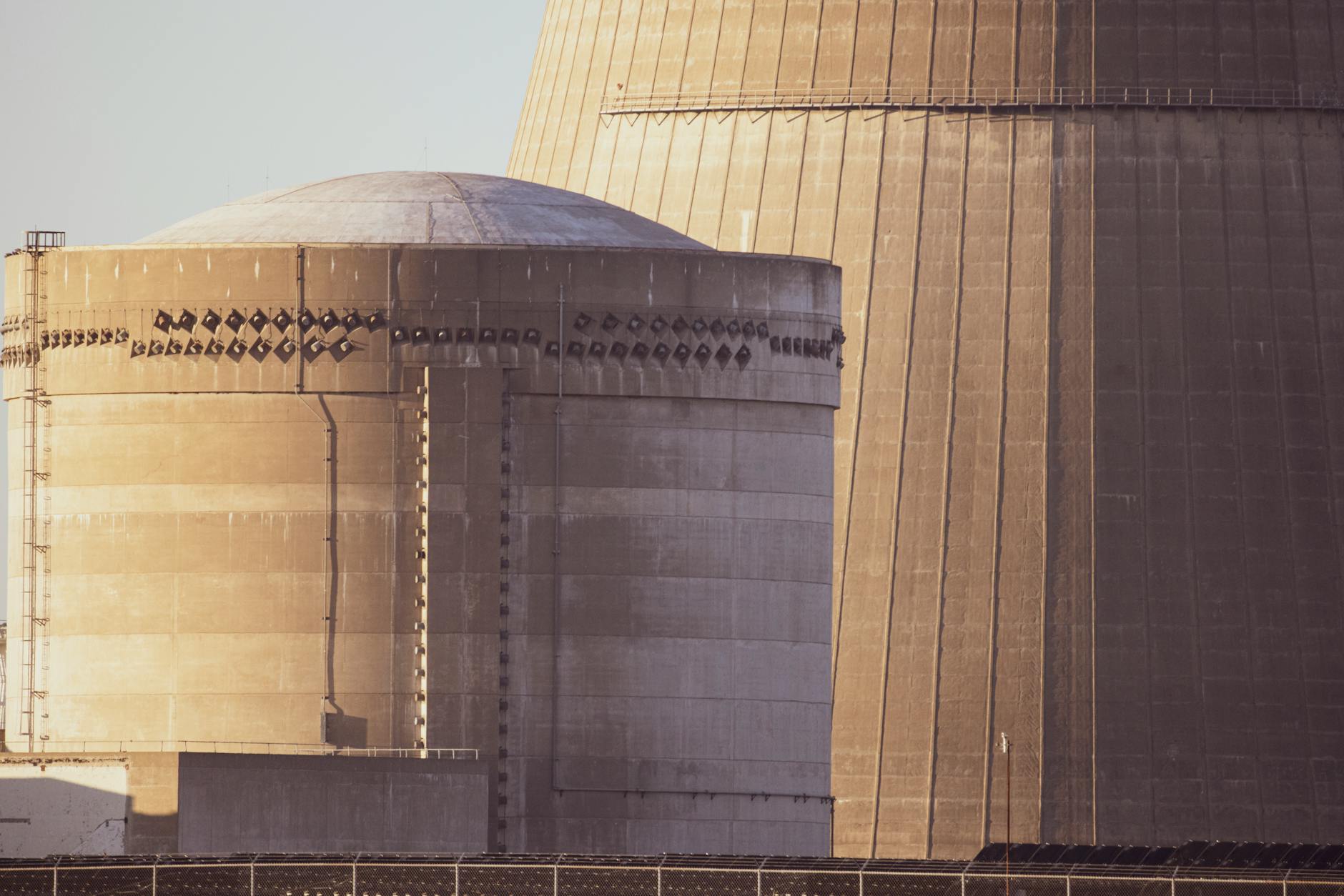
Part 53 marks the moment the U.S. nuclear licensing system stopped being a structural veto on advanced reactor deployment. The Nuclear Regulatory Commission finalized 10 CFR Part 53 on March 26, 2026 — the first new regulatory framework to address initial reactor licensing since Part 52 was created in 1989, and the first fundamental update to reactor licensing standards since 1956, when the Atomic Energy Commission issued Part 50. Completed nearly two years ahead of the end-of-2027 deadline mandated by the Nuclear Energy Innovation and Modernization Act of 2019, the rule establishes a risk-informed, technology-inclusive licensing pathway that eliminates the exemption process previously required for any reactor design that departed from light-water architecture. The strategic consequence is direct: the regulatory friction that has functioned as an effective capital barrier for non-LWR technologies has been structurally removed.
The advanced nuclear market is entering its most consequential licensing cycle in a generation, and the table is large. The NRC authorized 13 license renewals in 2025, delivering 12,000 MW of power over 20 years, and approved the first-ever restart of a decommissioned reactor at Palisades, Michigan. The commission completed over 700 licensing actions in 2025, 90% ahead of schedule, with project estimates down roughly 40% for schedules and 35% for staff hours — efficiencies attributable to the ADVANCE Act and Executive Order 14300. The companies with the most direct exposure to Part 53 are TerraPower, whose 345-MWe sodium-cooled Natrium reactor in Kemmerer, Wyoming has a construction permit application active before the NRC; Kairos Power, whose Hermes fluoride salt-cooled high-temperature reactor is similarly in process; and Oklo and X-energy, both of which are advancing designs that would have required extensive exemption packages under the old framework. These four companies collectively represent the leading edge of a non-LWR pipeline that Part 53 was purpose-built to accelerate.
The rule's operative mechanics are precise. Part 53, formally titled 'Risk-Informed, Technology-Inclusive Regulatory Framework for Advanced Reactors,' shifts the licensing standard from technology-specific prescriptions calibrated to 1950s-era light-water designs to a technology-neutral approach grounded in risk analysis. Applicants can no longer be required to seek exemptions from LWR-specific rules that are structurally inapplicable to their designs — a process that had added cost, time, and regulatory uncertainty to every advanced reactor project. The NRC's own prior draft regulatory analysis quantified the benefit at $53.6 million to $68.2 million in net savings per license applicant relative to the Part 50 and Part 52 pathways. The rule introduces graded security requirements scaled to actual risk profiles, flexibility for staged licensing that allows developers to lock in regulatory certainty earlier in the development cycle, and nine guidance documents published alongside the rule, with additional guidance to follow. The final rule is scheduled for Federal Register publication on April 3, 2026, with an effective date 30 days thereafter, placing it operationally live by approximately May 3, 2026.
The structural forces that made Part 53 possible now converged from three directions simultaneously. First, the legislative mandate: NEIMA 2019 created a statutory deadline that forced the NRC to act, and the commission beat that deadline by nearly two years — a pace consistent with the broader efficiency gains the agency has reported under EO 14300. Second, the capital environment: clean baseload demand has intensified as emissions trajectories under current policies show continued growth, with IIASA research projecting upper-end emissions growth of 0.1% per year between 2021 and 2035, sustaining pressure on governments and utilities to secure firm zero-carbon capacity. Third, the technology maturation curve: both TerraPower's Natrium and Kairos Power's Hermes have advanced far enough in their NRC review processes that a framework clarification is immediately actionable, not theoretical. The Palisades restart approval in 2025 demonstrated that the NRC was willing to move with unprecedented speed when political and commercial conditions aligned — Part 53 extends that posture into the advanced reactor domain.
The competitive implications restructure the advanced nuclear value chain in three ways. First, non-LWR developers — TerraPower, Kairos, Oklo, X-energy — gain a licensing path whose cost and timeline are now bounded by a published regulatory analysis rather than open-ended exemption negotiations; this directly improves their ability to close project finance and offtake agreements. Second, engineering, procurement, and construction firms that built specialized practices around navigating LWR exemption processes for advanced designs face margin pressure as that complexity premium erodes. Third, the broader EO 14300 rulemaking wave, which the NRC describes as including more than two dozen rulemakings with a front-loaded schedule between March and May 2026, signals that Part 53 is the opening move in a sustained regulatory restructuring — companies that move earliest to file under the new framework gain a learning-curve advantage in interpreting guidance documents that are still being finalized. TerraPower's Natrium, with its molten-salt energy storage system capable of boosting output from 345 MWe to 500 MWe, is the most construction-ready non-LWR in the queue and stands to extract the largest near-term benefit if it transitions its existing application to the Part 53 pathway.
Our read: Part 53's real test is not whether it is better law — it clearly is — but whether the per-applicant savings of $53.6 million to $68.2 million are large enough to materially compress the risk-adjusted development timelines that currently separate advanced reactor projects from final investment decisions. The hypothesis is that they are not sufficient on their own, but that they are the necessary precondition for the EO 14300 rulemaking wave to have first-order commercial impact. If TerraPower announces that Part 53 has shortened the Natrium construction permit timeline or reduced its bonding requirements within the next two quarters, that confirms the framework is operationally effective and not merely declaratively permissive. If no leading applicant files under Part 53 within 12 months of its effective date — defaulting instead to familiar Part 50 or Part 52 pathways — the rule will have closed a regulatory gap without triggering the deployment acceleration it was designed to produce.
Decision-makers should monitor four specific indicators over the next 12 months. First, the Federal Register publication on April 3, 2026, and the 30-day comment window through approximately May 3: any court challenge or administrative stay request filed in this window would signal organized opposition capable of delaying the effective date and should be treated as a leading indicator of deployment timeline risk for the entire non-LWR pipeline. Second, TerraPower's construction permit process at Kemmerer, Wyoming: the company had expected to receive its final safety evaluation by December 31, 2025; any NRC statement updating that timeline under the Part 53 pathway is the first real-world test of whether the new rules accelerate or merely reframe existing schedules. Third, the NRC's EO 14300 proposed rulemaking wave between March and May 2026, and specifically the proposed rule on 'Licensing Requirements for Microreactors and Other Low Consequence Reactors': passage of that rule would extend the Part 53 framework logic to sub-utility-scale deployments, opening a second commercial track with different capital and offtake structures. Fourth, the 90-day comment period on proposed fusion regulations, closing May 27, 2026: fusion developers' responses will signal how much of the Part 53 architecture they view as applicable to their designs versus requiring a separate framework — a distinction with direct implications for how broadly the regulatory restructuring propagates across the advanced nuclear sector.