In April 2018, Ontario's newly elected Progressive Conservative government tore up 750 renewable energy contracts that the previous Liberal administration had signed. The stated reason was simple: the power purchase agreements were too expensive, locked in at above-market rates, and politically toxic. Doug Ford's government was not wrong about the optics. By 2026, that cancellation decision looks like a massive policy misstep — not because renewables are ideologically correct, but because Ontario's electricity demand is about to spike hard and the grid operator just figured out that solar and wind are now the cheapest way to meet it.
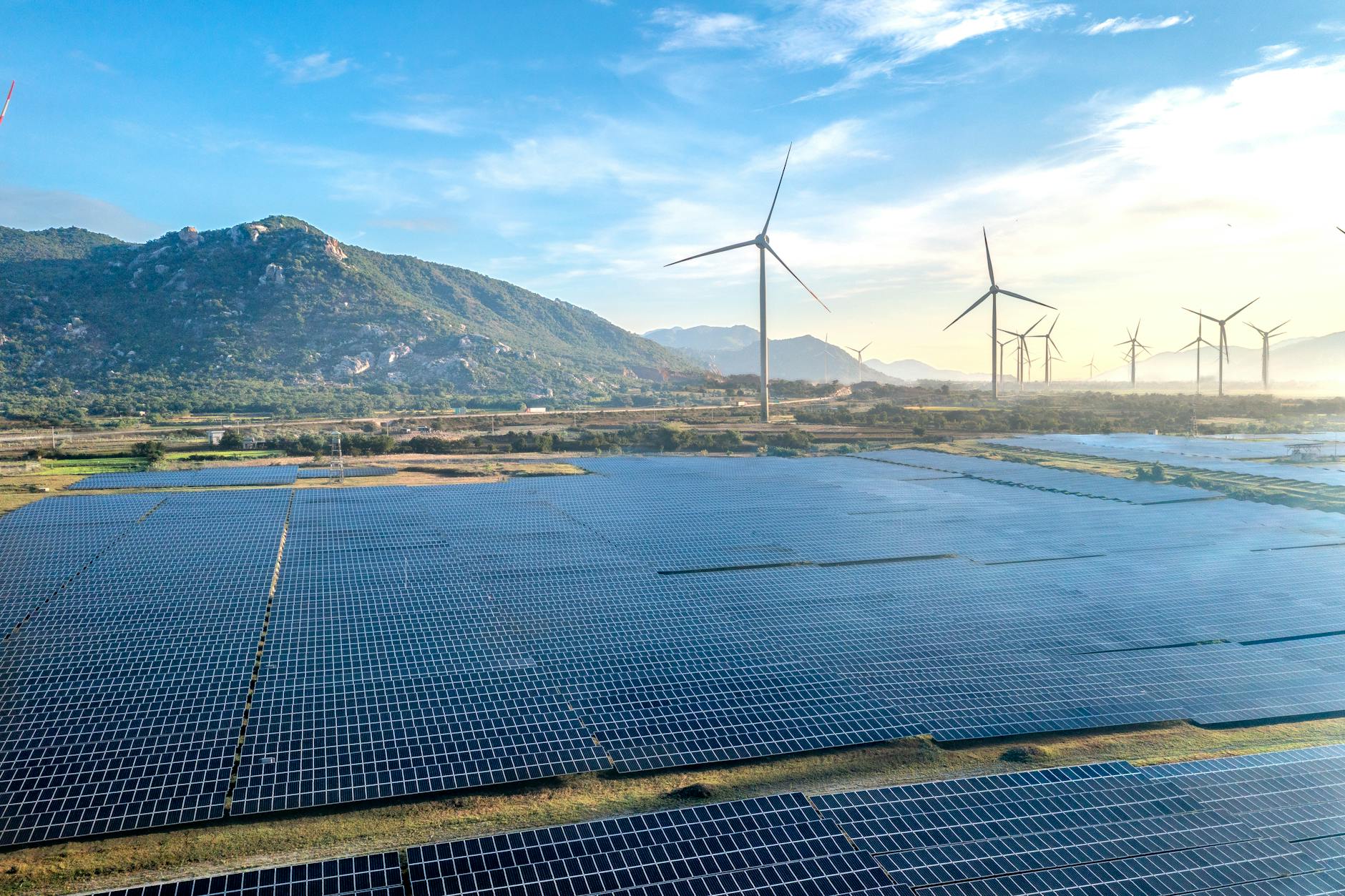
On April 9–10, 2026, Ontario's Independent Electricity System Operator approved 14 renewable energy projects with combined capacity of more than 1,300 MW: 12 solar farms totaling 915.1 MW and 2 wind projects, all under a 20-year contract framework with commercial operation required by May 2030. The IESO calls this the first large-scale renewable development in Ontario in more than a decade. That description is technically accurate and politically important. It is also underselling what just happened. The IESO's prior procurement round, LT1, which closed in 2023, delivered 2,100 MW of total capacity — but 1,784 MW of that was electricity storage and 410 MW came from natural gas and biogas. In other words, the LT1 round was not about building new generation. The LT2 Window 1 results are fundamentally different: they are pure, new renewable generation, and they came with price tags that the IESO describes as 'competitive and lower than other weighted average prices for the two renewables.' Specific per-project pricing will be published once contracts are fully executed, expected by May 2026.
The 12 solar projects break down into four significant facilities: the 200 MW Dunns Valley Solar site, the 167.2 MW CarbonFree Fort Frances project, the 154 MW CarbonFree Kynoch project, and the 141.25 MW Massey Solar project, with the remaining eight projects ranging from roughly 40 MW to 80 MW each. Together with the two wind projects, the portfolio will generate more than 3 TWh of supply annually — enough to power something like 300,000 homes at median Ontario consumption rates, though grid operators do not think about capacity in home-equivalents for good reasons. The procurement was driven by a single structural fact: the IESO projects electricity demand in Ontario could rise by up to 90% by 2050. That forecast was almost certainly revised upward based on EV growth, data center expansion, and electrification of heating loads. The EIA's April 2026 Annual Energy Outlook projects that EV and data center server demand alone will account for between 50% and 80% of North American electricity growth through 2050. Ontario's grid operator saw those same numbers and decided that waiting another five years to approve new generation capacity was not an option.
The timing matters. The U.S. EIA reported in February 2026 that developers plan to add 43.4 GW of utility-scale solar capacity in the United States in 2026 — a 60% jump from the prior year. Battery storage additions are running at 24 GW planned for 2026 versus a record 15 GW added in 2025. That is the competitive landscape Ontario is now bidding into. Solar manufacturers have excess capacity in 2026, prices are falling, and developers are desperate to lock in long-term offtake agreements. The IESO leveraged that desperation. The fact that the new Ontario contracts came in at 'competitive and lower' pricing than prior renewable benchmarks is not a surprise — it is an indictment of the 2018 decision to cancel the earlier agreements. Those contracts were expensive because they were signed when renewable costs were higher and solar supply was tighter. Eight years later, the industry has moved on. Ontario did not. Until now.
Who wins from this announcement? First, the developers behind the winning projects — CarbonFree Energy, Dunns Valley Solar, and the operators of the two wind projects will have 20-year revenue certainty, which is what makes solar and wind projects financeable at scale. Second, Ontario's grid operator, which bought renewable capacity at lower costs than prior benchmarks and locked in supply through 2050. Third, utilities and large industrial customers that will eventually benefit from lower renewable marginal costs flowing through to their power purchase agreements. Who does not win? Natural gas generators and nuclear operators are now competing for a smaller slice of the demand growth pie — though the IESO's planned LT2 Window 2 procurement (expected later in 2026) will include 'more capacity from natural gas and battery storage projects,' so fossil-gas interests are not shut out. The real loser is any developer who assumed Ontario's renewable procurement window would stay closed forever. It is open now, and the price is set.
Here is the actual read: Ontario just reversed a decade-long policy mistake not because the government changed its ideology or listened to activist pressure, but because the grid operator faced a choice between building renewable capacity or watching demand outrun supply by 2030. The IESO chose to build. That is how energy policy actually works — not through moral suasion or climate commitments, but through spreadsheet economics meeting physics. The 1,300 MW of approved capacity is not enough to solve Ontario's 2050 demand forecast; the EIA projects overall Ontario electricity growth of 25% to 50% by 2050, which means the IESO will need to approve many more procurement rounds. The LT2 process is clearly meant to be repeatable, not a one-off. The real risk to track is execution: Ontario's transmission interconnection queue is notoriously slow, and the requirement that all 14 projects achieve commercial operation by May 2030 leaves a five-year window to permit, site, build, and energize generation facilities spread across the province. Permitting delay on even one or two major sites will cascade. The IESO knows this. The fact that they approved projects anyway signals they believe Ontario's permitting environment has actually improved, or at least they are betting it has. That bet is worth watching.
Three concrete milestones will tell you whether this story unfolds as the IESO expects. First, watch for the per-project price data in May 2026 — when the IESO publishes those numbers, you will know whether the 'competitive and lower' claim was genuine or spin. Second, track the LT2 Window 2 announcement later in 2026, which will include the battery storage pricing that will determine whether Ontario's grid is moving toward storage-as-commodity or treating battery capacity as a long-term strategic asset. Third, watch the interconnection queue status reports from the IESO through 2027 and 2028 — if major solar projects start slipping past their construction start dates due to transmission congestion or permitting, the 2030 COD deadline becomes at-risk and the credibility of future IESO procurement rounds gets called into question. One adjacent signal to monitor: FERC's large-load interconnection rulemaking, due for final action by April 30, 2026, will determine how quickly data centers and large industrial loads can interconnect to the grid in adjacent regions. If that ruling opens up faster interconnection pathways, it will pull power into the U.S., reducing the effective supply available to Ontario's grid and making future procurement rounds even more urgent.