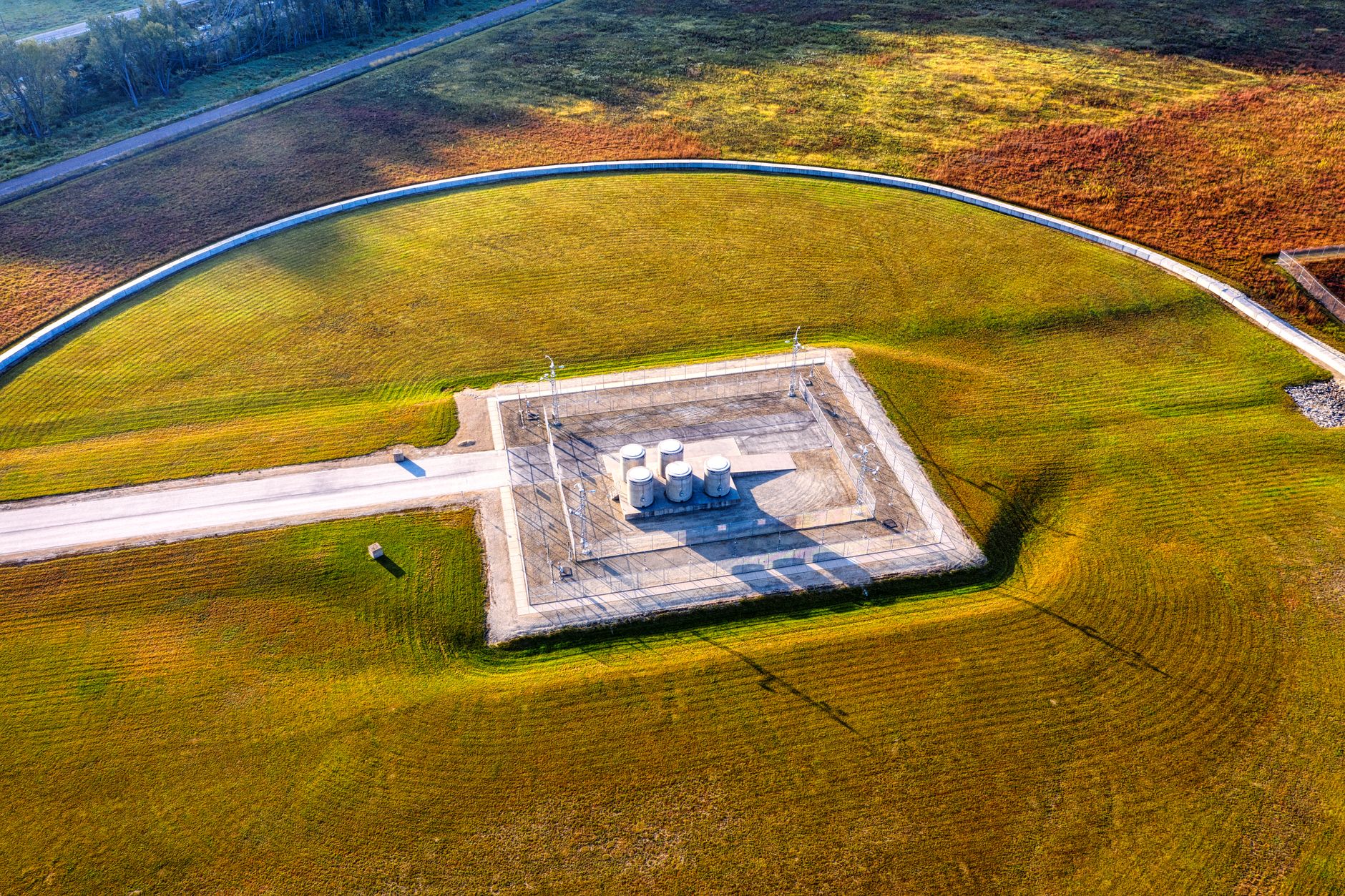
A 250-megawatt battery storage plant in Napanee, Ontario reached full commercial operation on May 19, five weeks ahead of schedule and on budget, a fact buried in a provincial energy minister's announcement but representing one of the clearest data points on where grid storage sits in its adoption curve. The facility holds 1,000 megawatt-hours of charge, making it a single-site infrastructure asset comparable to a mid-sized power plant. Ameresco, a U.S.-based clean energy contractor, developed it as a joint venture with Atura Power, a Canadian power producer. The project was a winner in the Ontario Independent Electricity System Operator's Long-Term 1 procurement, which awarded over 850 megawatts of storage capacity across the province in 2023, Canada's largest single BESS tender at the time.
The schedule and cost performance matter more than they appear to. When utility-scale battery storage was still a novelty five years ago, hitting timelines on a gigawatt-hour facility would have been news. Now it is table stakes, which is exactly the point. Napanee was not a pilot or a technology demonstration. It was a commercial procurement where Ontario's grid operator sought firm capacity at a fixed price, developers bid against each other, and the winner built it to spec. That it came in early and under budget tells you that the supply chain, the labor market, the financing terms, and the construction processes for battery storage are mature enough that developers can commit to hard deadlines without betting the company on a breakthrough. The facility uses proven lithium-ion chemistry, not experimental iron-air or long-duration concepts waiting for the next venture round.
Behind that milestone sits a much larger procurement pipeline. The IESO's follow-on Long-Term 2 procurement has already awarded contracts to 13 separate proponents for 1,115 megawatts of maximum capacity in the first window alone, nearly 1.3 times the entire LT1 award. That window is now closed, meaning the IESO and the winning developers are moving into detailed feasibility and site work. A Phase 2 award decision for Napanee itself is expected on June 16, which would add another tranche of capacity to the same site. If awarded, that expansion would follow a proven playbook: the first facility proved the site works, the permitting and grid connection are de-risked, and the developer can mobilize crews faster the second time. Boralex, a Quebec-based independent power producer, closed a US$145.12 million financing in April for a separate 125MW/500MWh BESS in Oxford County, Ontario, also an LT1 winner, showing that institutional capital is moving into these projects with confidence.
What makes Ontario's move significant is not the raw megawatt count. It is the speed and the consistency. The EIA projects the U.S. will add 24 gigawatts of utility-scale battery storage in 2026 alone, nearly 60% more than the record 15 gigawatts added in 2025. But that deployment is fragmented across dozens of independent developers, merchant plants, and utility-owned assets competing in different wholesale markets with different regulatory frameworks. Ontario's procurement is singular: the grid operator decided how much storage it needed, set a price ceiling, ran a competitive tender, and contracted the capacity. Developers knew the rules, the timeline, and the revenue model upfront. No waiting for a merchant developer to convince a utility to sign a power purchase agreement. No negotiating ancillary service revenues after the fact. No watching a storage project sit idle for two years waiting for favorable market conditions. This is infrastructure procurement, not speculative development.
The real read: Ontario is demonstrating that grid storage has moved from "prove the technology works" to "we need capacity, what is your best price and timeline?" That shift changes who wins. Ameresco, Atura, Boralex, and other established infrastructure developers with long-term corporate balance sheets can commit to fixed prices because their cost curves are predictable. Startups promising next-generation chemistry or breakthrough cost reductions cannot compete in this framework, not yet, and maybe not at all if the commodity lithium-ion supply chain keeps improving. The Ontario pipeline also shows what happens when a grid operator treats storage as a solved problem worth procuring at scale: costs come down, timelines tighten, and capital flows. Watch the June 16 Phase 2 award. If Napanee Phase 2 is approved, it signals that on-schedule, on-budget delivery locks in future supply. Watch also whether the IESO's Capacity Stream awards (still under evaluation) match the pace and price of the Energy Stream winners. If they do not, it means the market still cannot price capacity reliably, and Ontario's efficiency advantage collapses. Watch finally whether U.S. grid operators start copying Ontario's procurement model instead of waiting for merchant developers to build storage on speculation. That is where real deployment acceleration happens.