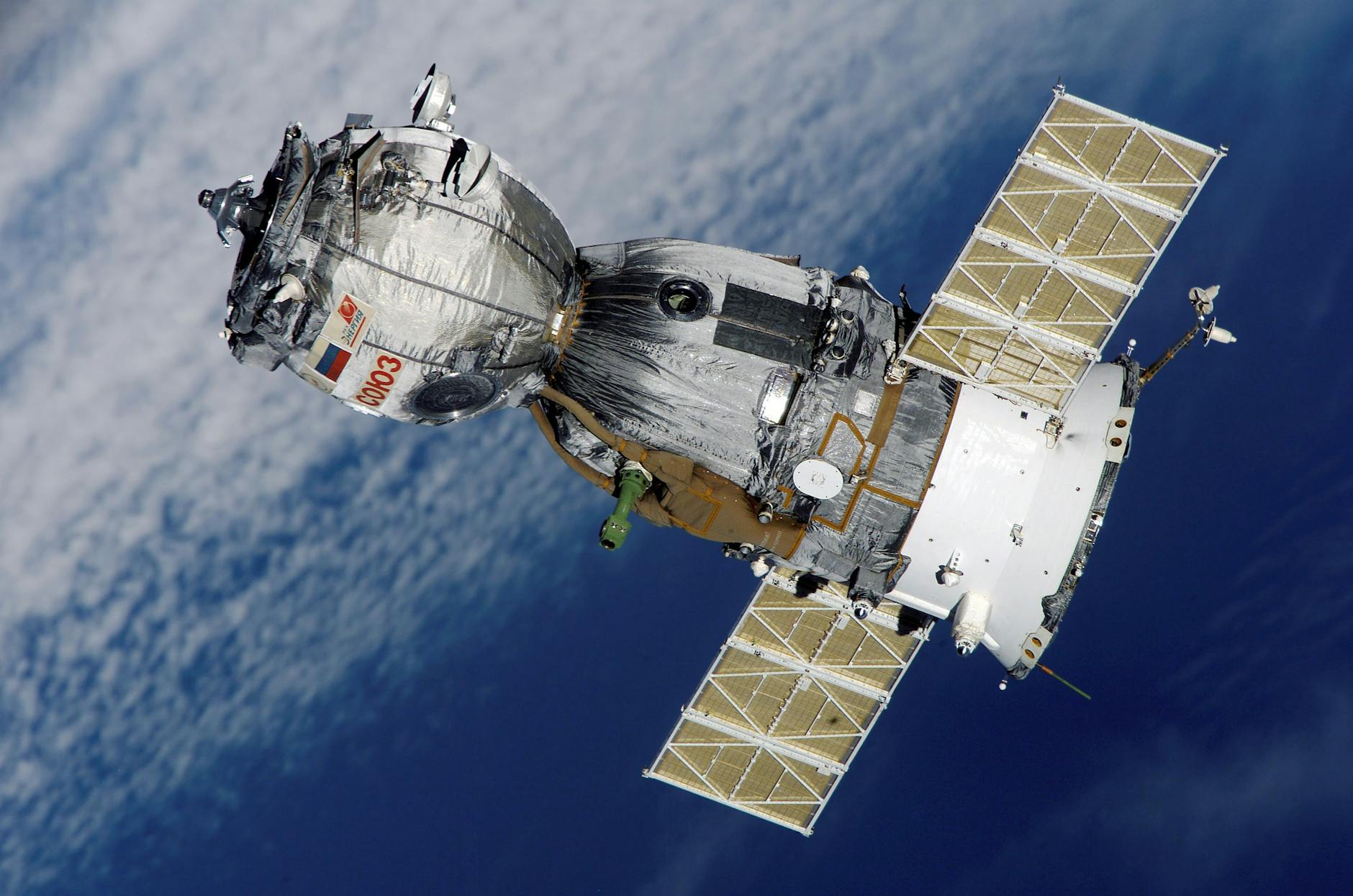
Pegasus XL flew for the last time on Friday morning at 4:36 a.m. EDT, carrying a 4.9-foot robotic spacecraft to orbit on a mission to keep a 21-year-old NASA gamma-ray telescope alive. The launch itself was routine, the air-launched rocket, dropped from an L-1011 carrier plane, ignited its first stage and climbed away from the Pacific. But the payload changed everything about what comes next. Katalyst Space Technologies' LINK spacecraft is now chasing Swift, NASA's Swift Burst Alert Telescope, which has sunk from its original safe altitude of 373 miles to a dangerous 249 miles. NASA estimates that if no one intervenes by October 2026, atmospheric drag will push Swift below 186 miles, the point of no return, and the telescope will tumble back to Earth uncontrolled by late 2026 or early 2027. LINK is racing to prevent that reentry.
The clock started the moment LINK reached orbit. Over the next seven to fourteen days, mission controllers will test the spacecraft's power, thrusters, and cameras before firing up the ion thrusters to execute a series of phasing burns, slow, gentle adjustments that will align LINK with Swift's exact path and velocity. By August, LINK will approach the telescope and use its onboard cameras to scan for a grip point. This is where the hardware-level problem becomes clear: Swift was built in 2004, long before anyone imagined a private spacecraft would need to grab it mid-orbit. The telescope has no standard docking ports, no handles designed for servicing. LINK's three robotic arms will have to grip whatever structural features they can find, a mission profile that has never been executed on an uncrewed government satellite. Once securely attached, LINK will fire its ion thrusters continuously for two to three months, pushing Swift upward by 150 miles back toward safety. The ion-thruster architecture is the mechanical stroke here: traditional chemical rockets would be too violent, too risky to fire against a satellite not built to withstand the structural shock. Gentle, constant electric propulsion is the only way to raise an old space telescope without breaking it.
Katalysta had less than a year to build this spacecraft after NASA awarded the $30 million Small Business Innovation Research Phase 3 contract in September 2025. That compressed timeline, design, build, test, launch, all inside twelve months on a fixed-price government contract, is a brutal filter for execution. It also signals something structural in the market: NASA was desperate enough, and confident enough in the servicing concept, to fund a startup directly instead of waiting for a mature contractor ecosystem to materialize. Pegasus XL's retirement after flying only three times in the last decade reflects the broader air-launch market contraction, but Katalyst's choice of the vehicle was not about nostalgia. The Pegasus could reach Swift's peculiar 21-degree orbital inclination, a path chosen to avoid the South Atlantic Anomaly, a region of intense radiation that would degrade the telescope's instruments. Few launch vehicles, and fewer that could accommodate a rapid-turnaround mission, could hit that inclination affordably. By the time LINK launches, Pegasus was the only option left.
What happens if LINK succeeds is a reframing of who owns the post-launch satellite business. For decades, in-space servicing has been a theoretical market, something that startups pitch and governments fund in proof-of-concept stages. LINK changes that framing by validating servicing against the hardest case: a spacecraft that was never designed to be serviced, by hardware that has to operate autonomously, on a government asset where failure means uncontrolled reentry over populated areas. If this works, the question shifts from "Can we do in-space servicing?" to "Why is every satellite launch not factoring in servicing cost as a routine line item?" Swift stays operational, possibly until 2030. Katalyst proves it can execute under deadline pressure. The ion-thruster economics, gentle, fuel-efficient, scalable to heavier satellites, become real, not vaporware. The companies that lose are the ones that built satellites under the assumption that once you launch, the spacecraft's lifetime is over. The companies that win are the ones building for modularity and for future touch by external hardware.
Two markers will determine whether this actually works. First: by August, whether LINK's cameras can identify a stable grip point on Swift and whether the robotic arms can maintain a firm hold during the subsequent thrusting phase. Second: between August and November, whether the ion-thruster reboost achieves the 150-mile altitude gain fast enough to clear the October deadline with margin. If LINK reaches stable capture and Swift climbs back above 186 miles before October, the market has its proof of concept, and the next phase becomes obvious: who builds the next-generation servicing spacecraft to handle not just rescue but planned maintenance, fuel transfer, and instrument upgrades on satellites that *are* designed for it. If LINK fails to achieve capture or thrusting stalls the altitude gain, in-space servicing remains theoretical, and Swift becomes another satellite lost to the laws of orbital mechanics.