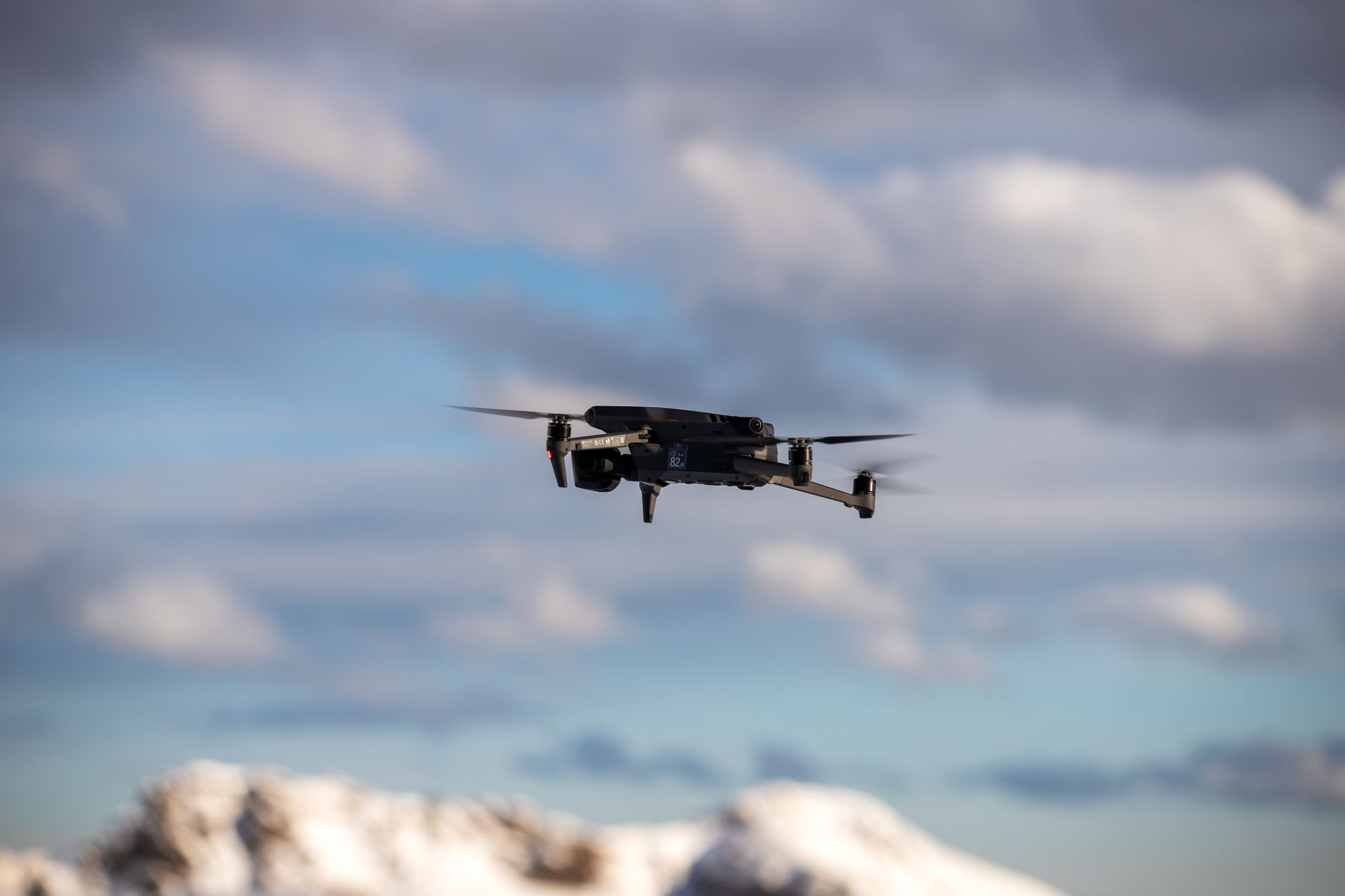
The Pentagon's Joint Interagency Task Force 401 has ordered three drone interceptor systems from Perennial Autonomy under a $500 million contract ceiling, a move that locks in one of the clearest cost-per-effect trades in recent defense procurement: replacing $3 million Patriot missiles with $15,000 autonomous drone killers. The three-year indefinite-delivery/indefinite-quantity award covers the Merops interceptor, the Bumblebee quadcopter, and the Hornet mid-range strike drone, all built to operate at the edge of human control, with humans retaining final authority over lethal force but the targeting loop executing at drone speed. This is not a prototype contract. This is an enterprise procurement for platforms that have already killed enemy drones in actual combat.
Merops proved its value in February when the Army purchased 13,000 interceptors in eight days after Iran began launching Shahed drones at U.S. positions in the Middle East. That speed of procurement, triggered by actual operational need, exposed a structural problem in air defense: the Pentagon had been burning through hundreds of Patriot missiles at several million dollars per engagement, draining stockpiles that Ukraine depended on, to defend against drones that cost a fraction as much to build and replace. Lithuania formalized the shift in April, buying 48 Merops units at $15,000 per piece, the first NATO country to field Perennial Autonomy's interceptor. The JIATF-401 contract caps three years of demand from that same customer base under a single vehicle, eliminating the need to renegotiate for each order and signaling to the market that low-cost drone-on-drone defense is now core Pentagon strategy, not an expedient workaround.
Perennial Autonomy, which rebranded from Project Eagle and counts former Pentagon innovation chief Will Roper among its leadership, had already built a relationship with JIATF-401 through a $5.2 million Bumblebee V2 contract in February. The new award consolidates three separate platforms under one ceiling, which matters operationally and competitively. It means a commander can mix interceptor types, deploying Merops for swarm defense, Bumblebee for low-altitude drone killers, and Hornet for longer-range strike, without juggling separate contracts or vendor relationships. It also means JIATF-401 has chosen to standardize on Perennial Autonomy across its counter-UAS portfolio rather than distributing the work across multiple vendors. That concentration is a bet: the company has the engineering depth and production capacity to deliver across three platforms simultaneously, and the task force believes the upside of integration and speed outweighs the downside of supplier risk.
The contract arms the joint force with computer vision, radio frequency sensing, and secure communications built into each platform, the stack required for autonomous targeting that does not require line-of-sight control or continuous operator input. JIATF-401's language around the award emphasizes layered defense and mission command integration, which translates to: these drones are meant to plug into existing air defense networks, feed targeting data back to human decision makers, and execute intercepts faster than traditional surface-to-air systems can turn and fire. That last point is the actual competitive advantage. A Patriot battery takes minutes to acquire, track, and launch. A drone loitering over a forward operating base can intercept another drone in seconds.
What changes now: order volume becomes the proof point. A $500 million ceiling over three years is roughly 33,000 interceptors at current unit pricing if the military orders purely at scale, or substantially fewer if it shifts to the more expensive Hornet platform for certain missions. Watch whether the Army, Air Force, and Navy each stand up their own demand signals through JIATF-401, or whether the task force consolidates all C-UAS procurement through one entity. Watch whether Perennial Autonomy can sustain production ramps without hitting supply chain friction on components or manufacturing capacity. And watch whether other vendors, particularly those building fixed-wing drone interceptors or kinetic C-UAS systems, lose market position as JIATF-401 formalizes its preference for this three-platform approach. The competitive landscape just narrowed. Everyone else in the counter-drone space is now competing for the remaining 67 percent of what JIATF-401 might spend, assuming the task force does not increase the ceiling as demand signals mature.