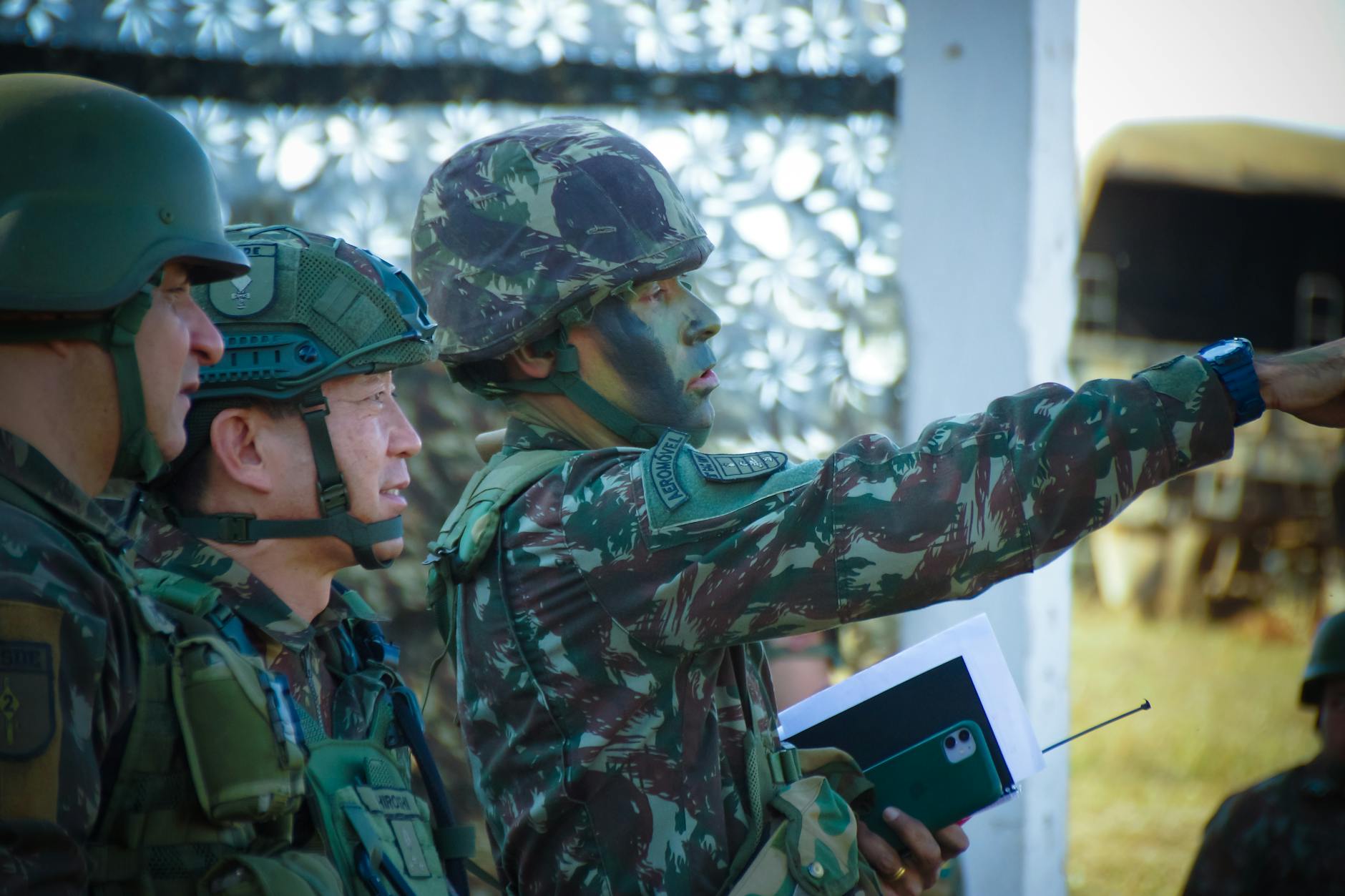
The Pentagon just cut a check to deploy eight frontier AI systems directly into its classified networks, and the company that was supposed to win, Anthropic, got locked out. On May 1, 2026, the Defense Department announced formal agreements with OpenAI, Google, Microsoft, Amazon Web Services, NVIDIA, SpaceX, Oracle, and Reflection AI to run their models on Impact Level 6 and 7 systems, the highest-security environments where real military operations happen. This is not a $1.5 million SBIR Phase I. This is not a proof-of-concept. The Pentagon's own language describes it as the mechanism for "establishing the United States military as an AI-first fighting force." Anthropic, maker of Claude, was the only major frontier lab cut out, a formal exclusion that carries consequences.
The Defense Department has been moving toward this moment since 2024, when it started formalizing AI as operational infrastructure rather than an R&D line item. Project Maven, which began in 2017 as a $15 million intelligence analysis experiment, is now being converted into a permanent program of record. In July 2025, the Pentagon's Chief Data and Artificial Intelligence Officer (CDAO) split $600 million between Anthropic, Google, and xAI for "agentic AI" work, autonomous AI systems that can reason through military decision problems, plus another $200 million to OpenAI. The May 1 announcement represents a categorical expansion: moving from research contracts to operational deployment inside classified military networks. The Pentagon committed over $32 billion in the first half of fiscal 2026 to AI, cloud computing, cybersecurity, and data analytics, described explicitly as "production contracts and operational systems being deployed at scale," not as experiments.
The mechanics are straightforward. All eight vendors will have their AI models accessible through GenAI.mil, the Pentagon's internal AI portal, which has grown to more than 1.3 million Defense Department users since launch. That means a military planner in the operational planning cell, a logistics officer at a regional command, or an intelligence analyst working with classified material can now invoke OpenAI's GPT, Google's Gemini, Microsoft's Copilot, AWS's models, NVIDIA's AI frameworks, SpaceX's Grok, Oracle's AI capabilities, or Reflection AI's forthcoming model, all running in classified environments where the output and reasoning chains stay compartmented. The contracts cover deployment "for lawful operational use," which in Pentagon-speak means: targeting analysis, decision acceleration, logistics optimization, threat modeling, and anything else the military deems lawful. No daylight, no restrictions, no content policy exceptions flagged by the AI maker.
The exclusion of Anthropic is where the story turns policy. In March 2026, Defense Secretary Pete Hegseth formally designated Anthropic a "supply chain risk", a designation that blocks the Pentagon from using Claude and also limits defense contractors' access to the model. The stated reason: Anthropic's leadership, particularly CEO Dario Amodei, refused to permit Pentagon use of Claude for "all lawful governmental purposes." Anthropic drew a line around fully autonomous weapons systems and domestic mass surveillance capabilities. Reuters reported in May that Pentagon staff and former officials "have grown used to Anthropic's tools and see them as stronger than many alternatives," but that preference does not matter. The Pentagon chose vendors willing to operate without carve-outs. OpenAI, Google, Microsoft, and the others signed on to unrestricted military use. Anthropic did not. The result is that a company valued at $900 billion, with a product that internal Pentagon users reportedly prefer, is now formally barred from the single largest classified AI procurement in Defense Department history.
Reflection AI is the dark horse in this field. Founded in 2024 by former Google DeepMind researchers, the company has not yet shipped a commercial product. Its founders are building toward a model trained on tens of trillions of tokens, orders of magnitude larger than existing frontier models, but have no public track record as an operational AI vendor. The fact that it secured classified network access alongside OpenAI and Google suggests the Pentagon is willing to bet on technical talent and future capability over market adoption. It also signals that the AI vendors in this contract are being selected partly on their ability to innovate at scale, not just on their current model performance. SpaceX, meanwhile, became an AI vendor earlier in 2026 after it merged with xAI Holdings, the deal that gave Elon Musk's aerospace company the Grok family of language models. SpaceX Starshield, Musk's classified government satellite communications product, is now paired with an LLM deployed to classified networks. The vertical integration is complete.
This is the clean read: the Pentagon just formalized that it will work only with AI companies willing to remove all guardrails on military use, and it built that preference into the structure of its largest classified AI procurement. Anthropic's exclusion is not temporary and is not subject to negotiation, it is a policy statement. Any defense contractor that wants to use Claude in work for the Pentagon will now face a compliance nightmare. Any venture capital firm funding an AI company that plans to go after defense contracts knows exactly what position to take on content policies and use-case restrictions. The market signal is unambiguous. The Pentagon does not want AI with usage conditions. It wants AI that scales to whatever lawful military application the user can imagine. The eight vendors chosen have all signaled they accept that premise. Anthropic did not.
Watch three things. First: whether Anthropic pursues formal legal challenge to the supply-chain risk designation, or whether it tries to negotiate a carve-out with the Pentagon and fails. Second: whether the classified network deployment actually ships on schedule and whether the 1.3 million GenAI.mil users actually adopt the tools, or whether classified environments prove too constraining for real operational use. Third: whether smaller defense tech companies, the autonomous systems firms, the ISR software shops, the command-and-control platforms, start building integrations with these eight AI vendors, or whether they hedge by building for all eight in parallel. That last question tells you whether the Pentagon's choice to avoid content-policy restrictions actually speeds innovation in the defense tech sector, or whether it just shifts the friction to the integration layer below.