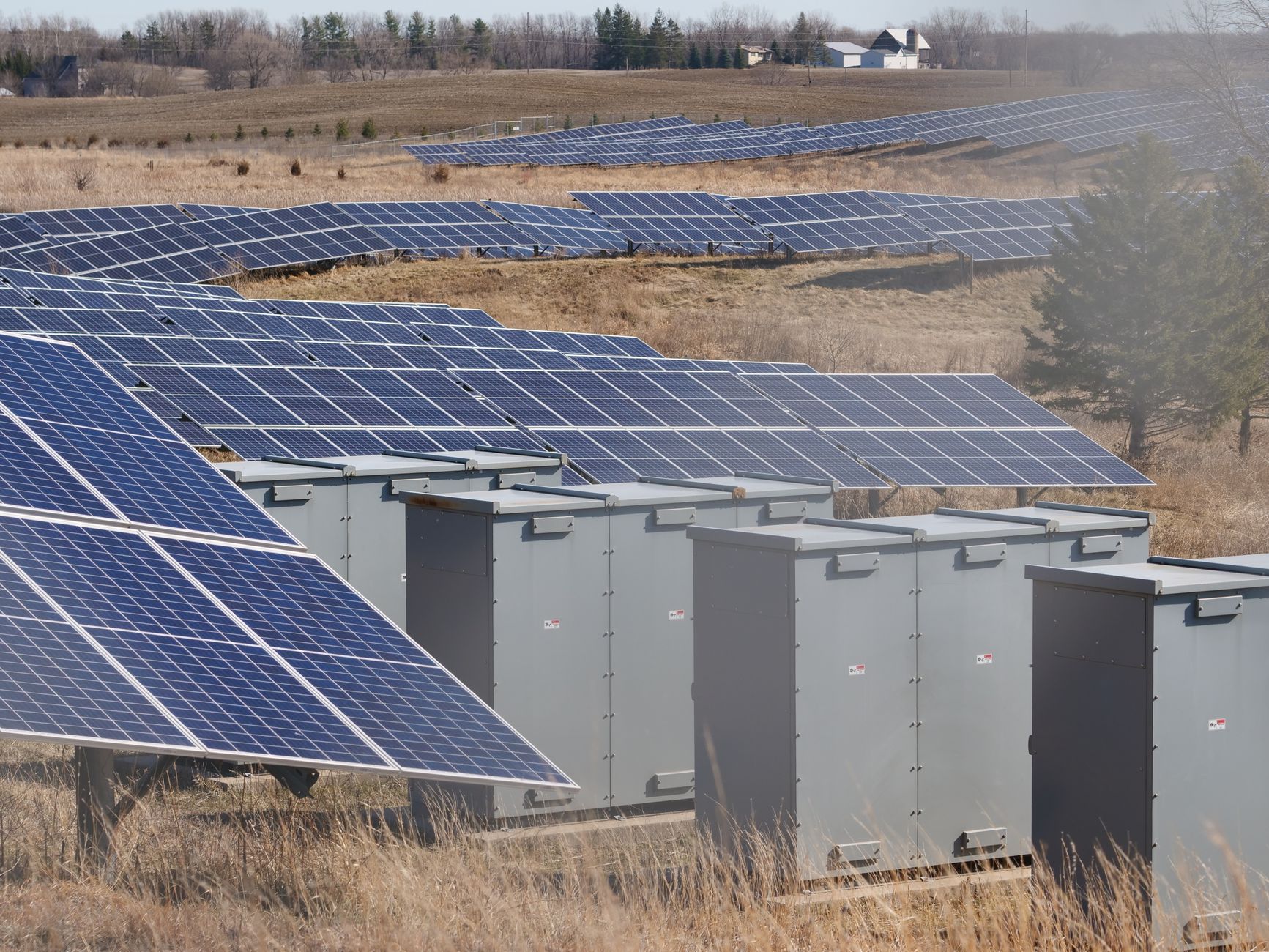
During the early-July heatwave that pushed PJM Interconnection demand to near-record levels, a virtual battery program discharged power from thousands of small batteries distributed across the power market, not emergency generators or fossil peakers, but aggregated customer batteries responding to operator dispatch in real time. The event happened. No press release heralded it as a turning point. That is the point. What used to be a speculative claim about distributed storage has become grid operations: when the largest U.S. power market hit peak stress, operators called on batteries to deliver, and they did.
This is not new technology finding a use case. It is a use case finding the economics and the grid conditions that make it inevitable. PJM's near-record demand moment happened because the utility-scale battery market has moved from scarcity to abundance. The U.S. power industry plans to add 24 gigawatts of utility-scale battery storage in 2026, 60 percent more than the record 15 GW added in 2025. The Energy Information Administration expects total new generating capacity this year to reach 86 gigawatts; batteries will be one-quarter of that. Texas alone accounts for 53 percent of planned battery capacity (12.9 GW), California for 14 percent (3.4 GW), and Arizona for 13 percent (3.2 GW). At scale like this, the question stops being whether batteries work and becomes whether grid operators have the dispatch protocols, the market rules, and the real-time visibility to use them. The PJM heatwave event says they do.
What made the dispatch possible was the collapse in battery cell pricing. Early 2026 international cell markets settled lithium iron phosphate (LFP) cells at $55 to $75 per kilowatt-hour, below the $90 to $120 range analysts projected eighteen months ago. That cost curve destroys the economics of peaker plants and forces grid operators to treat distributed batteries as primary infrastructure, not supplemental. Virtual battery programs aggregate customer-owned storage, rooftop solar batteries, EV chargers with battery backing, industrial reserve power systems, into a pool that PJM operators can dispatch collectively. The program operator handles the logistics. PJM handles the grid. When peak demand hits, the operator tells the distributed assets to discharge, and they do. No transmission buildout required. No new power plant siting fights. Just electrons flowing from existing assets that were already installed for other reasons.
The regulatory environment is moving faster than the technology. California regulators adopted modifications to its Resource Adequacy program on July 8, the same week as the PJM heatwave, including new qualifying capacity counting rules for storage resources. Those rules now account for nonlinearity and co-located energy resource interactions, meaning the state's grid operator can now accurately model how much actual capacity a distributed battery deployment will deliver during stressed hours. FERC issued show-cause orders to all six regional transmission operators in June, pushing them to explain their storage interconnection timelines and market compensation mechanisms. Translation: regulators are forcing grid operators to answer a question storage operators have been asking for two years: why does it take eighteen months to interconnect a 5-megawatt battery system but three months for a natural gas peaker? The answer is bureaucratic drag, not technical constraint. Once the orders filter into actual rule changes, interconnection timelines will compress.
Who benefits is clearer than who loses, but both are visible. Every storage developer that can build within the next eighteen months wins because cell prices stay depressed and grid operators are now actively soliciting supply. Developers in Texas, California, and Arizona win more than everyone else because 80 percent of planned 2026 capacity concentrates there. Grid operators win because they have a new tool for managing peak demand without building gas peakers or transmission. Residential solar installers win because virtual battery programs create a revenue stream for customer batteries that used to sit idle most of the time. Utilities that own gas peakers and have spent the last decade assuming they would run 6,000 hours per year lose. Fast. The 24 gigawatts of battery capacity planned for 2026 does not replace all the peaker fleet, but it moves the marginal unit from 6,000 hours per year to maybe 3,000. That is not a niche problem, that is 50 percent of the revenue on assets that cost 8 to 12 figures.
Watch three markers to see whether this inflection holds. First, whether PJM and MISO expand virtual battery programs to capture more distributed assets or whether regulatory barriers or market design flaws slow enrollment. Second, whether the 24 GW planned deployment target actually materializes or whether supply chain bottlenecks (especially in battery management system electronics and interconnection labor) cause a pullback to 18 or 20 GW. Third, and most important: whether any regional operator begins counting distributed batteries as firm capacity in their reserve margin calculations. If batteries are just emergency backup, the business model stalls. If they become primary load-serving resources, the entire economics of grid planning shift. The heatwave discharge event is the proof of concept. What happens next is adoption.