Monarch Quantum has existed for six months and has already booked $60 million in contracts from Quantinuum, Infleqtion, and NASA, plus a $55 million round in March from Serendipity Capital out of Singapore, with 55 North and Global Innovation Labs co-investing. The San Diego company makes photonic control systems, the laser hardware that drives qubits inside neutral-atom and trapped-ion quantum computers. The ramp tells you where quantum's bottleneck sits in mid-2026.
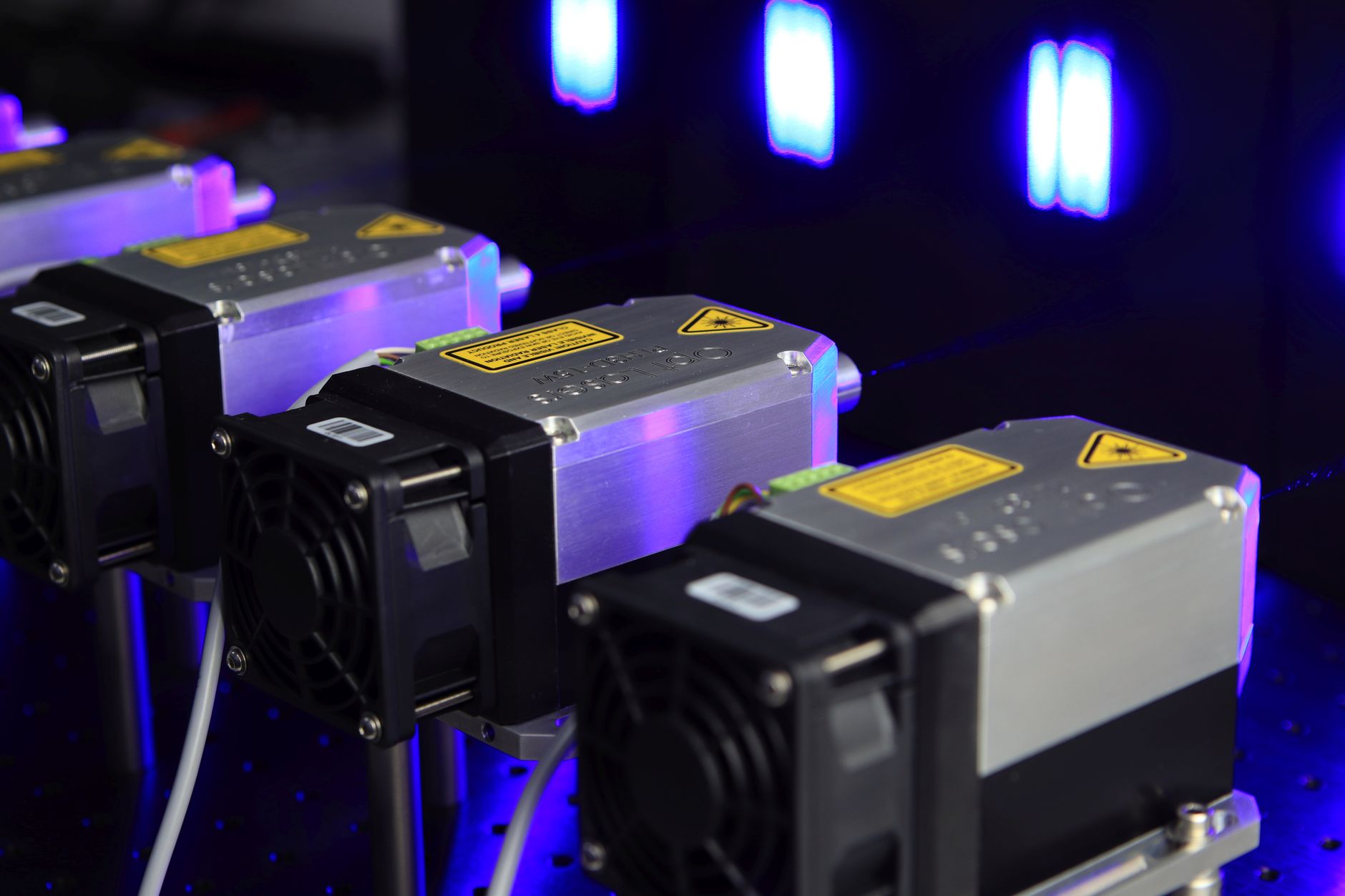
The bottleneck is supply, not qubit count. Quantum systems companies have been cobbling together laser stacks in-house because no one manufactures integrated photonic subsystems on the schedule and tolerances commercial deployment requires. Monarch sells what it calls Quantum Light Engines, packaged units that bundle lasers, modulators, detectors, low-noise electronics, and control firmware that an OEM can drop into a quantum system without six months of integration engineering. The pitch is mundane in any other hardware market and revelatory in this one.
Timothy Day, Monarch's founder, co-founded Daylight Solutions in 2004 and ran it through Leonardo DRS's 2017 acquisition. DRS kept the unit as a high-precision laser shop for infrared countermeasures and semiconductor inspection, both fields that pay premium prices for ruggedization and tolerate long development cycles. When Day left, roughly 40 engineers came with him. Monarch's competitive moat is that team, twenty years of building laser hardware that survives in environments where academic prototypes do not.
The NASA deal is the contract that matters. Infleqtion is the prime on the Quantum Gravity Gradiometer Pathfinder, a neutral-atom quantum sensor flying on a 2030 satellite to map subsurface mass distribution and gravitational anomalies from orbit. Infleqtion picked Monarch for the laser subsystems. Space-qualified photonics have to survive radiation, thermal cycling, and launch vibration on a fixed timeline, with no second source. Until Monarch, no domestic supplier could credibly bid that scope of work on neutral-atom hardware.
The investor mix carries information. Serendipity Capital led from Singapore. 55 North and Global Innovation Labs joined, both outside the standard Sand Hill Road rotation. Quantum photonics has become a thesis category for institutional and international capital that wants exposure to the hardware layer without taking platform-risk bets on which qubit modality wins. Monarch is a hedge: every commercial quantum architecture, atoms, ions, photons, neutrals, needs the same control optics.
Three things to track through 2028. First, whether Monarch ships the NASA hardware on specification and on schedule, the gate that opens up defense contractors and other space agencies. Second, whether Quantinuum and Infleqtion's evaluation orders convert to production volume as their commercial systems scale. Third, whether Northrop Grumman, Raytheon, or another defense prime decides quantum photonics is a natural extension of its infrared business and tries to undercut Monarch on price. No credible competitor by 2028 means the moat is real. One emerges, and margin compression moves fast.