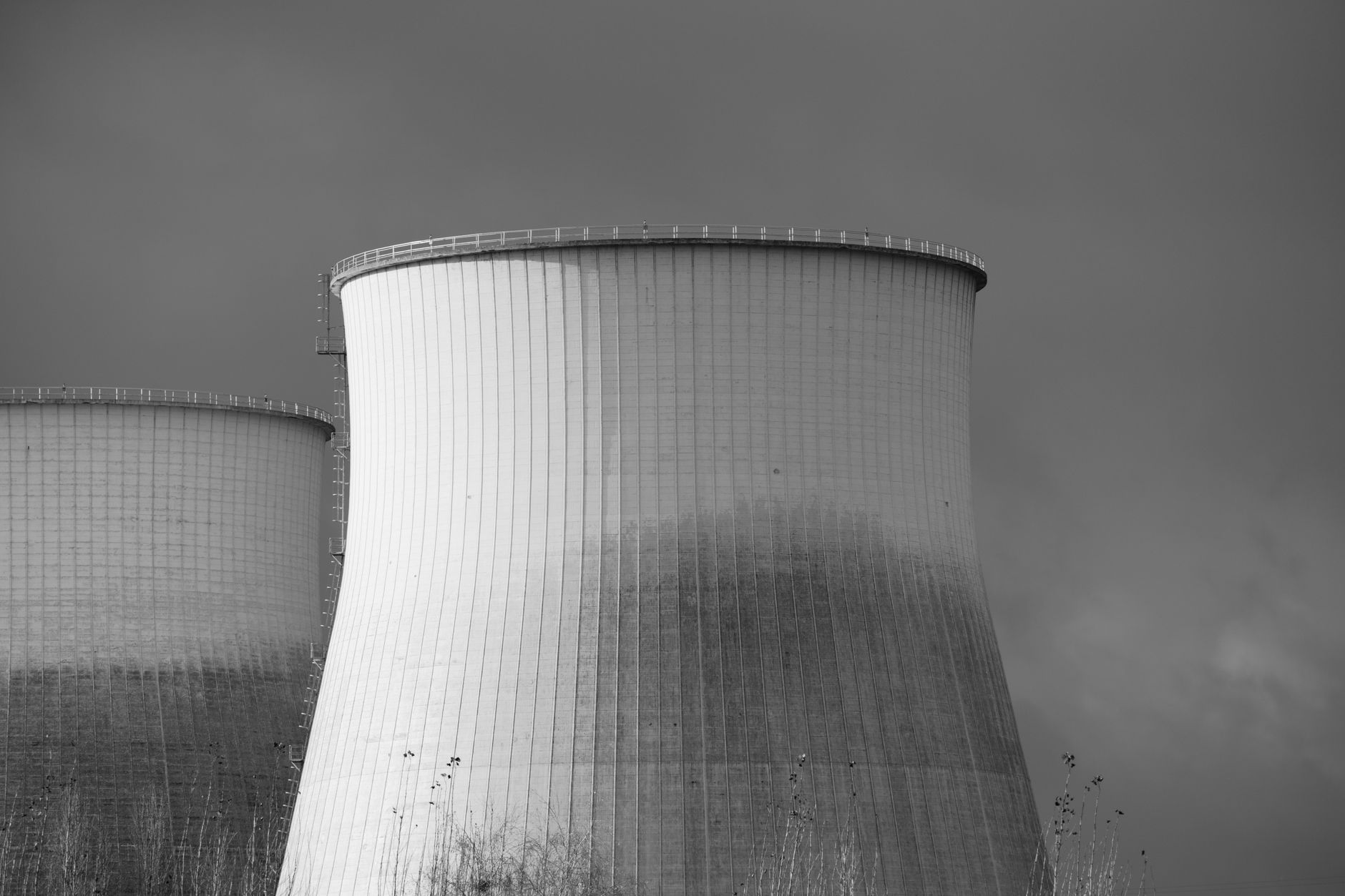
The Wylfa nuclear site has been silent for more than a decade. Unit 1 shut down in 2015, Unit 2 in 2012, and for years the 215-acre plot on the island of Anglesey sat as a monument to aging coal-and-nuclear Britain. Last month, the UK government handed Rolls-Royce SMR a contract to fill that void with something that did not exist anywhere on Earth as an operational grid asset: three small modular reactors generating 1,400 megawatts of firm power by the mid-2030s. The contract is signed. Work has started. Money is moving. This is no longer a policy statement or a venture-backed bet—it is a government infrastructure commitment with the capital and timeline to match.
Wylfa sits at the center of a deliberate reordering of energy policy across Europe. Data-center demand in the United States jumped 22 percent in 2025 alone and could triple by 2030, driving a parallel hunt for firm, decarbonized power that renewables cannot reliably provide. The UK is competing directly against this demand. The National Energy System Operator has already projected that SMRs could account for up to 59 percent of installed nuclear capacity in the UK by 2050. Rolls-Royce is not the only vendor chasing this market—GE-Hitachi, Holtec, and Westinghouse all bid for Wylfa—but Rolls-Royce is the only one with a signed contract and a government committed to finishing it. The broader context is simple: whoever builds the first working SMR fleet in Europe owns the reference design, the supply chain relationships, and the regulatory pathway for everything that comes after.
The deal mechanics matter because they reveal what the UK is actually willing to spend. Great British Energy–Nuclear is committing £2.6 billion in total across the program, with £599 million ($812 million) dedicated specifically to Rolls-Royce for the technology design activities and reactor development that are critical to making the three units work. An additional £300 million went to a joint venture between Amentum and Cavendish Nuclear to serve as the Owner's Engineer, meaning an independent third party will oversee design, safety, construction, and commissioning. The Wylfa site itself can theoretically host up to eight SMR units, though the contract covers three. Each reactor is rated at 470 megawatts. The three-unit configuration will produce enough stable electricity to power roughly three million homes for more than 60 years. Construction will employ approximately 3,000 workers at peak, with another 5,000 across the UK supply chain. The timeline is aggressive: regulators expect to conclude the Generic Design Assessment—the UK's equivalent of design certification—by December 2026, and grid connection for the first units is targeted for the mid-2030s.
Two structural forces made this moment possible. First, the UK's 2024 spending review committed the capital upfront rather than tying funding to per-unit delivery milestones. This removed the bootstrap problem that has killed most nuclear ventures outside the state sector: you cannot build a factory without knowing you can finish it, and you cannot finish it if each step requires regulatory approval for the next round of money. Second, Rolls-Royce spent the past decade building institutional credibility through smaller contracts and design work, essentially derisk-ing themselves into viability. The company has already shown it can navigate UK regulatory processes, maintain cost discipline on manufacturing-adjacent work, and deliver on timeline. The government was not betting on a startup's promise; it was paying for a company that had already proven the fundamentals. The fact that Rolls-Royce simultaneously holds a Czechia commitment for up to six units on the same design means the company can amortize development costs across multiple sites, which changes the unit economics of the entire European SMR market in their favor.
This contract hands Rolls-Royce an asymmetric position. No other European SMR vendor has a signed deployment contract backed by sovereign capital. Holtec, GE-Hitachi, and Westinghouse now face a choice: either accelerate regulatory approval and find capital outside the UK, or accept that Rolls-Royce will have validated the European permitting pathway and supply chain before they are ready. The second-mover disadvantage in nuclear is structural and severe. Rolls-Royce also benefits from the fact that Wylfa is a known quantity—it is a decommissioned nuclear site with existing infrastructure, local workforce experience, and a grid connection point. A new vendor would have to negotiate all three of those from scratch. For the UK supply chain, the £350 million already awarded across the sector this year represents real work and real references that smaller firms can use to pitch larger programs. For the energy market, three units at mid-2030s provides a concrete data point for when 1,400 MW of firm nuclear capacity will actually hit the grid—not a projection, not a pilot, but a firm date on which grid operators can begin planning.
The real stake here is not whether SMRs work—the physics has been solved for years—but whether a vendor can build them faster and cheaper than traditional nuclear without losing the regulatory discipline that makes atomic energy acceptable to the public. Rolls-Royce is betting it can do both. The company has no margin for error. A significant cost overrun or delay at Wylfa does not just slow one project; it delegitimizes the entire UK SMR strategy and gives ammunition to competitors arguing that small reactors are just small-cost-overrun reactors. Conversely, if Rolls-Royce hits its timeline and cost targets, the replicability of the model becomes obvious to every energy ministry in Europe. The contract structure—government capital, independent oversight, phased approvals—is designed to surface problems early, which is probably the only reason the UK was willing to fund it. If the design approval slips past December 2026, or if construction at Wylfa hits major issues, the entire European SMR narrative shifts from 'first-mover advantage' to 'even simple units take a decade.' Watch for that inflection point.
Three things will determine whether this contract actually delivers what the headlines claim. First, the Generic Design Assessment conclusion in December 2026: if the regulator finds major safety or engineering issues, the mid-2030s timeline collapses and the cost picture deteriorates immediately. Second, the first concrete pour at Wylfa and the supply-chain performance in the 18 months after it—this is where you see whether the UK manufacturing base can actually deliver components on time and to spec, or whether the project becomes another case study in British infrastructure delays. Third, GE-Hitachi and Holtec's regulatory progress in the US: if either company secures a US contract with a comparable timeline, the narrative flips from 'Rolls-Royce has a unique advantage' to 'multiple vendors have solved the deployment problem,' which would rationally lower the risk premium on UK government's bet. None of those events are guaranteed. But right now, with a signed contract and real capital in motion, Rolls-Royce has the clearest path to proving that SMRs are not a technology story anymore—they are an infrastructure story, and the UK has committed the resources to let it play out.