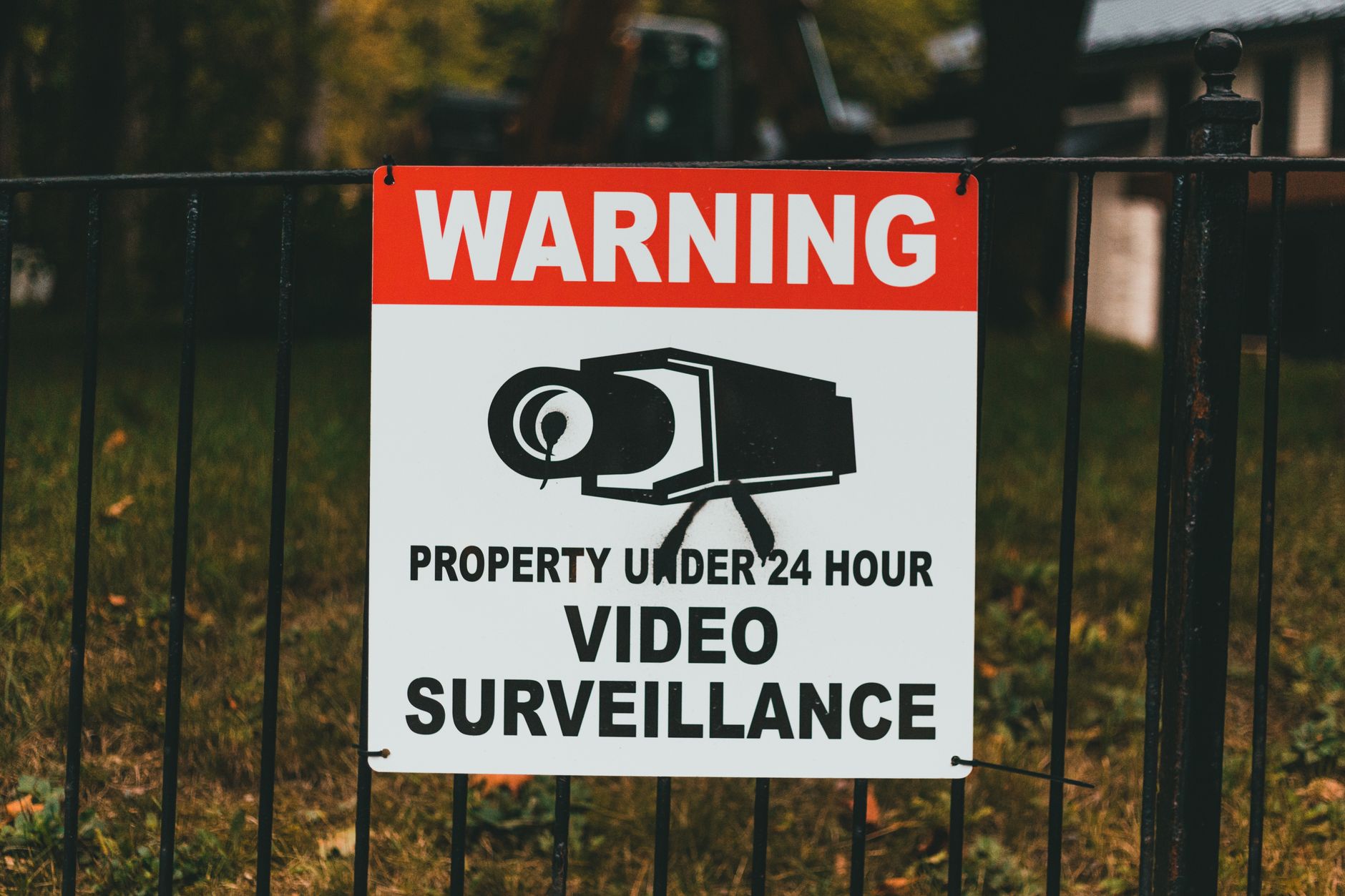
On April 20, 2026—twelve days from now—the legal authority that permits the U.S. government to conduct warrantless electronic surveillance of Americans will expire unless Congress votes to reauthorize it. Section 702 of the Foreign Intelligence Surveillance Act has been renewed before, twice, with minimal resistance. This time, there is no renewal bill on the floor, the Congressional Progressive Caucus has bound 98 members against a clean reauthorization, and a previously hidden threat has just surfaced: the government treats Americans using VPNs as foreigners, and therefore subject to surveillance with no constitutional protection at all.
This is the machinery that Freedom Tech exists to defeat. And it is about to become either the law of the land for another six years or the subject of an emergency Congressional showdown in the next two weeks. Either way, the outcome will reshape what privacy tools are for and who can afford to use them.
Section 702 was enacted in 2008 and has been reauthorized three times—in 2012, 2017, and 2024. Under the statute, the NSA and FBI can conduct surveillance of any "non-U.S. person" abroad without a warrant, and the law permits "incidental" collection of American communications that pass through the same fiber-optic cables, cell towers, or internet infrastructure. The incidental part matters because it is not actually incidental. The NSA collects roughly 250 million internet records per year under Section 702. The FBI has conducted warrantless searches of Section 702-acquired data to access communications of Black Lives Matter protesters, U.S. government officials, journalists, political commentators, and the 19,000 donors to a single congressional campaign. None of those searches required judicial approval. None required the government to articulate probable cause. The target was simply flagged as a person of interest, the database was queried, and the results were returned.
The 2024 reauthorization—the RISAA bill—did not reform these practices. It expanded them. The bill broadened the definition of "electronic communication service provider" to permit the government to compel the assistance of "a wide range of additional entities and persons" in conducting surveillance. It also preserved a second surveillance mechanism: the government can purchase Americans' personal data—location history, browsing records, phone metadata—from data brokers on the open market without a warrant, without a court order, and without judicial oversight. A coalition of 130 organizations urged Congress to close this loophole. Congress did not. The loophole remains.
Now comes the VPN issue, and it is the hinge on which the entire debate has turned. The question is simple: under what conditions does the government classify an American as a "foreigner" for purposes of Section 702? The answer, according to a letter sent to the Director of National Intelligence by Democratic members of Congress, is chilling. "Under both Section 702 and Executive Order 12333, the government is obligated to seek to determine the non-U.S. person status and location of its targets. Nonetheless, the federal government has taken the position that communications whose source remains unknown are treated as foreign, and thus subject to few privacy protections." A VPN obscures source location. Therefore, VPN traffic is treated as foreign. Therefore, an American using a VPN is classified as a foreigner for surveillance purposes. The government has not officially confirmed this interpretation, but the letter makes clear that lawmakers have credible evidence the practice is real. The Director of National Intelligence has not yet responded.
The stakes are direct. Millions of Americans use VPNs for legitimate reasons—privacy, security, accessing home networks while traveling. Tor users number in the millions. Bitcoin node operators who route traffic over Tor do so to avoid being deanonymized or having their IP address associated with their financial activity. Under the current interpretation of Section 702, all of them are classified as foreign targets. All of them are inside the surveillance pipeline. All of them can be searched, their communications accessed, their data retained, without a warrant or judicial order. The Trump administration, which has shown no restraint in deploying surveillance powers for immigration enforcement, now has explicit statutory authority to do this. The authorization is set to expire on April 20. The bipartisan Government Surveillance Reform Act—backed by Senators Ron Wyden and Mike Lee—would require a warrant before agencies can search Americans' data collected under Section 702 and would close the data broker loophole. It has not passed. The Congressional Progressive Caucus, representing 98 House members, has declared its opposition to any clean reauthorization. But the Caucus does not have the votes to block a renewal unilaterally. What it has is the ability to make renewal politically costly. As of April 8, 2026, there is no agreed-upon legislative path forward. The default scenario is that Section 702 expires on April 20 unless Congress passes a renewal bill in the next twelve days. If it expires, the immediate question is not whether surveillance will stop—the executive branch will likely claim continuity authority—but whether Congress will then move to reauthorize it quickly, and if so, on what terms.
Here is what this actually means: Congress has had six months to debate Section 702 reauthorization. It chose not to. The Trump administration has shown it will use surveillance powers aggressively. The VPN classification loophole is now public. Congress is divided. And the authorization expires in twelve days. This is not a policy debate that will be resolved through thoughtful deliberation. It will be resolved through legislative scramble, executive-branch assertion of continuity authority, and backroom negotiations where the Government Surveillance Reform Act—the only bill that closes the data broker loophole and requires warrants—is traded away in exchange for a quick renewal. If that is what happens, Section 702 will be reauthorized for another six years with no material reform. The VPN classification question will be litigated in the courts, not settled in Congress. And every Freedom Tech tool becomes essential not because it is better technology, but because it is the only functional privacy infrastructure available to Americans inside a warrantless surveillance state. That is the baseline scenario. The upside scenario—warrant requirements, data broker loophole closure, VPN classification clarification—requires Congress to act in the next twelve days with surgical precision. Congress has not demonstrated that capacity on this issue.
Our read: Congress will pass a last-minute renewal of Section 702 without material reform. The Government Surveillance Reform Act will not make it to the floor before April 20. The VPN classification issue will be litigated later, not resolved now. The data broker loophole will remain open. The authorization will be extended, probably for another four to six years, and the executive branch will use it as intended. This outcome is not certain, but the legislative clock is now so compressed that a different outcome would require unexpected speed and coordination from a divided Congress. The signals that would change this assessment: (1) the Senate passes the Government Surveillance Reform Act with 60 votes before April 15; (2) the House brings a warrant-requirement bill to the floor and passes it; (3) the Trump administration signals it will not claim continuity authority if Section 702 lapses. None of these look likely as of today.
Watch three things: First, the April 20 sunset date itself—whether Congress passes a renewal, lets it expire, or claims the government can continue operations under executive authority. Second, the Director of National Intelligence's response to the VPN classification letter, which will set a precedent for how Tor, Bitcoin nodes on VPNs, and other privacy infrastructure are treated under future surveillance regimes. Third, whether the Government Surveillance Reform Act gets a floor vote before April 20, which would indicate whether warrant requirements have any remaining support in leadership. The data broker loophole closure is the easiest reform to pass—it has bipartisan support—so watch whether it appears in any last-minute compromise bill. If the loophole survives the April 20 deadline, Congress has chosen to preserve the government's ability to buy personal data without courts. That choice will shape what privacy means for the next six years.