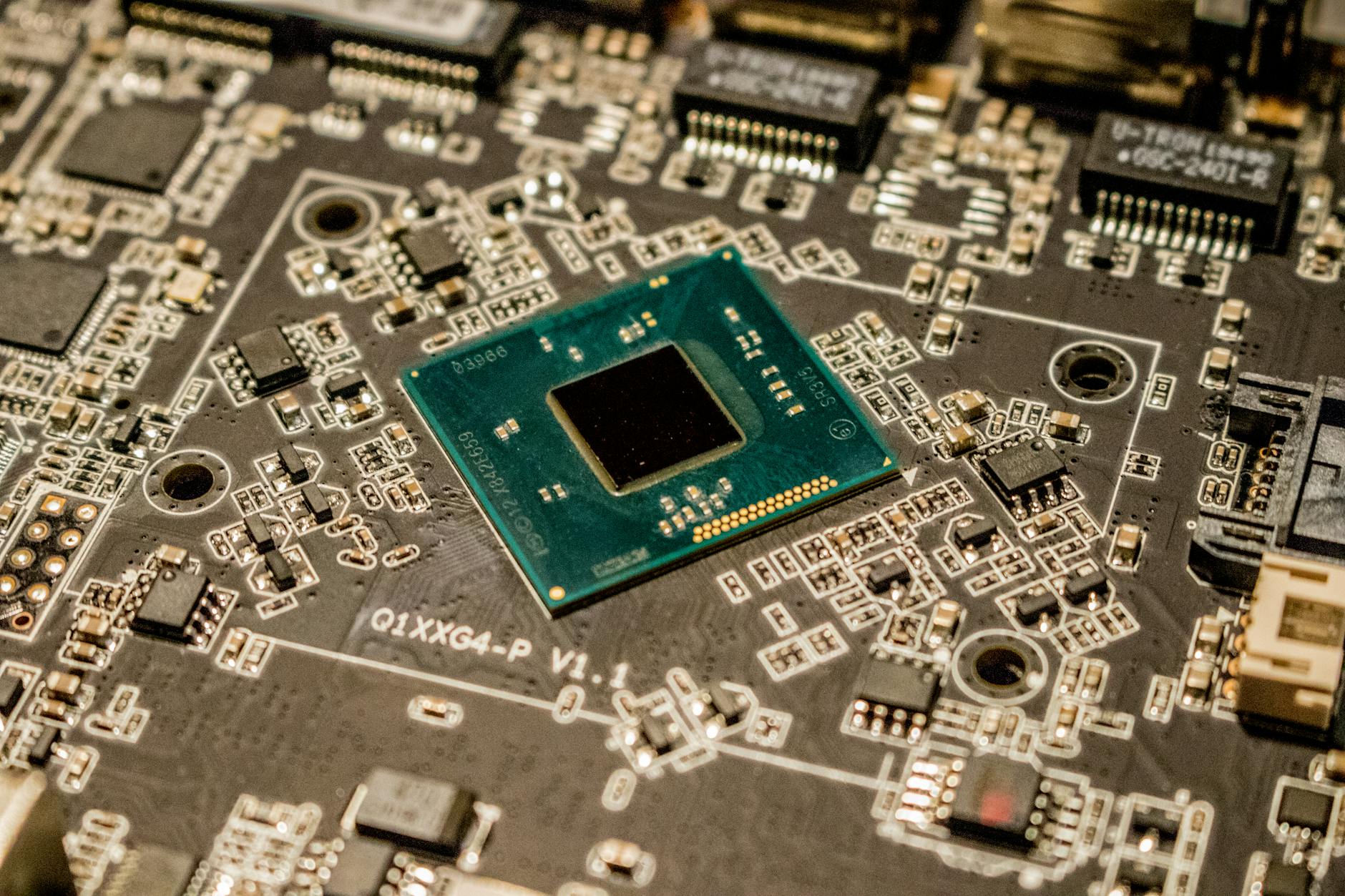
SK Hynix announced on April 20, 2026 that it had begun mass production of 192GB SOCAMM2 memory modules. The phrase 'mass production' landed with the weight it deserves: the second-largest memory chipmaker in the world had moved from development into factory lines, building the low-power, high-capacity DRAM that AI data centers need to train trillion-parameter language models without drowning in electricity costs. But buried in the same announcement was a number that reframes the entire competitive picture. In early March, Micron had already shipped 256GB SOCAMM2 samples to customers. That is 33% more capacity per module than what SK Hynix is now producing at scale. The announcement is real. The achievement is significant. But the framing that SK Hynix is leading this segment? That is a narrative that does not survive contact with the facts.
SOCAMM2 is a compression-attached memory module designed to solve a bottleneck that has become acute in the AI infrastructure buildout. Traditional server memory, called RDIMM, was engineered for throughput and latency — optimized for databases and transaction processing, not for the memory-hungry sequential access patterns of large language model training. SOCAMM2 takes the low-power DRAM architecture that powers smartphones and tablets and adapts it for server environments. SK Hynix's SOCAMM2 delivers more than double the bandwidth and over 75% improved power efficiency compared to conventional RDIMM, according to the company. More importantly, it shrinks power consumption during the training and inference of models with hundreds of billions of parameters — the category of AI workload that is currently consuming disproportionate amounts of cloud infrastructure capital. The module is explicitly designed for NVIDIA Vera Rubin, NVIDIA's next-generation AI platform, which signals that these products were engineered for a specific, high-volume customer and deployment timeline.
SK Hynix built its SOCAMM2 on the 1cnm process, which the company describes as the sixth generation of its 10-nanometer technology family using LPDDR5X low-power DRAM. The specificity matters here because process node is not an abstract engineering achievement — it represents years of incremental yield improvement, defect management, and supply chain coordination across foundries and materials vendors. Micron's 256GB samples run on a different process, 1-gamma LPDDR5X, which Micron owns and controls internally. Samsung, the third player in this segment, has reportedly resolved warpage issues that plagued its SOCAMM2 development and may announce mass production in the coming weeks. The warpage problem was real and potentially catastrophic: when you stack memory dies vertically in a module and subject them to thermal cycling, the substrate can bend, breaking electrical connections. Samsung fixing that first could matter more than who announced mass production first.
The conditions that created this race were set months ago. Cloud service providers began explicitly signaling that the next wave of AI infrastructure investment would prioritize energy efficiency and training capability over raw inference throughput. This shifted demand from the high-bandwidth, high-power memory architectures that dominated the 2024-2025 AI boom toward low-power alternatives that could sustain long training runs without tripling electricity bills. NVIDIA's Vera Rubin platform roadmap — publicly disclosed as the successor to Blackwell — became the design target for all three vendors. ASML, the Dutch lithography equipment monopolist, reported Q1 2026 net sales of 8.8 billion euros and raised its full-year 2026 guidance to 36-40 billion euros, citing accelerated semiconductor fab construction from TSMC, Intel, and Samsung in response to AI chip demand. That capital velocity created the permission structure for SK Hynix, Micron, and Samsung to commit manufacturing capacity to SOCAMM2 simultaneously, rather than sequentially. The race became inevitable because the market could absorb all three suppliers at once, and the cost of losing first-mover advantage in capacity was higher than the cost of capital on the machines themselves.
Who benefits here depends entirely on where Vera Rubin goes and how much capacity each vendor can actually deliver. SK Hynix benefits from mass production confirmation because it removes execution risk — the company has proven the process works at scale. But the benefit is qualified by Micron's capacity advantage. A hyperscaler comparing quotes from SK Hynix, Micron, and Samsung in Q2 2026 will see that Micron can offer more gigabytes per module at the same power envelope. That is not a trivial advantage; it means fewer modules per server, lower overall system cost, and simpler board design. Samsung benefits if it announces mass production before significant hyperscaler procurement locks in with Micron and SK Hynix. Micron benefits from arriving first with a higher-capacity product, but it is currently shipping samples, not volume production, which means there is still time for manufacturing yields to matter. SK Hynix does not lose anything from this announcement — but it also does not win the capacity race. It wins the production-readiness race, which is different and less valuable.
Here is the actual read: SK Hynix's mass production announcement is a credible manufacturing achievement, but it is a second-place position dressed in press-release language. Micron arrived with higher capacity three weeks earlier. Samsung is potentially weeks away from resolving the last manufacturing hurdle. The real story is not who announced first — it is who can sustain volume production and at what yield. A 192GB module is valuable only if you can make 10,000 units per month reliably. A 256GB module from Micron is only dangerous if Micron can actually ship volume at acceptable yields. And Samsung is only a threat if it can ramp production without the warpage nightmare recurring at scale. SK Hynix has made the logical move: get into production, lock in hyperscaler relationships, and prepare to scale. But the company is now competing on price and support, not on technical leadership. The product is good. The timing is too late to own the segment.
Watch for Samsung's mass production announcement in the next four weeks — if Samsung can confirm production yield and timeline, the competitive dynamic shifts against both Micron and SK Hynix. Monitor Micron's Q2 2026 earnings call for volume shipment data and gross margin on SOCAMM2 — if yields are mediocre or prices have to drop to win volume, the advantage collapses. Track NVIDIA Vera Rubin availability announcements carefully, because the first confirmed system deployment will reveal which vendor secured the largest allocation. And watch ASML's H2 2026 shipment patterns to memory fabs for a forward signal on whether the next generation of SOCAMM2 (likely 256GB or 384GB) is already being tooled at scale.