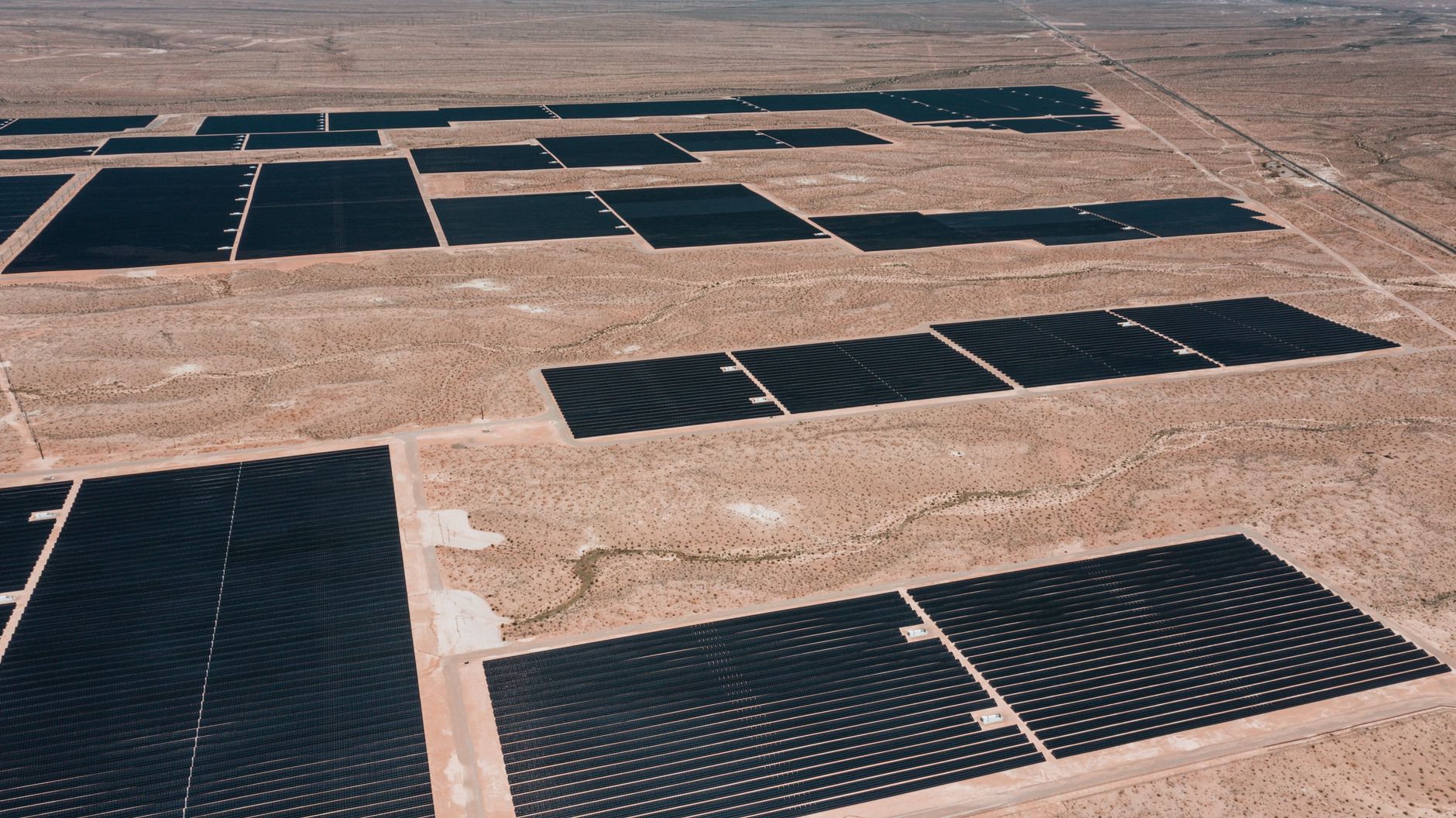
The U.S. Energy Information Administration forecasts 78 billion kilowatthours of solar generation in ERCOT during 2026, 30% more than the 60 billion kilowatthours the grid will pull from coal. This is the first time in the nation's largest deregulated grid's history that annual solar generation will exceed coal on record. The announcement arrived buried in the May 2026 Short-Term Energy Outlook, a routine EIA data release. But the underlying fact is not routine: a grid that ran on 19% coal and 4% solar in 2021 will run on 13% coal and 12% solar by year-end 2026. That is not a trend line. That is a structure change.
The EIA revised its 2026 solar forecast upward by 1.4% in May because it recalibrated how much solar capacity was actually online at the start of the year, a sign that installations are outpacing even the government's tracking system. Utility-scale solar projects expected to come online in Texas in 2026 include the Tehuacana Creek 1 facility at 837 megawatts, which EIA expects will be the largest solar project to reach commercial operation all year. That single facility will generate enough electricity to power roughly 160,000 homes for a year. Behind these individual projects sits a structural reality: there are no plans to build new coal plants in ERCOT. The grid's coal fleet is aging, runs only when solar and wind cannot meet demand, and now faces a competitor that is cheaper to build, faster to deploy, and increasingly stable thanks to battery storage.
Texas will install 12.9 gigawatts of utility-scale battery storage in 2026, 53% of all battery storage planned for the U.S. grid that year. That figure is not incidental. Without it, solar's ability to serve as the dominant generation source would depend entirely on favorable weather and time-of-use pricing that shifts demand to match solar output. Battery storage decouples solar from those constraints. It allows 78 BkWh of solar generation to actually replace 60 BkWh of coal's steady, dispatchable output. Coal provided baseload power around the clock. Solar provides peak power during the day, and stored energy provides power at night. The economic math only works if you can store the surplus cheaply. Texas is solving that equation faster than any other grid in North America.
Coal plants in ERCOT face a binary choice: retire or repurpose. Remaining coal capacity will earn money primarily during winter months when solar output falls and demand for electricity spikes, and during grid emergencies when ancillary services (reactive power, voltage support, fast-frequency response) matter more than raw megawatt-hours. That is a narrower, less predictable revenue stream than baseload dispatch. Plant operators know this. The lack of new coal construction in ERCOT is not a policy choice; it is an economics choice. No private power company will finance a $1 billion coal plant built to run 16 hours a month in winter and earn grid-stability fees the rest of the year.
EIA's 2027 forecast widens the gap further: 99 BkWh solar versus 66 BkWh coal, a 50% margin. That forecast assumes roughly 15 gigawatts of new solar capacity will come online between now and end-of-2027, alongside continued battery storage buildout. The primary driver is not climate policy or renewable mandates. It is load growth in ERCOT that neither solar nor coal can ignore. Cryptocurrency mining operations, data center buildouts, and industrial activity tied to oil-and-gas refining are all pulling electrons from the grid faster than coal can supply them. Solar answers that demand at a lower per-megawatt cost than coal, and battery storage makes solar dispatchable. The grid did not choose solar over coal because of virtue signaling. It chose solar because solar is cheaper, faster to build, and actually works when stacked with the infrastructure that modern demand requires.
Watch three markers over the next 18 months. First, coal plant retirements in ERCOT: if five or more plants retire or announce retirement in 2026-2027, coal's shift from baseload to seasonal backup will accelerate faster than EIA forecasts. Second, battery storage completion rates in Texas: if the 12.9 GW planned for 2026 actually comes online on schedule, solar's effective capacity factor will remain competitive with gas peaker plants, and the coal transition becomes irreversible. Third, demand: if data-center and crypto loads continue to grow at current rates, ERCOT may need to install even more storage than planned, forcing further acceleration of coal retirement as uneconomic. None of these outcomes depend on policy. They depend on arbitrage closing between solar-plus-storage and everything else.