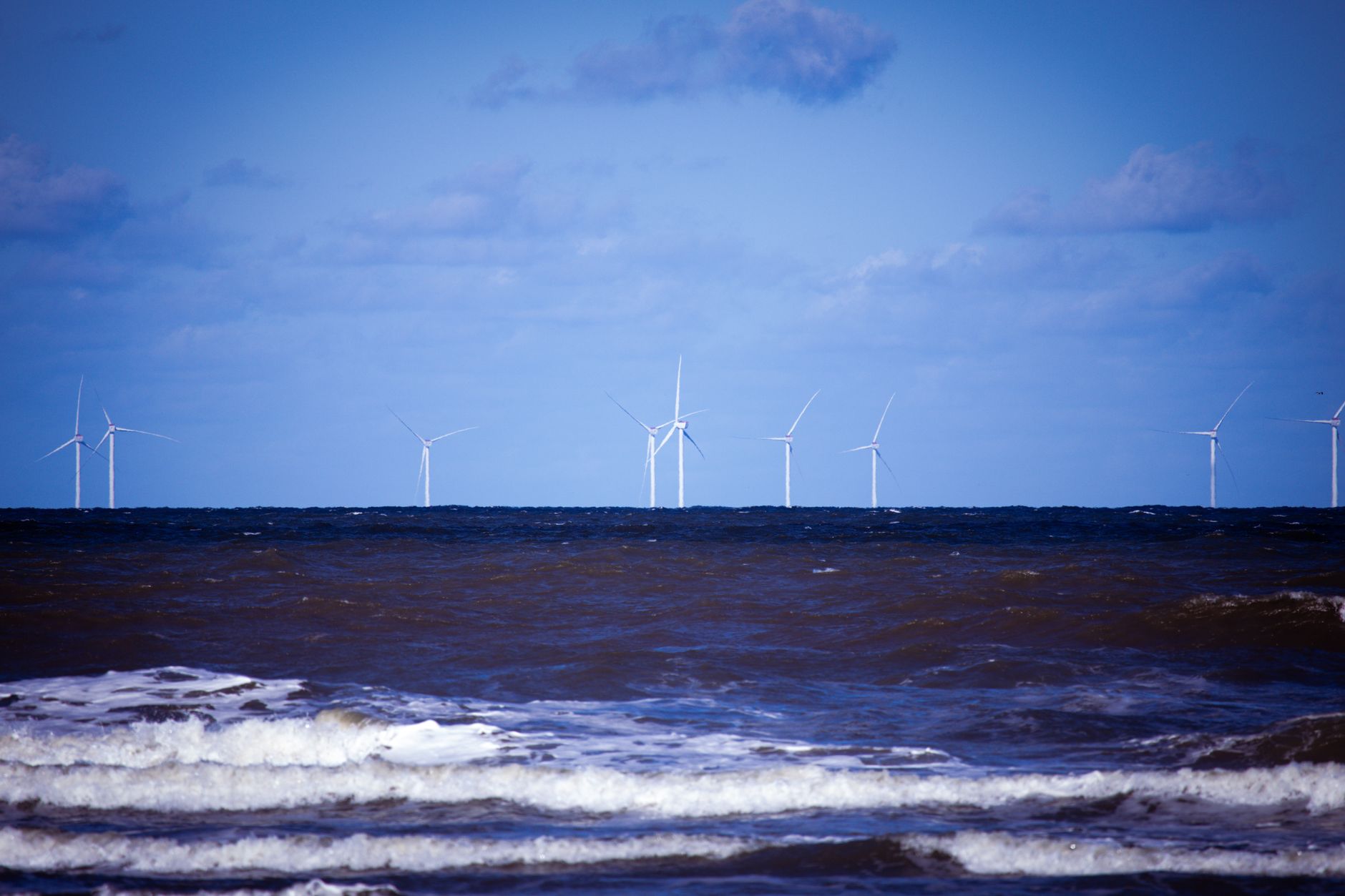
The TotalEnergies lease relinquishment is not a corporate retreat — it is the federal government's most effective policy instrument to date against U.S. offshore wind, and it sets a template that every remaining lease-holder must now price into their capital allocation models. On March 23, 2026, TotalEnergies signed settlement agreements with the U.S. Department of the Interior to surrender its Carolina Long Bay lease (OCS-A 0545) and its New York Bight lease (OCS-A 0538), both awarded in 2022, in exchange for approximately $928 million in reimbursement — a dollar-for-dollar recovery of the lease fees paid. The company simultaneously committed to reinvest that entire sum in U.S. oil, gas, and LNG production, completing a capital rotation that the Trump DOI had failed to engineer through executive stop-work orders repeatedly overturned by federal courts.
The U.S. offshore wind market entered 2026 as the weakest technology segment in an already constrained build environment. According to EIA's Preliminary Monthly Electric Generator Inventory (December 2025), planned 2026 capacity additions total approximately 78 GW across all technologies, with solar commanding 51% of that pipeline, battery storage 28%, and wind just 14%. Within wind, the offshore component — 4,155 MW of planned additions — represented the highest-cost, most policy-exposed slice of that 14%. The total addressable U.S. offshore wind market has been valued at over $100 billion in cumulative investment potential through 2035, but that figure is contingent on a federal permitting and leasing environment that no longer exists in its pre-2025 form. The dominant players holding active leases include Equinor (Empire Wind 1 and 2), BP (through its joint ventures), Ørsted (whose five projects were halted by the Trump administration on national security grounds in 2025), and Dominion Energy (Coastal Virginia Offshore Wind, currently the only major project still under active construction). TotalEnergies' exit eliminates the fourth-largest capacity block in the active pipeline.
The mechanics of the settlement are precise and consequential. TotalEnergies originally purchased the Carolina Long Bay lease in 2022 for approximately $133 million — a project designed to deliver more than 1 GW, sufficient to power roughly 300,000 homes. The New York Bight lease (OCS-A 0538) was acquired in 2022 for $795 million and was planned to generate 3 GW, enough to power nearly one million homes. Combined, the two leases represented more than 4 GW of planned offshore capacity. Under the settlement, the federal government will reimburse TotalEnergies approximately $928 million — the full value of its investments in the Attentive Energy and Carolina Long Bay projects. In exchange, TotalEnergies has pledged to invest that $928 million in 2026 specifically in: the development of Trains 1 through 4 of the Rio Grande LNG plant in Texas; and the development of upstream conventional oil in the Gulf of America and shale gas production. The company has also pledged not to develop any new offshore wind projects in the United States.
Three structural forces converged to make this settlement possible now. First, repeated judicial defeats of the Trump administration's direct stop-work orders created political urgency to find a legally durable alternative mechanism — the voluntary settlement model avoids the administrative-law vulnerabilities that sank the executive orders. Second, TotalEnergies' own project economics had deteriorated beyond recovery: the company's internal studies concluded that U.S. offshore wind developments, unlike European counterparts, carry cost structures that 'might have a negative impact on power affordability for U.S. consumers,' per the March 23 press release. That conclusion is consistent with the industry-wide cost inflation that has driven contract cancellations by Ørsted, BP, and Equinor since 2023, as supply chain disruption, higher interest rates, and Jones Act vessel constraints pushed U.S. offshore wind levelised costs materially above contracted strike prices. Third, TotalEnergies had an obvious and immediately deployable alternative: the company is already the number-one exporter of U.S. LNG, with 19 million tons exported in 2025 and a 17% ownership stake in NextDecade's Rio Grande LNG project, which now receives the redeployed capital.
The competitive implications of this settlement operate on two distinct time horizons. In the near term, Equinor and BP are the most directly exposed counterparties — both hold leases that have faced pressure since Trump's January 2025 executive order paused new offshore wind permitting, and the dollar-for-dollar reimbursement model now gives both companies a financially rational exit path that preserves capital rather than writing it off. The settlement shifts pricing power from offshore wind developers to the DOI, which now controls the terms of any future reimbursement negotiation. For Rio Grande LNG and NextDecade, the redeployed $928 million represents a material acceleration catalyst for Trains 1 through 4, with TotalEnergies' CEO Patrick Pouyanné explicitly citing European LNG supply and U.S. data center gas demand as the end markets. That linkage is significant: the same data center load growth driving PJM's record $333.44 per megawatt-day capacity auction in December 2025 — and PJM's projected 10 GW to 28 GW load increase between 2030 and 2032 — is now being cited as a demand rationale for LNG infrastructure rather than offshore wind. The value chain is being redrawn in real time, with fossil-aligned infrastructure developers capturing the demand signal that offshore wind developers had expected to serve.
Our read: the TotalEnergies settlement is a proof-of-concept for a legally durable, financially structured mechanism to contract the U.S. offshore wind sector — and its replicability is the central risk for remaining lease-holders. The hypothesis is this: if Equinor or BP accept comparable terms within 18 months, it confirms that the buyback model has become the de facto federal offshore wind policy, and the 4,155 MW in EIA's 2026 offshore pipeline becomes a planning fiction. The disconfirming signal would be a successful federal legal challenge to the settlement's reimbursement structure — specifically, whether directing a private company's reinvestment into named fossil fuel projects constitutes an unlawful condition on a federal refund — or a rapid reversal in offshore wind project economics driven by a Jones Act waiver or supply chain normalisation that neither the DOI nor TotalEnergies has signalled. Absent those disconfirming signals, the strategic calculus for every active U.S. offshore wind lease-holder has shifted from 'develop or sell' to 'develop, sell, or negotiate a federal exit.' The third option now has a published price.
Four specific indicators should anchor decision-maker monitoring over the next 90 days. First, FERC's final action on the large-load interconnection rulemaking (RM26-4-000) is due by April 30, 2026 — the DOE-directed deadline for a rule governing how loads above 20 MW and co-location facilities interconnect to the transmission system; a final rule asserting broad federal jurisdiction would structurally re-price data center power contracts and simultaneously remove a key demand-side rationale for offshore wind development near coastal load centres. Second, the EIA Monthly Generator Inventory April release should be monitored for a formal downward revision to the 4,155 MW 2026 offshore wind planned additions — if TotalEnergies' 4 GW is removed, the offshore pipeline collapses to a rounding error. Third, watch for any DOI outreach or public statements directed at Equinor's Empire Wind 1 and 2 leases or BP's portfolio positions; a formal settlement offer or voluntary relinquishment filing from either company before Q3 2026 would confirm the template's replication. Fourth, track FERC certificate proceedings and Texas Railroad Commission permitting activity for Rio Grande LNG Trains 1 through 4 — construction acceleration backed by the redeployed $928 million would serve as the most concrete evidence that the capital rotation from offshore wind to LNG infrastructure is operationally underway, not merely announced.