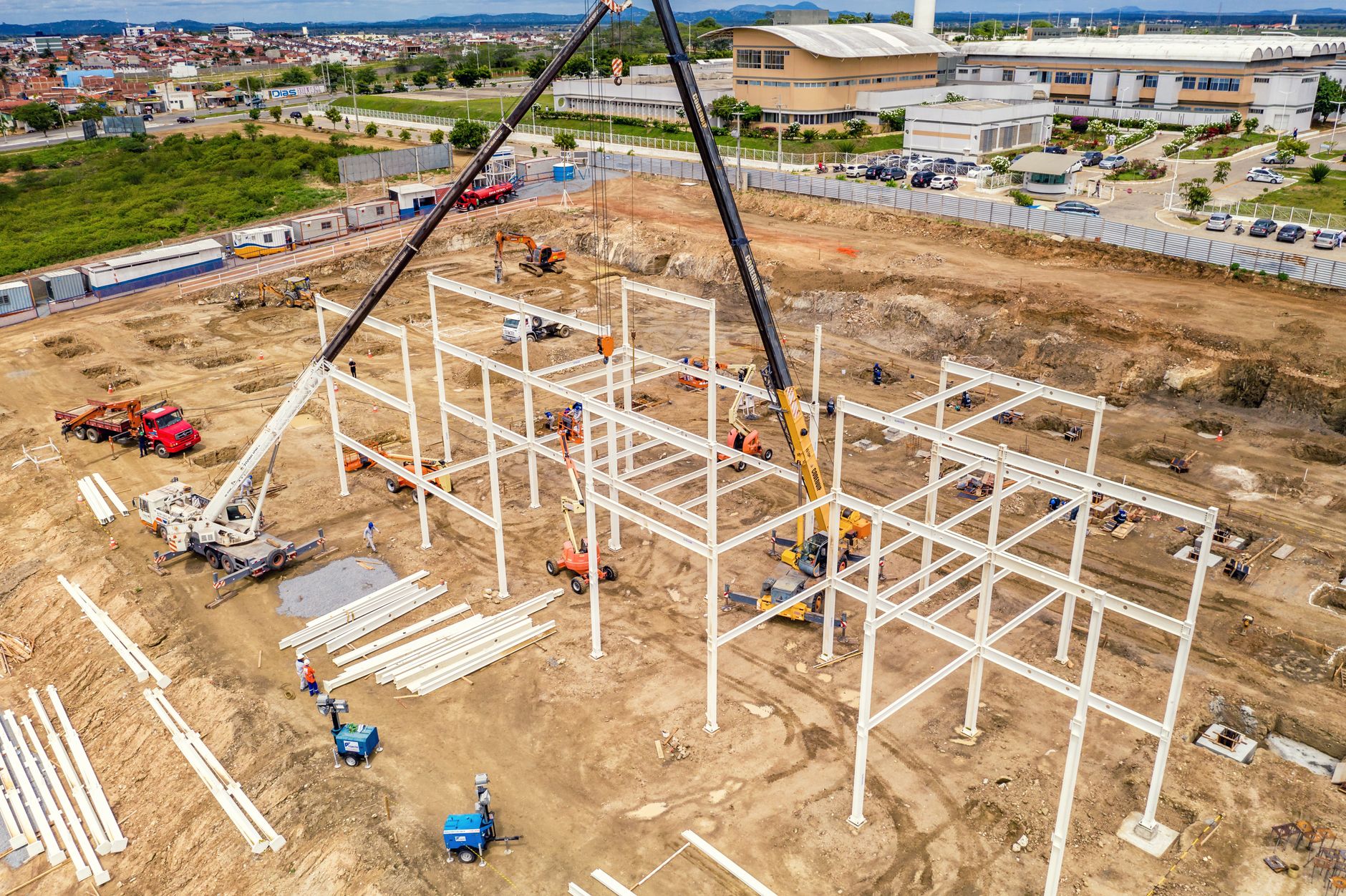
The factory frame went up in Somerset using 100% British steel, and on 9 April the UK Business Secretary walked the site to announce £380 million in government money to finish it. Not a commitment. Not a letter of intent. Real capital, flowing now, to build what Tata calls one of Europe's largest battery gigafactories at Agratas in Bridgwater. The total project cost is £4 billion. JLR, which Tata also owns, will be the anchor customer — starting with Range Rover, Land Rover Defender, and Jaguar models, all due to go electric over the next three years. The announcement included a named construction manager (Sir Robert McAlpine), a named timeline (2,200 workers on site within a year, ramp continuing), and a named bottleneck being solved (a new M5 junction designed by Costain to give the facility critical access). This is not vaporware. This is industrial policy executing.
The battery supply picture in Europe tells you why this matters and why it is also not enough. The UK currently has one confirmed high-volume cell production facility: AESC's gigafactory in Sunderland, which is ramping. Agratas will be the second. European EV demand is expected to drive total battery demand to over 100 GWh by the early 2030s — a number the continent is nowhere close to having domestic capacity to meet. Meanwhile, European battery imports climbed 17% year-on-year in 2025, with Chinese imports alone jumping 27%. That is the shape of the problem: demand growing faster than Western supply. A single new UK plant, even at scale, does not change the math. The European continent needs at least one more major gigafactory announced by the end of 2026 just to start closing the gap. Agratas solves for UK automotive anchor demand and British jobs. It does not solve for European supply security.
The numbers show genuine commitment. The £380 million grant comes from the Department for Business and Trade's DRIVE35 Automotive Transformation Fund, administered by the Advanced Propulsion Centre. An additional £84 million in government money flows to related vehicle makers (JLR, ELM Mobility, Maeving, Nissan) for battery supply chain development. The facility is designed to support 4,200 direct jobs and thousands in the supply chain, with 300 apprenticeships through a dedicated battery manufacturing training unit. Over 25 years of operation, Agratas projects £43 billion in economic activity. The factory will initially produce cells for Jaguar, Land Rover, and Range Rover models. In the near term, while Agratas ramps, JLR will source from AESC Sunderland — meaning AESC gets immediate volume and Agratas gets time to reach production readiness without forcing JLR into a supply cliff.
The timeline, however, shifted. Agratas was originally slated to begin production in 2026. That date moved — partly because JLR pushed back its flagship electric Range Rover from 2025 to later 2026. The factory is now in final build-out (cladding finished soon, internal equipment fitting next), but the anchor customer's product launch delay means the revenue clock does not actually start ticking for another 12 to 18 months. This is not a disaster; it is common in supply chain ramp. But it does mean the £4 billion Agratas deployment is burning cash for a longer period before it sees throughput, and JLR is paying a carry cost by sourcing interim battery supply from a competitor's facility. Both parties absorb that slack. The question is whether investor appetite for the full £4 billion remains intact if the first revenue is delayed.
Who wins and who loses is straightforward. Tata gets a second anchor for its EV strategy (JLR is its automotive crown jewel), a UK government willing to co-invest in its supply chain, and a facility positioned to be the second-largest battery plant in the UK — valuable for both volume and strategic positioning in Western supply chains. Sir Robert McAlpine and the UK construction ecosystem get a £4 billion project and the associated subcontracting cascade. AESC Sunderland wins near-term volume supply to JLR while Agratas ramps, and faces no direct competition for UK battery supply for years. The UK government wins a manufacturing facility, jobs, and a story about industrial policy working. Who loses is less obvious but worth naming: other battery makers considering UK or European entry will see that Tata got government co-investment and an anchor customer tied to it; that raises the bar for everyone else. China wins by default, because European imports from Chinese battery makers will remain elevated until at least one additional major Western gigafactory reaches scale — and Agratas alone will not move that needle fast enough.
The real read is this: the UK is executing a working strategy for battery supply chain consolidation, but it is executing it in a market where timing, scale, and import competition mean success at the single-plant level does not translate to continental supply security. Agratas will be a functional, productive facility with genuine economic impact in Somerset and genuine supply for JLR's EV line. But the European continent as a whole will remain structurally dependent on imports — Chinese imports especially — until at least two more major gigafactories (not one, two) reach meaningful production. The UK is solving for domestic manufacturing and anchor customer supply. It is not solving for the continental supply problem that 27% year-on-year import growth signals. Whether that is acceptable policy depends on whether the goal was always UK-focused or whether the real ambition was European supply resilience. The grant structure suggests the former. That is not a failure. It is just a different scope than the scale of the underlying demand problem.
Watch three things. First, the M5 junction 22A construction timeline — if Costain hits or misses that delivery, you know whether the factory access bottleneck is real or administrative theater. Second, whether JLR actually launches the electric Range Rover in late 2026 or slips again; if it slips, the whole Agratas revenue timeline moves and you see whether investor commitment to the remaining £3.6 billion holds steady. Third, whether any other battery maker announces a UK or major European facility by end of 2026; if no one else commits capital at this scale, you know that import volumes will stay elevated and European supply security is a medium-term problem, not one Agratas solves.