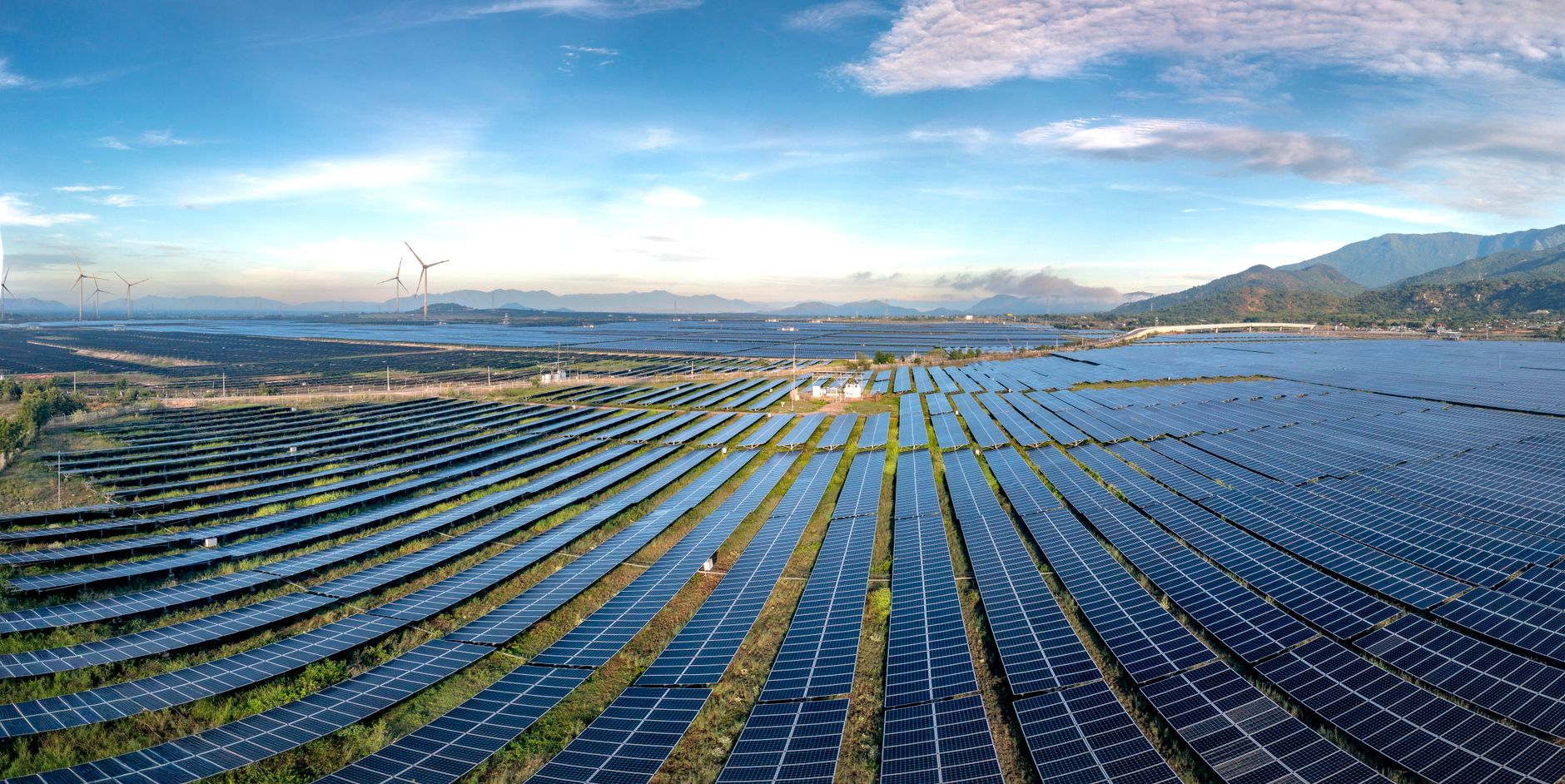
Rabobank closed a £43 million financing this week for a 71 MW solar farm in North Yorkshire that will not turn a single kilowatt of power until 2027. The contract that made the deal possible was not a power purchase agreement with a utility or a merchant customer. It was a government strike price guarantee, a Contracts for Difference award from the UK's Department for Energy Security and Net Zero. This is not a funding event. It is a signal that renewable energy finance has completed its metamorphosis from venture-backed innovation into institutional debt operations.
The Carlton Solar Farm deal arrives as global solar venture capital collapsed 21 percent year-over-year to $1.1 billion in Q1 2026, down from historical norms and dwarfed by the sector's actual capital deployment. In that same quarter, debt financing for solar projects hit $8.9 billion across 28 deals, a 154 percent surge from the $3.5 billion in 23 deals posted in Q1 2025. The gap between these two numbers is the real story. Solar no longer needs venture capital. It needs bank lending, and banks need government contracts. Once a developer has a CfD strike price locked in, project finance follows in weeks. Without one, capital does not move at scale.
The Rabobank deal works because of how the CfD mechanism actually functions. The UK auction program awards long-term power purchase agreements at a fixed strike price, effectively a government guarantee that protects developers from merchant price risk over 15 to 20 years depending on the award round. That price certainty is what lenders use as collateral for senior debt. Rabobank's sustainable finance desk can model cash flows, build debt service schedules, and size a facility knowing the revenue floor. No merchant risk to model. No corporate credit quality anxiety. Just stable cash flow from a contract backed by the UK Treasury. This is why 154 percent year-on-year growth in solar debt financing happened while equity funding contracted. Debt does not need entrepreneurial upside. It needs boring, predictable cashflows. CfDs deliver that.
The Carlton project, a 71 MW facility scheduled for 2027 commissioning, sits inside a broader surge in UK solar deployment. The CfD program has become the de facto infrastructure that unlocks utility-scale solar finance in Britain, mirroring a pattern that already played out in the United States through PPAs and in Germany through feed-in tariffs. Once the revenue mechanism standardizes, institutional capital scales faster than venture capital ever could. Rabobank is not a venture investor hunting moonshots. It is an institutional lender deploying capital into predictable, government-backed infrastructure. The decision to deploy £43 million on a 2027 asset says the bank sees the asset class as mature, boring, and fundable at scale.
Who wins from this? Developers with CfD contracts or signed PPAs win immediately, debt becomes cheap and abundant. Early-stage venture funds hunting solar technology bets lose. The VC firms that built their models around funding cell technology, module manufacturing, or inverter design now face a funding environment where 99 percent of available capital in the sector goes to project-level debt, not innovation. This is why global solar VC contracted 21 percent while debt surged 154 percent. The capital stack has fully inverted. What matters now is not the technology, modules and inverters are commoditized, but the contract. A developer with a CfD strike price can raise institutional debt faster than a deep-tech solar startup can close a Series B.
The open questions that will test this thesis: First, what is Carlton's CfD strike price? Enray Power has not disclosed it, but it will appear in UK government auction results and will signal whether solar is still contracting in levelized cost or stabilizing. Second, when does Enray Power name an EPC contractor and issue a Notice to Proceed? Financing closed; commissioning still 18 months away. The gap between these events is where construction risk lives. Third, what is Rabobank's appetite for additional CfD-backed solar debt through the rest of 2026? If this is a one-off, it is a press release. If Rabobank names three more Carlton-scale CfD deals by September, the institutional debt thesis hardens into strategy.