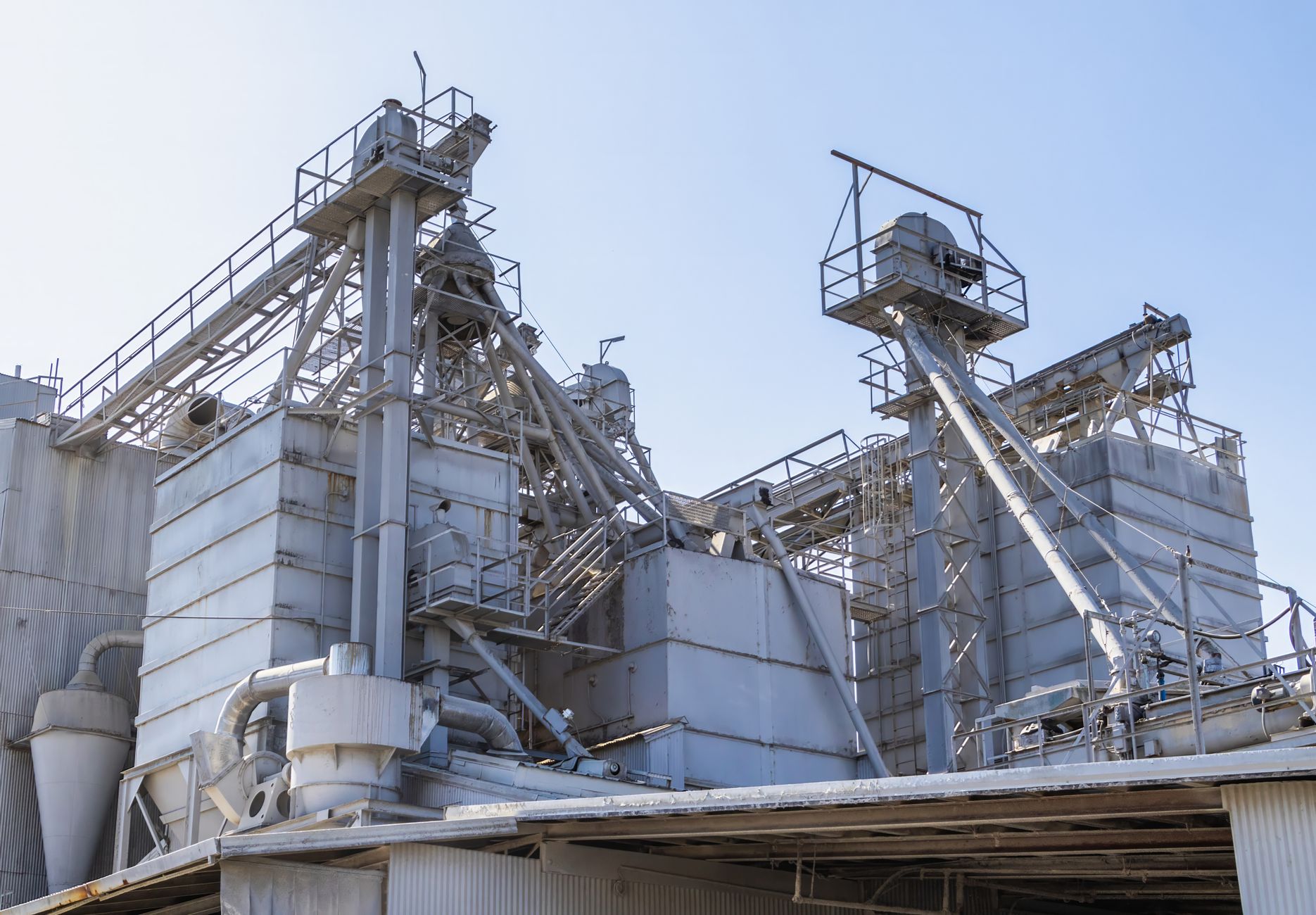
Ford is converting a $2 billion EV battery plant in Glendale, Kentucky into a battery energy storage facility. Not retrofitting. Converting. The entire production line, the workforce, the supply agreements, all redirected from electric vehicles to utility-scale grid batteries. This is not a minor product line extension. This is an industrial pivot the size of an entire automotive sector realigning because the math changed faster than anyone expected.
The scale is staggering. Industrial Info Resources reports $45 billion in battery-manufacturing projects currently under construction across the United States, almost entirely driven by automakers and their suppliers abandoning the assumption that EV batteries would be the growth engine forever. The two operational domestic lithium-iron phosphate (LFP) cell manufacturers, LG Energy Solution in Michigan and AESC in Tennessee, had spent over a decade making EV batteries before retooling existing lines to produce energy storage batteries in 2025. SK Battery America in Commerce, Georgia, and Samsung SDI in Kokomo, Indiana, plan to add BESS production in 2026. This is not speculation. This is happening now.
The specifics matter. Ford created an entirely new Ford Energy division to manage the pivot, with $2 billion committed to the Kentucky conversion alone. LG and AESC did not build new plants; they rewired existing ones, which means they can respond faster than greenfield competitors. The other two major players, SK and Samsung, are following the same path: use existing EV capacity, retool the production equipment, shift to BESS. Developers plan to add 24 gigawatts (GW) of utility-scale battery storage to the U.S. grid in 2026, compared with a record 15 GW added in 2025. U.S. BESS deployments are projected to reach 70 gigawatt-hours (GWh) across 35 GW of capacity in 2026, with utility-scale accounting for 62.4 GWh and behind-the-meter markets 7.3 GWh. The capital investment needed: $25.2 billion. The domestic industry can supply it.
What created this pivot in 18 months? Policy. The IRA subsidized both EV batteries and grid storage, but the One Big Beautiful Bill Act (OBBBA) removed EV owner incentives while leaving grid storage credits intact. That one legislative move inverted the margin structure. Grid storage now subsidizes manufacturing volume more reliably than EV sales, which face inventory gluts and slowing consumer adoption. Wood Mackenzie analysis from January 2026 showed that as of early this year, the U.S. was likely to have a 10 percent FEOC-compliant capacity surplus in 2026, meaning domestic cell manufacturers could produce more storage batteries than the market demanded, with Korean suppliers accounting for over 80 percent of FEOC-compliant (Federal Energy Regulatory Commission compliant) energy storage cell capacity. The window to flip that math was open exactly now: retool before Korean competition saturates domestic demand.
Here is what actually wins: domestic supply chains. Noah Roberts, VP of Energy Storage at the American Clean Power Association, stated in January 2026 that the U.S. is on track to produce enough grid batteries in American factories to supply 100 percent of domestic demand. This is not rhetorical. Four established domestic lithium cell manufacturers operating at full BESS production can deliver 49 GWh of storage annually, matching Wood Mackenzie and ACP projections for 2025 U.S. installation. Automakers and battery suppliers have made the calculation: making BESS in the U.S. is higher margin, lower inventory risk, and policy-protected. Korean suppliers face tariffs, geopolitical exposure, and shrinking share. The old EV battery monopoly is breaking. What loses: the assumption that EV scaling was the path to battery dominance. It is not anymore.
Watch three things. First, SK Battery America and Samsung SDI BESS production launch timelines in late 2026, if either slips, domestic capacity stays constrained and Korean imports stay above 20 percent. Second, actual 2026 BESS deployment numbers in May and June; if they fall below 18 GW (half the projected 24 GW for the year), the $25.2 billion investment thesis cracks and capital dries up fast. Third, the first utility contract wins by Ford Energy's new division, if Ford can land a 100 MW plus facility order by Q3 2026, the supply chain story is real. If Ford fumbles the first year, watch for another Asian player to snap up the Kentucky facility and export capacity right back to Korea.