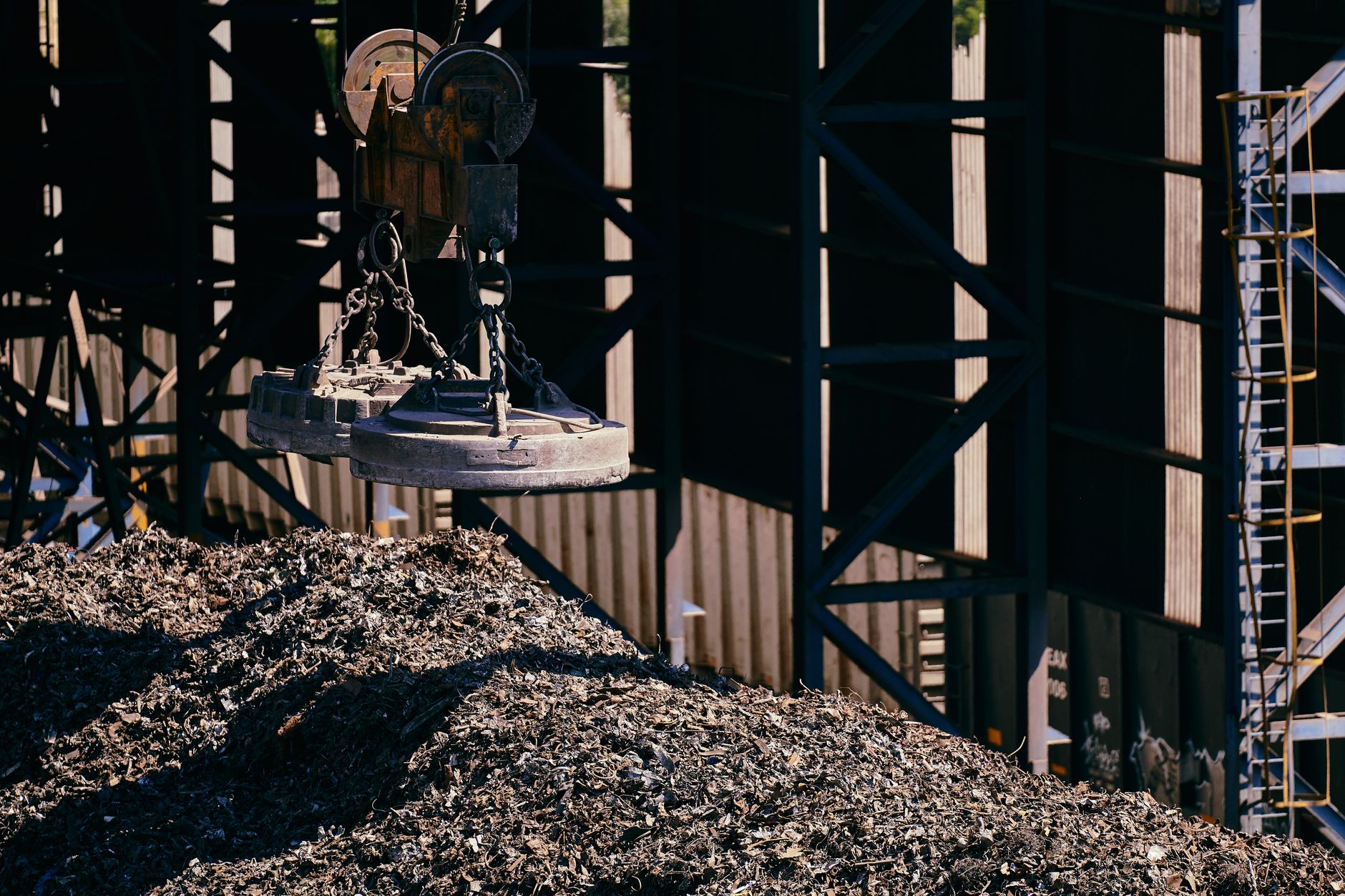
A facility in Stillwater, Oklahoma, the size of four football fields, is now milling rare-earth powder so fine it would take a human hair 20 times over to match its thickness, then pressing it into blocks, magnetizing them, and shipping them to Boeing, Lockheed Martin, Intel, and other companies that have spent decades buying the same product from China. USA Rare Earth announced on March 26, 2026 that its Phase 1a commercial magnet production line had been commissioned and was beginning to fulfill customer orders in Q2 2026. This is not a declaration of future intent. This is a production facility, operational now, with 100 employees running it and a stated ramp rate of 600 metric tons per year by the end of 2026.
The domestic rare-earth magnet market did not exist at commercial scale in the United States before this moment. China produces and controls more than 90 percent of global sintered neodymium-iron-boron magnet supply — the permanent magnets that spin electric motors, hold radar arrays rigid against g-force, and concentrate magnetic fields in everything from semiconductor fabrication equipment to direct-drive wind turbines. In April 2026, just weeks after USA Rare Earth's commissioning, China tightened export controls on rare-earth magnets, mirroring late 2024 restrictions on unprocessed critical minerals. That timing did not happen by accident. The U.S. and its allies finally have a domestic source, and China has responded by making access harder for everyone else. What was theoretical scarcity three years ago is now commercial leverage.
USA Rare Earth was founded to solve a specific problem: the U.S. depended entirely on China for permanent magnets used in defense systems, data center cooling, aerospace actuators, and the semiconductor equipment supply chain. The company decided in 2022 to start at the magnet end of the supply chain and work backward toward mining and processing. That strategy is now paying out in actual hardware shipped to customers. The Stillwater facility is over 310,000 square feet. Production begins with rare-earth and metallic elements formed into powder, then jet-milled to 3 to 5 microns in size in an oxygen-restricted environment. This fine powder is wet-pressed into large blocks, which are then machined, coated, and magnetized to form finished magnets. The facility is designed to ramp to 600 metric tons per year by the end of Q4 2026, with a second production line (Phase 1b) expected to come online by Q1 2027, doubling total capacity to 1,200 metric tons annually. At full capacity, the company estimates it will produce nearly 5,000 metric tons per year — hundreds of millions of individual magnets destined for aerospace, defense, semiconductor, energy, and data center customers.
The federal capital commitment made this possible. USA Rare Earth received a non-binding letter of intent from the Department of Commerce for more than $1 billion in loans across two projects: the Stillwater magnet manufacturing facility and the Round Top rare-earth mine in Texas. To qualify for that loan, USA Rare Earth issued 16.1 million shares of common stock and approximately 17.6 million warrants to the federal government, meaning Uncle Sam holds between 8 and 16 percent of the company depending on warrant exercise. That is not a grant or a subsidy — that is equity ownership backed by capital deployment. Additionally, the company raised $1.5 billion through a PIPE (private investment in public equity) from institutional and mutual fund investors who apparently believe the business case holds up. The Department of Energy's National Energy Technology Laboratory also signed a letter of intent to collaborate on heavy rare-earth element separation using digital twin modeling at the company's Wheat Ridge laboratory and Round Top site. Every piece of this — the loan, the equity, the venture capital, the federal R&D partnership — is conditioned on actual manufacturing execution and customer delivery.
USA Rare Earth signed a mutual sales and distribution agreement with Arnold Magnetic Technologies, a 75-year-old privately held magnet supplier with existing relationships in aerospace, defense, and industrial markets. This is the commercial piece that closes the loop: a domestic producer now has a distribution channel into customers who have spent decades buying from overseas suppliers and now have an alternative. Arnold brings customer access; USA Rare Earth brings domestic capacity and supply security. For customers who want magnets from allies rather than China, that option is now real, not prospective. The company also disclosed preliminary year-end 2025 cash reserves exceeding $350 million, meaning it has the balance sheet to sustain operations through ramp-up without running dry.
The competitive landscape just shifted. MP Materials, a rival domestic rare-earth player, is moving forward with its own $1.25 billion magnet campus in North Texas and expects to break ground imminently, with plans to create more than 1,500 direct manufacturing and engineering jobs. That project aims for even larger scale, but USA Rare Earth now has first-mover advantage — Phase 1a is live, customers are being served, and production is ramping. MP Materials is still in the groundbreaking phase. For a decade, the rare-earth space was about mining and processing capacity; anyone with a ton of neodymium oxide could ship it downstream to China and buy back finished magnets at prices set by Beijing. Now the U.S. has two domestic magnet producers coming online at scale, and the price of those magnets will no longer be a Chinese monopoly decision. That is not trivial. Aerospace and defense contractors will shift supply chains the moment they trust the domestic alternative. Trust is building now.
Here is what is actually happening: the U.S. is closing a 40-year supply chain vulnerability in permanent magnets through genuine capital deployment and manufacturing execution, not policy theater. China controls 90 percent of global supply, just tightened exports, and every ton USA Rare Earth produces is a ton that does not have to transit through Beijing's control. The federal government held enough leverage — through its procurement power in defense and energy — to pull private capital into a market that did not exist five years ago. The PIPE investors believe the long-term demand case and the unit economics are real. If Phase 1a reaches 600 tons per year and Phase 1b comes online on schedule, USA Rare Earth will have proven that a new U.S. magnet maker can be built, operated profitably, and integrated into the defense and aerospace supply chains. That outcome is no longer uncertain — it is in motion. What changes the story now is execution failure, cost overruns that force price points customers will not pay, or a collapse in defense spending that kills end-market demand. None of those are likely in 2026 or 2027.
Watch for three things. First, Q2 2026 customer shipments: USA Rare Earth has named Boeing, Lockheed, and other aerospace/defense prime contractors as near-term customers. Disclosed order volumes and ramp rates will tell you whether demand is as strong as the company and federal government believe. Second, Phase 1b commissioning by Q1 2027: if that second line comes online on schedule, you will know the company can execute and scale. If it slips, you will know manufacturing complexity or capital constraints are real. Third, the Commerce Department's conversion of the non-binding letter of intent into a final binding award with milestone-gating terms: that will reveal whether federal oversight is tight or loose, and whether the government is prepared to enforce performance requirements. The mine at Round Top is scheduled to begin feasibility studies in Q3 2028 and move toward production in 2028 — that is when the mine-to-magnet value chain either closes or stalls. Until then, USA Rare Earth is dependent on third-party rare-earth carbonate feedstock, which means the supply chain is not yet fully secured. But the magnet facility itself is real, it is running, and it is serving customers. That is the story.