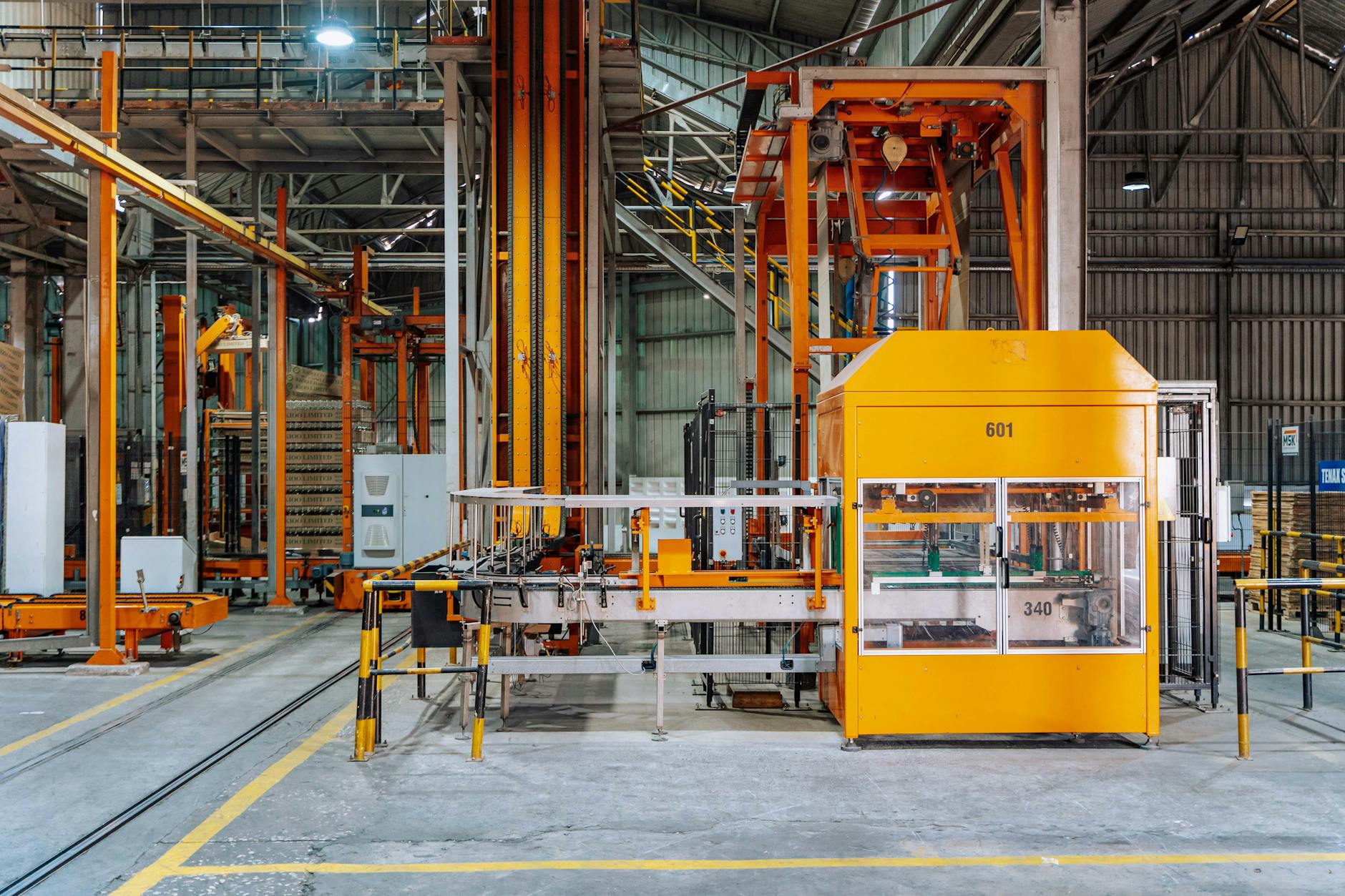
A factory in Stillwater, Oklahoma, just made the first commercial batch of high-grade permanent magnets manufactured in the United States in decades, and the federal government is bankrolling the entire supply chain to get here. USA Rare Earth commissioned Phase 1a of its sintered neodymium-iron-boron magnet production line in late March 2026, with the first customer orders shipped in Q2 2026. The facility will ramp to 600 metric tons per year by the end of 2026, then 1,200 metric tons by Q1 2027 when Phase 1b comes online. That sounds technical. What it actually means: the U.S. just recovered a manufacturing capability it lost entirely, after ceding 92% of global permanent magnet production to China over the last two decades.
The landscape here is stark. China dominates sintered NdFeB magnet manufacturing because it controls not just the mine-to-metal supply chain, but the processing bottleneck, the refinement and powder-formation steps that turn ore into magnets. Japan produces a small share for domestic automotive use. The United States had zero sintered magnet manufacturing capacity until this week. This is not a niche commodity. NdFeB magnets are components in every EUV lithography scanner that ASML ships to chip makers, in the pump and deposition equipment from Applied Materials and Tokyo Electron, in semiconductor spindle motors, in defense systems, drones, submarines, satellites, industrial motors, and the actuators in data center cooling systems. Lose access to these magnets and you lose the ability to make advanced semiconductors, build defense weapons, or scale data centers. China has understood this leverage for years. The U.S. government finally did too.
Here is exactly what happened. The Department of Commerce committed $1.6 billion to USA Rare Earth under the CHIPS and Science Act: $277 million in direct grants, plus a $1.3 billion senior secured loan. In exchange, the government receives 16.1 million shares of common stock and 17.6 million warrants. Alongside the federal package, USA Rare Earth raised another $1.5 billion through a private investment in public equity round led by Inflection Point Ventures and other strategic investors. The total capital stack is $3.1 billion. That money is flowing to three things: the magnet production line at Stillwater, which is now operational; the Round Top rare earth mine in Texas, which is expected to begin commercial production in 2028; and acquisitions to vertically integrate the supply chain, including a recent investment in French rare earth specialist Carester SAS. The Stillwater facility is 310,000 square feet. Currently 100+ people work there. The production process starts with rare earth and metallic elements formed into powder, jet-milled to 3-5 microns (about 20 times finer than human hair) in an oxygen-restricted environment, then wet-pressed into blocks, machined, coated, and magnetized. This precision manufacturing step is exactly the kind of high-barrier, capital-intensive industrial work that does not move around once it is built.
The timing here is not accidental. China has been tightening export controls on rare earth elements and processed materials for years, not as crude embargoes, but as quiet licensing requirements and processing delays that make foreign supply unreliable. The U.S. semiconductor industry watched chip equipment makers like ASML and Applied Materials face delays and uncertainty in getting magnet-bearing components from their suppliers. Meanwhile, the U.S. Defense Department faced real constraints in scaling up weapons production because magnet supply was bottlenecked through China. The CHIPS Act funded this. So did the Biden administration's recognition that critical mineral supply chains are national security infrastructure. The capital was there because the risk became too visible to ignore. USA Rare Earth went public via SPAC merger in 2022 at a $1.1 billion valuation. Today the company is backed by $3.1 billion in total capital and owns the first functioning U.S. magnet factory in a generation. That is a 2.8x capital injection into a real asset.
Who wins from this? Semiconductor equipment makers win, because they gain a domestic supplier and reduce China leverage. The U.S. Defense Department wins because it can now qualify magnet production from a domestic source for weapons systems. Data center builders win because they get backup supply and do not have to route magnet procurement through Chinese intermediaries. USA Rare Earth wins because it now has a funded runway to scale. Who loses? China loses export leverage, not catastrophically, because it still controls 80+ percent of global capacity, but meaningfully in the high-margin, high-security segments like EUV equipment and defense. Smaller magnet manufacturers globally lose, because USA Rare Earth just became a vertically integrated, federally-backed competitor with secure feedstock and a pre-committed customer base. The losers are real. The gain for the U.S. is also real, and it is measured in supply chain resilience, not quarterly revenues.
Here is what I actually think is happening: the U.S. is not trying to become the world's largest magnet manufacturer. It is trying to become the world's most reliable magnet manufacturer for applications where China leverage is unacceptable. That is a much smaller, much more defensible market. USA Rare Earth will never compete on cost with Chinese producers at scale. It will compete on reliability, domestic sourcing, and security clearance for defense applications. The Stillwater facility will serve semiconductor equipment makers who need magnet supply they can rely on and can source from a U.S. company. It will serve defense contractors. It will serve data center operators who want supply chain diversification. The Round Top mine, when it comes online in 2028, closes the loop by giving USA Rare Earth guaranteed feedstock. This is classic industrial policy: using federal capital to build the specific chokepoint that an adversary has locked down, knowing you will never outcompete them on volume, but knowing you can win on specificity and trust. That is the actual strategy.
Watch three things. First, Round Top mine ramp in 2028, if that slips, the whole supply chain feels it because Stillwater will still be partially dependent on third-party rare earth concentrates. Second, customer qualifications and order book visibility, USA Rare Earth has said it is already fulfilling orders, but watch for public disclosures on which equipment makers and defense contractors have qualified their magnets and placed orders. That is the real test of whether the market believes the quality and supply reliability. Third, Phase 1b timeline, if Phase 1b comes in on schedule in Q1 2027 and ramps to target capacity, the company has proved it can scale. If there are delays or yield issues, the whole case for federal investment starts looking fragile.