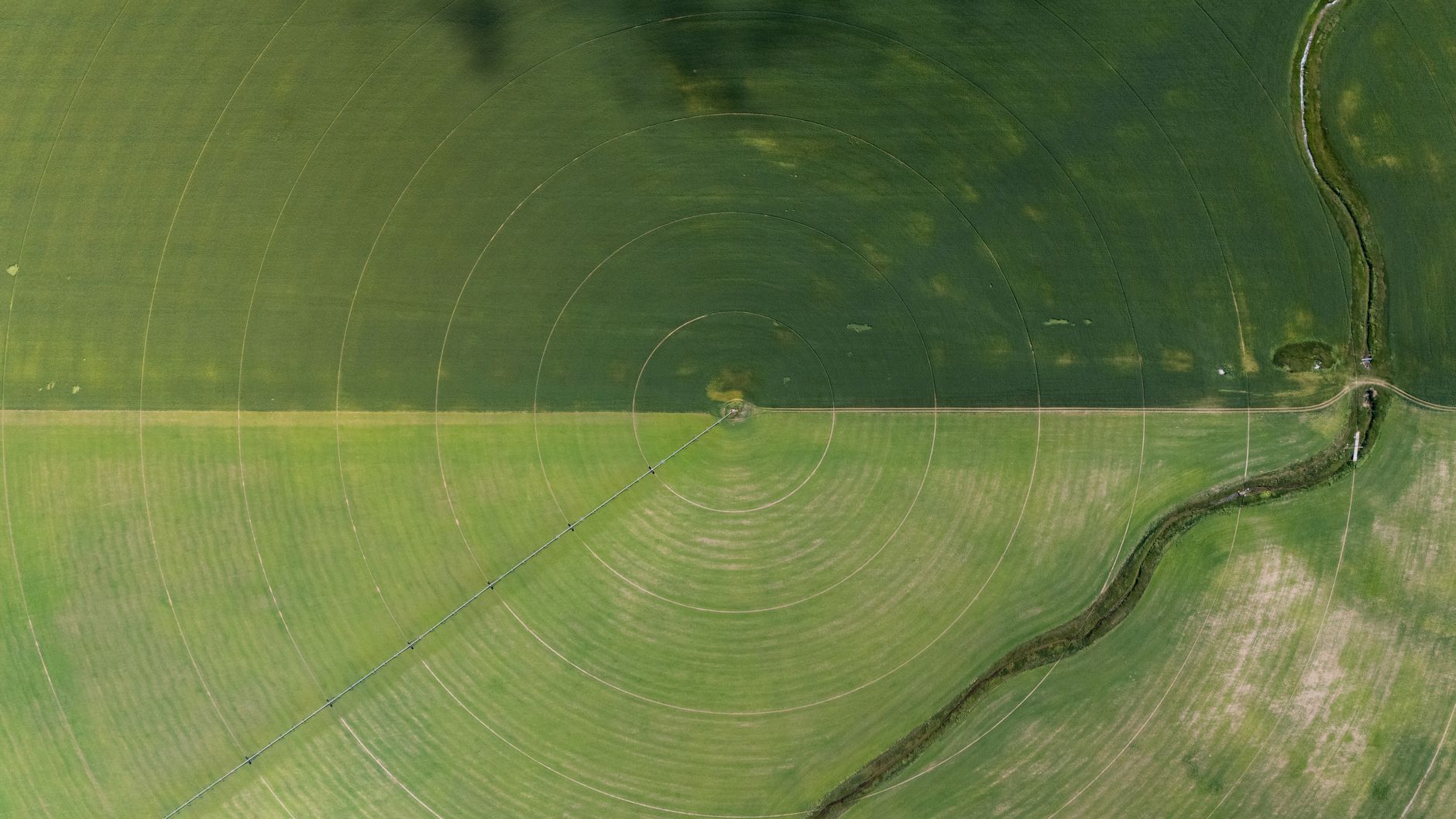
Grand Farm, a precision agriculture testbed in North Dakota that most farmers have never heard of, just became the gatekeeper for every new agricultural technology the U.S. Department of Agriculture wants farmers to trust. On April 7, 2026—just four days before this article—USDA formally announced that Grand Farm will serve as the National Program Manager for the USDA National Proving Grounds Network for AgTech, a nationwide infrastructure for testing whether commercial and pre-commercial precision agriculture tools actually work under real-world U.S. farming conditions. Dr. Scott Hutchins, Under Secretary for Research, Education, and Economics at USDA, was direct about what this means: 'By establishing a coordinated national research network to objectively validate new and emerging technologies, especially digital and AI-driven technologies, we are helping ensure row crop, specialty crop, and livestock producers all have access to reliable performance data for their investment decisions.' That is the core story. The federal government is no longer content to let private vendors, venture capital, and hopeful entrepreneurs convince farmers to adopt new technology. It is building the institutional infrastructure to say, definitively, whether a tool works or does not.
This matters because agtech funding has cratered. In 2025, the sector raised $4.799 billion across 735 deals—down nearly 6 percent from $5.099 billion across 913 deals in 2024, according to PitchBook data cited by AgTechNavigator. Ankit Chandra of the University of Nebraska-Lincoln identified the structural problem: 'tight margins, slow adoption, and cautious investors.' Farmers are not adopting precision ag tools at venture-scale velocity because they cannot reliably measure whether the technology will pay for itself on their specific soil, climate, and operation. Vendors make claims. Startups run demonstrations. Universities run small trials. But no one was running large-scale, coordinated, federally-managed validation across representative U.S. farming systems. That created a credibility vacuum. Farmers, faced with $50,000 to $500,000 technology purchases, defaulted to skepticism. Capital dried up. Startups folded. The NPG-Ag exists to fill that void—by making the USDA, not the vendor, the source of truth about whether a technology works.
The program's structure reflects this mission. Senator John Hoeven, Chairman of the Senate Agriculture Appropriations Committee, secured $11 million in cooperative agreement funding to establish the network, with an additional $2 million in FY2026 funding allocated to create a USDA Agricultural Research Service (ARS) work site at Grand Farm itself. Grand Farm will partner with a network of land-grant universities across the country, each of which will serve as a regional proving ground. The first proving ground, at Grand Farm, will focus on weed control—arguably the most labor-intensive, economically significant field operation in row crop production, and therefore the highest-value target for automation and AI-based decision support. ARS has also established a new Director of Digital Agriculture position within the agency, a signal that USDA is reorganizing itself to evaluate, approve, and deploy emerging technologies at scale. This is not a pilot. This is infrastructure. ARS Administrator Joon Park stated: 'ARS has established a new Director of Digital Agriculture to position the agency for the AI and digital agriculture era—and to support the responsible adoption of novel innovations.' The language of 'responsible adoption' is important. The federal government is not simply going to say yes to every AI weed-mapping tool or autonomous spray system that walks through the door. It is going to measure, compare, and rank them.
The timing reflects both necessity and urgency. Agtech capital markets have cooled precisely as AI has become mainstream. Farmers are overwhelmed by vendors claiming their sensors or algorithms will cut input costs by 15 percent or 20 percent—but with no independent validation and no standardized way to compare products against each other. A farmer in Iowa has no way to determine whether Trimble's autonomous system will perform better than CNH Industrial's, or whether either is worth the capital expenditure. This is not a problem that venture capital or private accelerators solved. Consider why: a venture-backed startup agtech firm makes money by selling software licenses or hardware. It has no financial incentive to conduct rigorous comparative analysis showing that Competitor A's product performs better on clay soils while Competitor B's excels on sandy loam. A government-backed proving ground has no such conflict of interest. The arXiv preprint 'Designing probabilistic AI monsoon forecasts to inform agricultural decision-making' (Aitken, Masiwal, Marchakitus, arXiv:2603.07893v2) documents exactly this gap: AI tools for agricultural decision-making exist, but farmers face 'high-stakes decisions under uncertainty' because no one has systematically validated whether these AI systems actually improve outcomes in real farm conditions, across diverse geographies and crop types. The NPG-Ag is the institutional answer to that scientific gap.
Who benefits and who does not is worth stating plainly. Grand Farm benefits enormously. It was already a regional agtech testbed run by North Dakota State University in partnership with private industry. Now it is the federally-sanctioned, federally-funded gatekeeper for nationwide technology validation. That is a permanent, privileged role. Land-grant universities with strong agricultural research programs benefit, because they will host regional proving grounds and secure federal research funding. Farmers benefit, because they will eventually have access to reliable, comparative data on whether a technology is worth buying. The USDA benefits, because it becomes the institution that farmers trust for agtech decisions, rather than defaulting to inertia or vendor hype. Who does not benefit: agtech startups with marginal or unproven technology. If your product cannot demonstrate real ROI under real-world U.S. conditions, the NPG-Ag will expose that. Venture-backed agtech firms that were relying on limited-scope pilot data and vendor-controlled case studies will now face independent scrutiny. This is a feature, not a bug, but it will eliminate products that might have otherwise found customers through marketing alone. Agricultural equipment manufacturers like John Deere, CNH Industrial, and Trimble do benefit if their technologies pass validation—because federal validation becomes a powerful sales tool—but they also face the risk of negative comparative results. If the NPG-Ag shows that Competitor A's autonomous system is 15 percent more reliable than yours, that data will circulate fast.
Here is the actual read: the NPG-Ag is a rational government response to market failure, and it signals that agtech has matured past the venture-capital hype phase and into the institutional-credibility phase. Private capital failed to solve the validation problem because validation does not generate revenue; it generates public goods. The USDA stepped in because farmers are a crucial voting constituency and precision agriculture is a strategic capability for U.S. agricultural competitiveness. This is not ideological. It is pragmatic. The federal government is essentially saying: 'We will de-risk technology adoption so that innovation can accelerate without dragging the entire sector through venture-backed false starts and failed pilot projects.' The network will work only if Grand Farm and the land-grant university consortium actually run rigorous trials and publish results that contradict vendor claims when warranted. If the NPG-Ag becomes a rubber-stamp for USDA-preferred technologies or a marketing arm for politically connected vendors, it will collapse in credibility within two crop cycles. But if it delivers what Hutchins and Hoever are promising—genuinely objective comparative data on what works—it will become the most powerful force in agtech adoption for the next decade.
Watch three things. First, when does the formal product enrollment process open? USDA has not yet announced a date for agtech companies to begin submitting products for NPG-Ag testing. This will likely come in Q2 or Q3 2026. Look for it on the USDA ARS and Grand Farm websites. The enrollment date is the point at which you can measure whether private agtech vendors—John Deere, Trimble, CNH Industrial, the major AI decision-support platforms—are willing to undergo independent validation or whether they drag their feet. Second, what do the early weed-control trial results show? Grand Farm's first proving ground is weed control, and early results will establish the NPG-Ag's methodology and credibility. If the data shows clear performance differences between competing products, farmers will pay attention. If the results are muddled or inconclusive, the network's authority erodes immediately. Third, which land-grant universities secure proving grounds in specialty crop states like California and Florida? If the NPG-Ag remains concentrated in the upper Midwest and Great Plains, it will be seen as a regional program, not a national one. Expansion into diverse agroclimatic zones is the test of whether this becomes truly representative infrastructure.